By Craig L. Barry B
are manufactured in Italy by two main manufacturers, D. Pedersoli and Armi Chiappa (Armi Sport), both experienced factory shutdowns related to the COVID-19 virus in 2020. Prices increased dramatically afterwards, and production has never really returned to pre-COVID levels. Every major retailer shows “out of stock” on virtually all models.
Traditions several reproduction musket kits based on the Armi Sport models, which they advertise as “simple to assemble with easy step-by-step instructions.” They also claim the parts have been “pre-assembled at the factory to ensure fit and ease of assembly.”
I have previously made several U.S. 1861s from the Dixie Gun Works kits, made at the time by Miroku, and those all turned out very well. This was about twenty years ago. I was expecting a similar experience here. I consider myself like Leander Stillwell, who is quoted above. I am not particularly handy, but I can take apart and reassemble an army musket from the Civil War era.
Traditions offers several kits including a Pattern 1853 Enfield, U.S. 1861, and U.S. 1842 models all from Armi Sport. I chose the rifled U.S. 1842 for this project mostly because I already have an excellent Mike Yeck U.S. 1861 and a Pedersoli P53 Enfield, but also because the Armi Sport U.S. 1842 is reputedly a very good reproduction in eginning in 2020, supply chain shortages with U.S. Civil War reproduction firearms, particularly black powder muskets, began. Most of these reproductions
offers terms of historical feature accuracy. First introduced in 1996, the Armi Sport U.S. 1842s earned a reputation as one of the best “out of the box” reproductions available. In other words, as you are building the kit it should require fewer corrections to come out looking remotely like a reproduction of something that was in use during the U.S. Civil War.
Upon removing the contents from the shipping container, I was immediately alarmed by the deep laser etching burned
working portion of the build.
A quick note about the easy “step-by-step” instructions. When it came time to add the long-range rear sight to the barrel, it simply states “attach rear sight to the barrel.” However, the screw which affixes it in place is not slotted but has two holes in the top and requires a special U-shaped screw driver tip not included with the kit. In addition, it is not an item easily found at your local hardware store. It is the period correct style screw head, however so I didn’t mind ordering this U shaped tip to put with my other extra parts and screws.
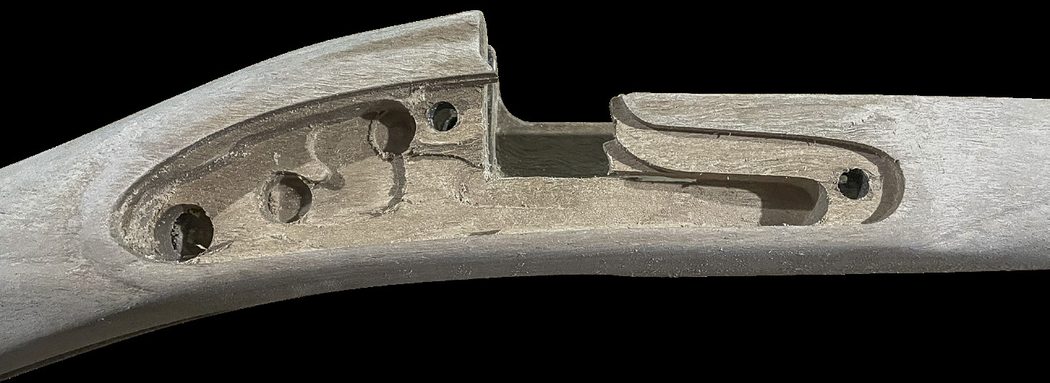
The stock did not appear to have anything awful laser into both sides of the barrel. Armi Sport usually has their name stamped on top of the barrel which is easily filed off to improve the appearance. I should have boxed the kit up and returned it right then and there. However, I thought with a few hours of elbow grease I could remove those disfigurements and proceed with the metal etched into it like the barrel and the lock assembly fit easily into the lock mortise. There was the usual amount of sanding to get the stock into shape and remove high spots created where they cut the lock mortise, which is to say, quite a bit of sanding and shaping. The stock was then refinished with multiple coats of boiled linseed oil hand rubbed into the wood, which is exactly how gunstocks were finished in the 1860s. No staining of the wood is required.
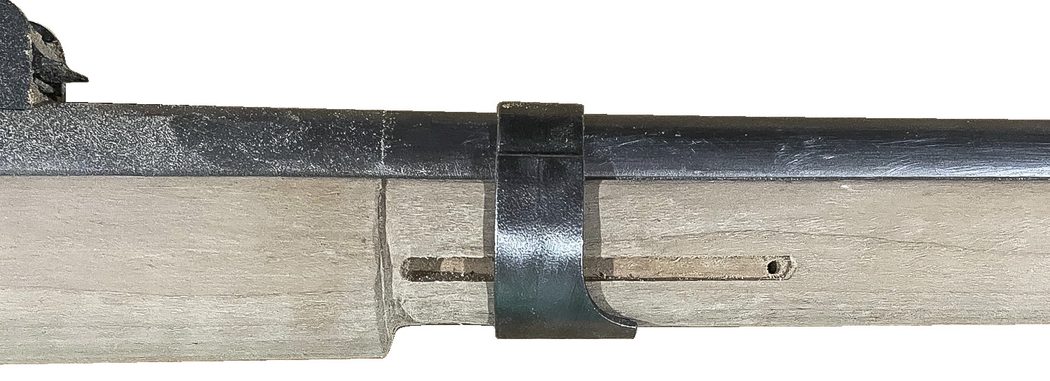
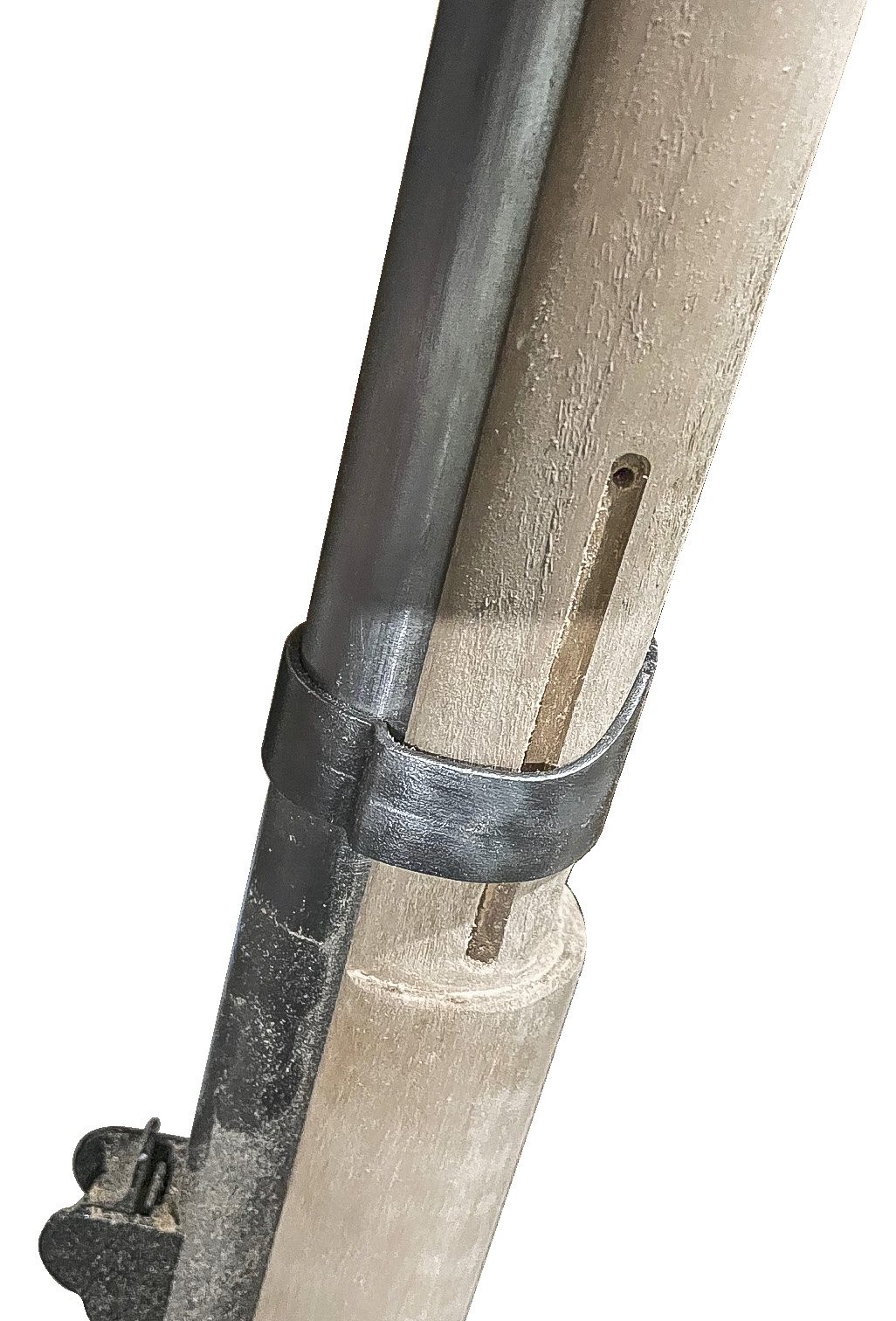
Then the metal parts like the trigger guard and barrel bands had to be polished and fit into the stock. Finally, when all this was completed, came the ultimate betrayal. The barrel holes were mis-drilled at the factory by about a half inch. The hole for barrel tang screw was drilled incorrectly and the hammer would not reach the percussion cone. Lacking the kind of equipment for this kind of major
Craig L. Barrywasbornin Charlottesville, Va. Heholdshis BA and Mastersdegreesfrom UNC (Charlotte). CraigservedThe Watchdog Civil War Quarterlyas Associate Editorand Editorfrom 2003–2017. The Watchdog publishedbooksandcolumnson 19th-centurymaterial. Heistheauthorof severalbooksincludingThe Civil War Musket: A Handbookfor Historical Accuracy(2006, 2011), The Unfinished Fight: Essayson Confederate Material CultureVol. I and II (2012, 2013). Hehasalsopublishedfourbooksin theSupplierstothe Confederacyserieson English Arms & Accoutrements, Quartermasterstoresandother Europeanimports.
rework, the entire thing had to be boxed up and shipped to professional gunsmith Todd Watts to relocate the holes and complete the project.
So is the Traditions kit a good option for the hobbyist interested in owning a reproduction Civil War musket? In speaking with gunsmith Todd Watts, he remarked that he had previously built four of the Traditions Enfield kits. He believes them to be “factory seconds” as so far every kit has had serious defects. On one, the lock mortise was mislocated, on another, the lock plate screws blocked the ramrod channel, and so on. And of course, the same laser etching which disfigured the barrels. In conclusion, the Traditions Civil War reproduction musket kits are not quite as advertised and probably not something that the average hobbyist could complete unassisted.