January 2024
left, the third man from me. He was in the ranks and I was the file closer. Well, I thought all the side of my head was gone, there was a piece of shell went so close to my ear, but it did not touch me.” For that Young was thankful. However, the Confederate artillery continued to toss shells their way. “One cut one of our color-guards right square in two and killed three more. We never heard it struck. It looked hard to see our men fall so fast,” Young penned.
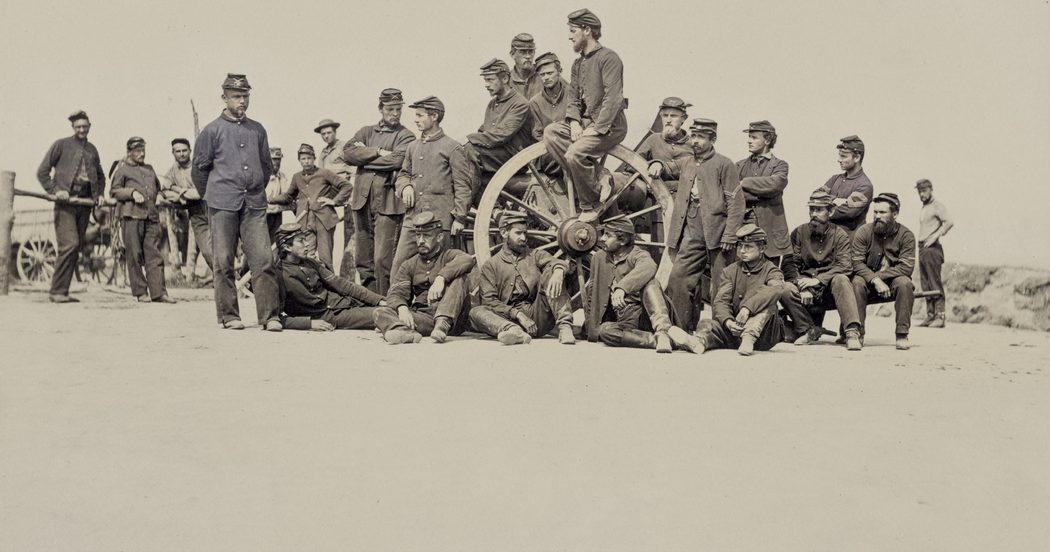
Fighting to the right of Sgt. Young and the 14th was the 12th U.S. Infantry’s Sgt. Charles T. Bowen. In a letter to his wife Kate on May 7, Sgt. Bowen wrote about the events of May 1st: “This morning our division was ordered out to worry them a little, & see if we could not coax them out of their holes.” Sgt. Bowen noted, “When we came out of the woods in sight of their first line, they opened on us with shell at long range, but their guns were not very well served & we only lost a few men here.” Advancing steadily and approaching closer “they put in grape & canister but we did not wait to see who fell but charged with a regular Yankee cheer... .,” and captured numerous Confederates, Bowen explained.
The 7th U.S. Infantry fought along the north side of the Orange Turnpike. The battalion suffered two killed, nine wounded, and five missing in the action. Corp. Stephen C. Neill received special mention from Capt. David Hancock in his afteraction report. Hancock noted,
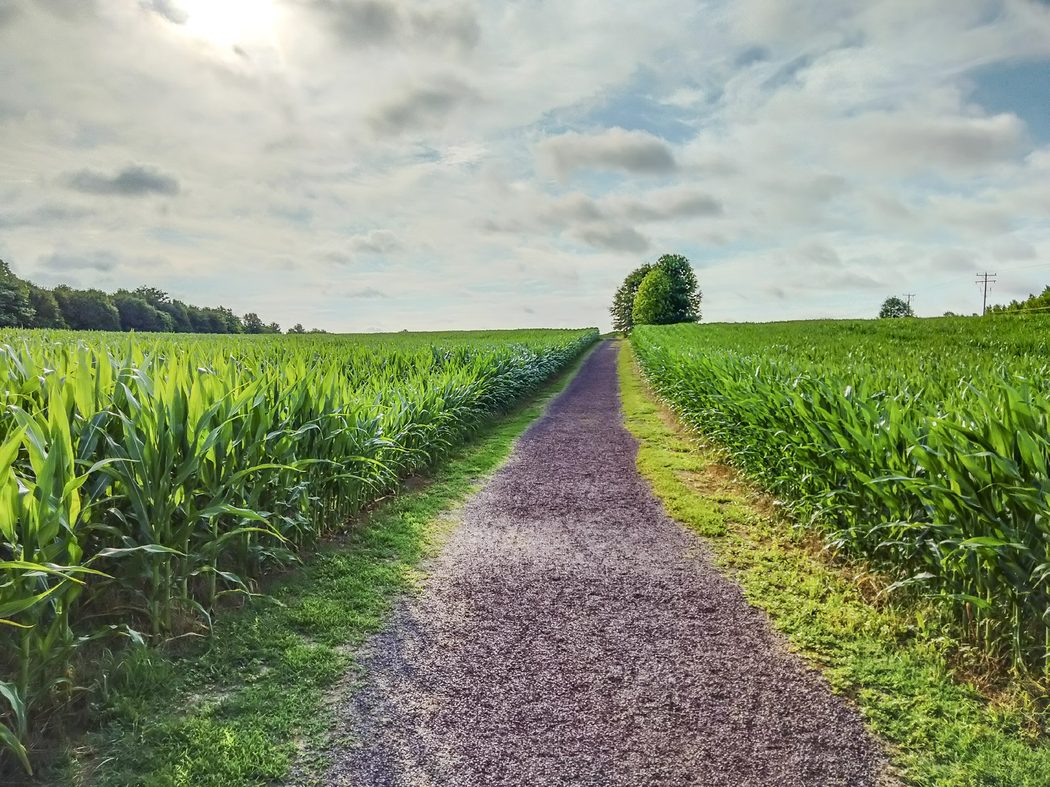
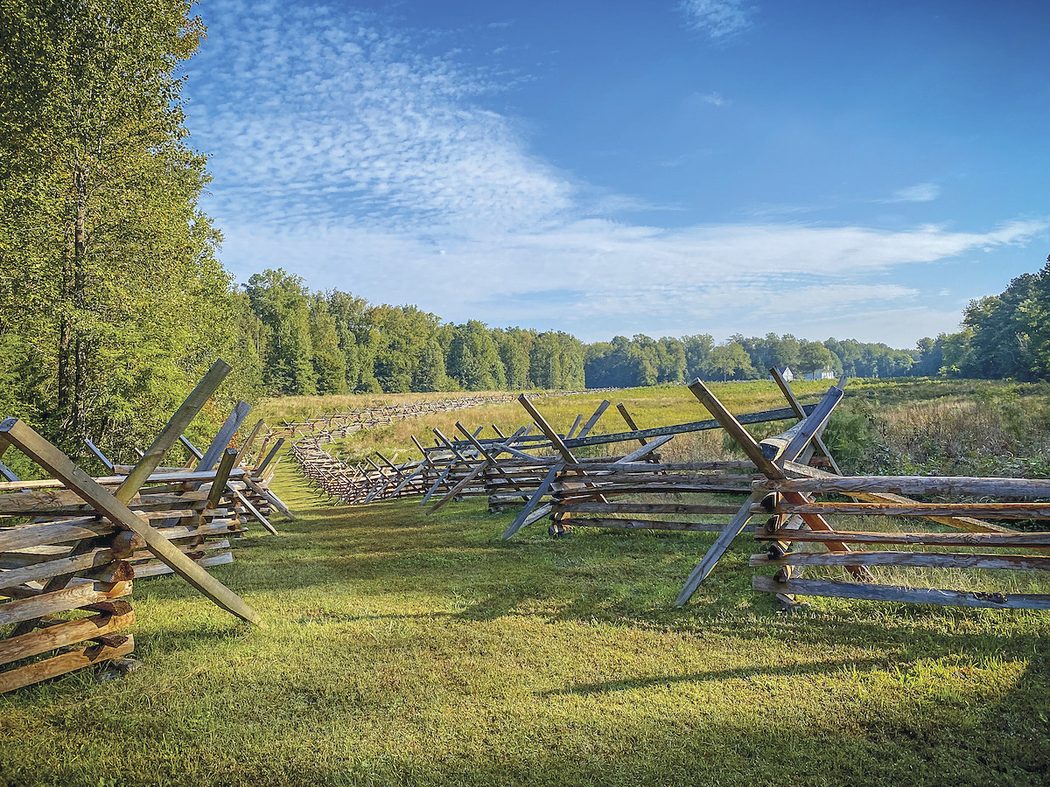
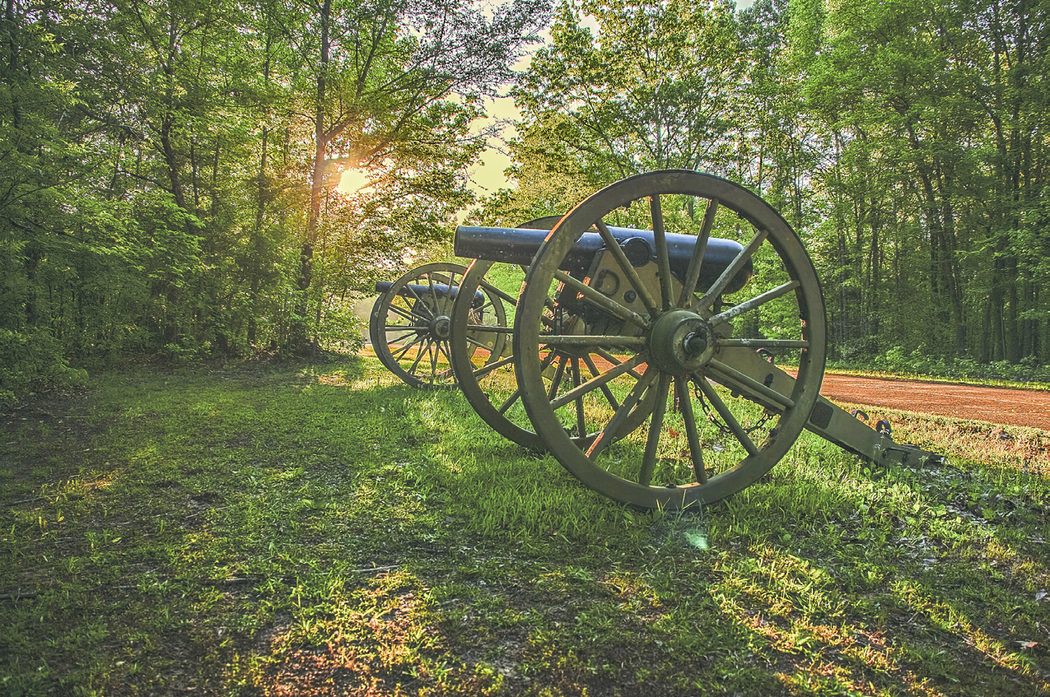
CVBT has helped save over 320 acres at Chancellorsville, including assisting the American Battlefield Trust with preserving land at the First Day Battlefield, where the Sykes’ Regulars fought. (Tim Talbott)
“when the color-bearer was shot down, [Neill] gallantly picked [the colors] from his hands, and bore them during the remainder of the engagement.” Neill later received the Medal of Honor for his heroism.
Fighting on the left of the 7th U.S., the 10th U.S. captured 27
prisoners including an officer. According to Lt. Edward Bush, the 10th’s flag-bearer, Sgt. John Crotty, “distinguished himself by his soldierly conduct under fire and capturing one of the enemy.” The 10th U.S. lost 12 men wounded.
The 11th U.S., serving as Col. Burbank’s left flank unit, endured losses of seven killed, 16 wounded, and five missing totaling 28 casualties, tying them with the 2nd and 6th U.S. for the most casualties among the Regulars. Maj. Delancy Floyd-Jones reported that his men “advancing steadily and with a will” were “exposed to a sharp fire from musketry and artillery.” They drove Mahone’s men back and captured prisoners, sharing some with the 10th U.S. on their right. Maj. Floyd-Jones praised “the coolness and bravery exhibited by the officers and the men” on May 1.
On the south side the road, the 6th and 2nd U.S. battled Semmes’ Georgians and Brig. Gen. Joseph Kershaw’s South Carolinians. During the fighting, the two Regular units lost contact with each other, as Capt. Samuel McKee noted in his report, “owing to the thickness of the woods through which the Second Regiment had to advance.” The enemy, only about 150 yard distant, “opened a heavy fire of musketry, which was replied to briskly by the battalion, silencing the enemy, who apparently fell back.” Throwing out a platoon of skirmishers to protect their right flank, they shoved back the Confederate skirmishers. When orders came to fall back, Capt. Salem Marsh, who “was commanding the battalion, a gallant and valuable officer, fell” dead, and McKee assumed command. The 6th lost one killed (Capt. Marsh) and 27 wounded.
Despite providing the Army of the Potomac with a successful advance on May 1, 1863, the Regulars and other Federal units received orders to fall back to Chancellorsville. Gen. Sykes explained in his report that although he did not receive support while in his advanced position “still I determined to hold it as long as possible. At this period General [Gouverneur K.] Warren, chief engineer of the Army of the Potomac, who had accompanied me, rode to the major-general commanding the army [Joseph Hooker], to explain the state of affairs, and, on his return, I was directed to retire in the direction of Chancellorsville.”
While Meade and Sykes both later offered tempered reports, Meade was apparently aghast at Hooker’s order to withdraw to Chancellorsville and thus give up the initiative, losing the ground so hard earned by Sykes’ Regulars.
Help Save 184 Acres Across the Volunteer State
At Shiloh, the critical 1862 battle allowed Union troops to penetrate the Confederate interior within Tennessee. The battle, marked by nearly 24,000 casualties, crushed any aspirations of blocking the Union advance into Mississippi.
Here, the Trust is seeking to preserve 152 acres, adding to the 1,400 acres already preserved by the Trust at the battlefield. The protection of this large tract would not only safeguard the history ingrained in its soil but also facilitate public access, enabling visitors from around the world to fully appreciate and comprehend the events that transpired at Shiloh.
At Stones River, the battle unfolded on New Year’s Eve 1862 and culminated in a Union victory. This triumph granted the Federals control over central Tennessee, providing
a much-needed morale boost and Lincoln the confidence to officially sign the Emancipation Proclamation. With only about 76,400 men engaged, it had the greatest percentage of casualties of any major battle in the Civil War, even more than at Shiloh and Antietam earlier that year. Here at Stones River, the 32acre property, surrounded by commercial, industrial, residential development, is one of the largest undeveloped tracts remaining on the battlefield.
With developers eyeing these properties, the targeted tract at Stones River was recently listed for sale as prime commercial property, threatening historical integrity of the land.
Trust Launches ‘Prize for History’
Calling attention to integral connection between the grounds on which the nation’s formative conflicts were decided and the fundamental role these landscapes play today as primary resources by which scholars and historians come to more deeply understand the past, the nation’s leading battlefield preservation nonprofit has launched $50,000 American Battlefield Trust Prize for History.
The Prize will be made annually to a work of military history or biography that underscores and
the the essential role of the nation’s military conflicts within the founding, formation and perpetuation of our exceptional country. In creating this award, sponsored entirely by a generous donor, the Trust is encouraging authors to create works that showcase the rich research potential of historic battlefields.
The award will be presented to a work published in the previous calendar year focused on history or a biography related to the three conflicts central to the Trust’s mission: the Revolutionary War, War of 1812 and the Civil War. The winner and two runner-up finalists will be announced this spring and award presented in the fall.
Restorations Continue Across Trust-Preserved Land
The Trust recently completed several projects to restore historic
landscapes at Gettysburg, Pa., Lookout Mountain, Tenn., and Eutaw Springs, S.C.
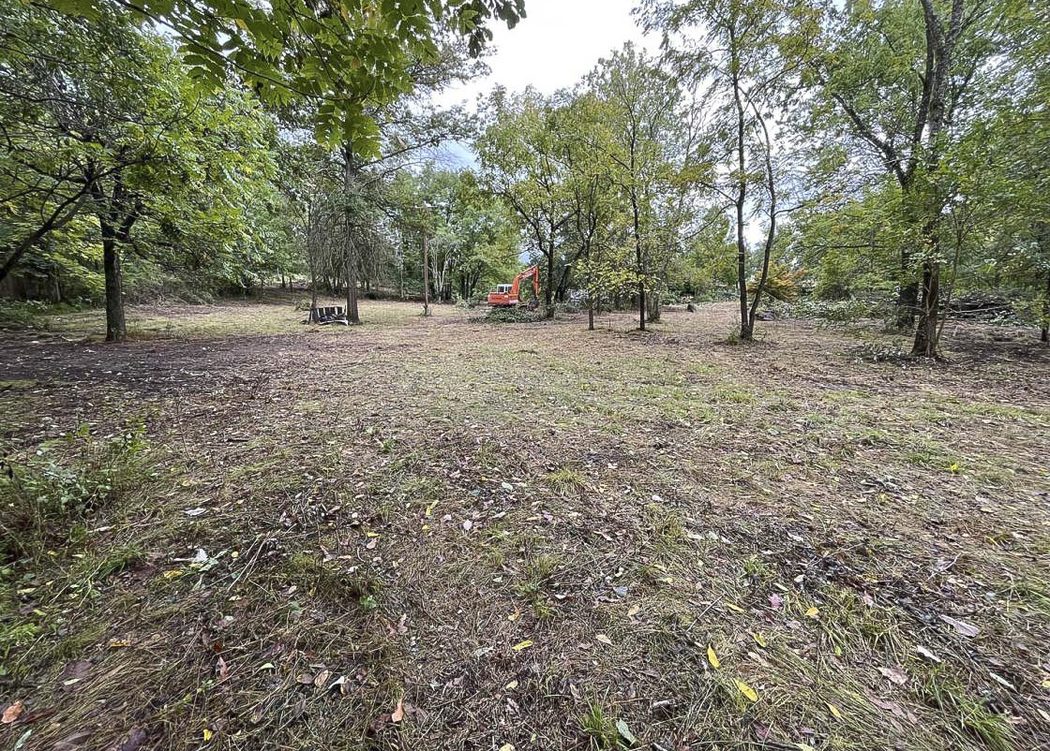
One of the Trust’s most highprofile restoration projects includes the demolition of Mulligan McDuffers Adventure Golf & Ice Cream Parlor in Gettysburg. Entering Gettysburg National Military Park from the east, visitors have for years driven past the shuttered minigolf course. In September and October 2023, the Trust removed the dilapidated structures, hauled away old concrete, graded the land and laid down soil and grass seed to restore the earth at the site of an important position on the Union right flank during the 1863 battle.
Likewise, in Tennessee, for decades, an increasingly run-down 1940s travel motel blemished approximately an acre of land next to the Chickamauga- Chattanooga National Military Park, on ground that played an important role in the Battle
of Lookout Mountain. The Wauhatchie Pike, the main road over the mountain during the time of the battle, runs by and through this field, the route of Confederate retreat. Some Union soldiers also crossed over the tract as they began their ascension of the mountain. In June 2023, the Trust was able to demolish the motel and lay down sod to restore the field.
In South Carolina, the Trust cleared the surroundings of a centuries-old oak—a witness to the Battle of Eutaw Springs on September 8, 1781, the last major engagement of the Revolutionary War in the Carolinas. Until this summer, it stood alongside modern features like a house, car port and chain link fence. With the generous help of the Trust’s members, donors, and partners, especially the South Carolina Battleground Preservation Trust, its surrounding landscape has been restored to a grassy field reminiscent of 1781.