March 2023
who had opposed secession. In talking with him Fanny worked at being considerate. Once, after such a conversation, she confided privately,
I would have done justice to Yankee virtues, if they had had any, but since that infamous march of Sherman’s and their insolence in bringing negro soldiers among us, my feelings are so changed that the most rabid secession talkers, who used to disgust me, are the only ones that satisfy me now.8
Today’s idiom is “C’mon, Fanny, and tell us what you really think,” but we don’t have to coax her.
Yankee, Yankee, is the most detestable word always ringing in Southern ears. If all the words of hatred in every language under heaven were lumped together into one huge epithet of detestation, they could not tell how I hate Yankees….I used to have some Christian feelings towards Yankees, but now that they have invaded our country and killed so many of our men and desecrated so many homes, I can’t believe that when Christ said “Love your enemies,” he meant Yankees.9
One afternoon Fanny and a friend were taking a walk downtown when “two drunken Yankees ran across the street at Mary and me and almost knocked us down, whooping and yelling with all their might.” “And the Yankees pretend to be a civilized people!” she exclaimed.
“It is sad to think how things are changing. In another generation or two, this beautiful country of ours will have lost its distinctive civilization and become no better than a nation of Yankee shopkeepers.”10
Alas, it was into the den of these very Yankee shopkeepers that Fanny ventured in the summer of 1865 after a Northern relative had invited her up for a visit. It didn’t take long at Cousin Lilla’s house for her to notice that “Yankee ideas of hospitality are very different,” she observed. “There is a primness about a Yankee house, that keeps me in constant terror lest I should put something out of order….The Yankee way is much more economical and orderly than ours—but I can’t help liking ours best.” Even the way they talked caused cringes: “I cannot get over my horror of that abominable lingo
that all these Yankees have—it sounds so coarse, so unrefined.”
“The more we see of Yankee society, the less we like it,” our diarist confessed. One afternoon Lilla led a carriage ride through Newark, and all she could talk about in pointing out the big mansions was how their owners had made their money. “They all belong to merchants or manufacturers,” sniffed our diarist, who commented that in the South men distinguished themselves as planters or soldiers. “Almost everyone of the elegant residences that have been pointed out to me,” she sniffed, “are owned by people who have grown suddenly rich by the manufacture of shoe pegs, trunk straps, or some contemptible little thing of that sort.”
A Yankee manufacturing town like Newark is certainly not the place that one would choose for its society. Give me a thousand times over, our elegant Southerners, with their poor old dilapidated homes. I would rather today, marry a poverty stricken Southerner without a home, than be mistress of one of these splendid establishments with a miserable plebeian who knows nothing beyond the shoe peg and tape business, for its master.
It is people, and not their surroundings, that make society.
“I thank the Lord I am not a Yankee,” she entered in her journal that September, after having gotten more than a taste of her cousin’s lifestyle.11
When Fanny returned to Washington, she turned to occasional writing. Perhaps it was the disciplined composition of her journal that led Frances to reckon that she had a knack for it— cacoethes scribendi, as they used to call it, the knack for writing, or maybe the urge to. Either way, in as early as February ’65 she wrote about “the career I have marked out for myself,” meaning that of writing, and affirmed that her pursuit of it would leave no time for marriage. She was so determined to succeed that in June 1865 she declined to sign a friend’s photograph book until she had become a “celebrated female.”12
Back then, there weren’t many vocational paths open to women, teaching being among the most common. Andrews, though, didn’t like the idea of being stuck with “a black-board and twenty stupid children.” But women novelists could write and sell their writing, even if it were under a pseudonym. Fanny’s was “Elzey Hay”: Elzey came from the name of a family friend, Confederate general Arnold Elzey, and Hay, probably taken from the name of the family home.
She scored her first hit with an article for the New York World that appeared on August 21, 1865. Others followed, including one titled “Dress Under Difficulties,” about Southern women’s efforts to look fashionable even amidst wartime shortages of sartorial finery. The essay appeared in Godey’s Lady’s Book, the popular women’s magazine published in Philadelphia.
There were outlets closer to home, though, and one was Scott’s Monthly Magazine. Founded in Atlanta shortly after the end of the war, the monthly featured pieces on war history, short fiction and items of general interest. Between spring 1866 and fall of ’69, Scott’s carried eight articles by Elzey Hay. It was Scott’s that first let the cat out of the bag as to its contributor’s identity, when one volume’s index listed a piece, “In Fashion and Out of Fashion,” by “Miss Fannie Andrews.” By 1872, it was pretty well known in the American literary world that “Elzey Hay” was Frances Andrews. She explained the reasons for her several years of anonymity in an article at the time. “The great beauty of anonymous writing is to protect one against the bores and the other annoyances of a small reputation, till one can claim the advantages of a great one,” she declared. In truth, Frances Andrews probably did not possess a “great” reputation; but as a young single woman of thirtysomething years, she had reason to be pleased with what she had accomplished so far.13
One of the features of our I Thank the Lord I am Not a Yankee is that we have collected all eight of Miss Andrews’ pieces appearing in Scott’s (from extant issues at the Atlanta History Center), and reprinted them. So far as we know, this is the first time they have been published together.
At work on novels during this time, Frances had her first, A Family Secret, published in 1876. Several more followed, during which years she nurtured a keen interest in botany. She wrote several texts on the subject, as well as articles for scientific journals. As another bonus in our book we reprint “Botany as a Recreation for Invalids,” in which she relates how, after ill health sent her for a long sojourn in Florida, she hunted and collected lots of local flora, all the while cuing readers how easy it would be for them, too.14
For years Miss Andrews taught French and literature at Wesleyan Female Georgia, and lived out her days, purposefully having never married, in Rome, Georgia. She departed this life in December 1931, and is buried in Washington’s Resthaven Cemetery.15
I recently gave a presentationto the Washington Civil War Round Table, and thought of getting into town a little early to pay a visit to Resthaven. But I didn’t, as I wondered what I would say to her at her gravesite that I had not already said to her during the time we’ve been together.
I’m an old Rock ‘n’ Roller, so I’ll close with lyrics from The Band’s Robbie Robertson’s hit on Music from Big Pink (1968): Catch a cannon ball now to take My bag is sinkin’ low and I do To get back to Miss Fanny, you
Yep, it’s time to get back to Miss Fanny. For those seeking to join me, I heartily recommend The War-Time Journal of a Georgia Girl.
3. Eliza College in Macon,
know she’s the only one Who sent me here with her regards for everyone
B. Reitt, “Eliza Frances Andrews” in Kenneth Coleman and Stephen Charles Dictionary of Gurr, eds., Georgia Biography, 2 vols. (Athens: University of Georgia Press, 1983), vol. 1, 29-31.
Frances Andrews, The War-Time Journal of a Georgia Girl 1864–1865, ed. by Spencer Bidwell King, Jr. (Macon: Ardivan Press, 1960). Frances Andrews, Journal of a Georgia Woman 1870–1872, ed. by S. Kittrell Rushing (Knoxville:
“I Thank
Eliza Frances Andrews (1840–1931) received a strong education and was
the Lord I
a successful writer and educator. Her War-Time Journal of a Georgia Girl
Am Not a
surely ranks among the most observant
Yankee...”
and intelligent wartime memoirs by a Edited with commentary by Stephen Davis, I Thank the Lord I Am Not a Yankeeincludes selections of her wartime and postwar journals which are most expressive of her Confederate
patriotism and Southern pride.
Stephen Davisis author of ten books on the Civil War, most of which treat the Atlanta Campaign. His two recent volumes
on Confederate General John Bell Hood have won several prizes, including the Fletcher Pratt Award of the New York CWRT.
4. Stephen Davis, ed., I Thank
6. Donald Davidson, Still Rebels
7. I Thank the Lord I Am Not a 8. Ibid., 123, 147, 159-60.
11. Ibid., 284, 288-90, 292-93, 12. Ibid., viii-ix.
14. Ibid., 305-309; Charlotte A.
15. Charlotte A. Ford, “Eliza
Steve Davis’ ruminations on General Lee, “Why Robert E. Lee Still Matters,” which appeared in our January issue, are now posted on the website of the Abbeville Institute.
University of Tennessee Press, 2002).
the Lord I Am Not a Yankee: Selections from Fanny Andrews’s Wartime and Postwar Journals (Macon: Mercer University Press, 2023), 283 n.
What the Davis, Yankees Did to Us: Sherman’s Bombardment and Wrecking of Atlanta (Macon: Mercer University Press, 2012), xvii. Still Yankees and Other Essays (Baton Rouge: Louisiana State University Press, 1972 [1957]). Yankee, 12, 14, 29.
184-85, 187, 305; [Mary T. Tardy], The Living Female Writers of the South (Philadelphia: Claxton, Remsen & Haffelfinger, 1872), 216.
Ford, “Eliza Frances Andrews, Practical Botanist, 1840-–931,” Georgia Historical Quarterly, vol. 70, no. 1 (Spring 1986), 63-80; Miss E. F. Andrews, “Botany as a Recreation for Popular Science Invalids,” Monthly, vol. 28 (April 1886), 779-81.
Frances Andrews: A Fruitful Georgia Life of Toil,” Historical Quarterly, vol. 89, no. 1 (Spring 2005), 25-56.
From the Editor
I frequently describe myself as a “Stonewall Jackson fanboy.” People who know me find it amusing, but I wonder how people who don’t know me take it.
Dead Confederate generals are well out of fashion these days. Most people don’t bother with nuances and assume the word “Confederate” equals “Lost Cause.” The terms aren’t interchangeable, but that conflation is an unfortunate part of the Lost Cause’s legacy. It has made all things Confederate almost radioactive these days. In fact, I’ve seen that radioactivity spill over to the Civil War writ large, where people think it’s all a bad thing to be interested in.
I prefer to think in terms once laid out for me by my friend John Coski, historian at the former Museum of the Confederacy: there’s a difference between the study of the Confederacy and the reverence of it. The former is important if we want a fuller understanding of our own history; the latter inhibits and clouds understanding.
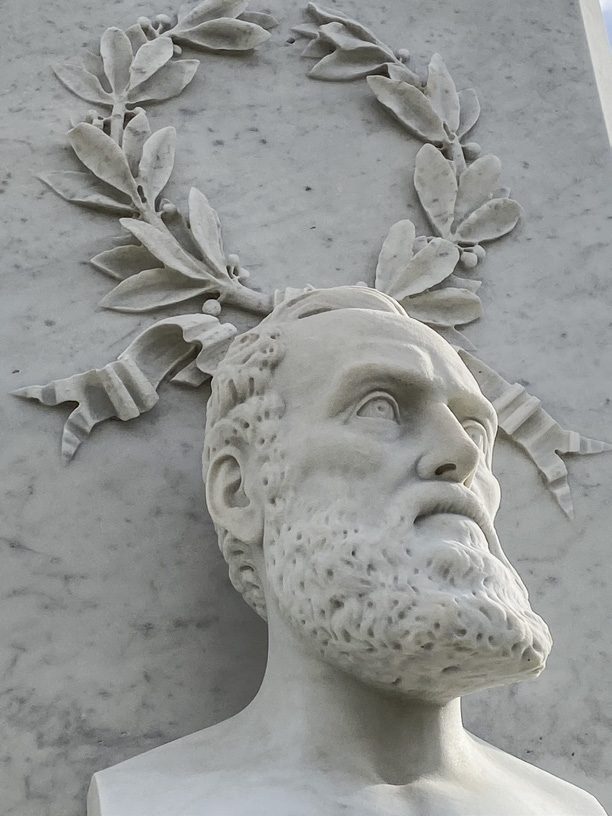
This all came to mind for me the weekend of Jackson’s 199th birthday. Also, I recently spent time in New Orleans tracking down a pair of Stonewall Jackson monuments in two of the city’s historic cemeteries. New Orleans, a place Jackson never visited, is the only location that still has two Jackson statues on display.
I have a fondness for Jackson because he was my gateway into the Civil War. When I first met him, I had my eyes clouded by magnolias and moonlight. In the two-plus decades since, I’ve come to appreciate what a truly human man he was, filled with inconsistencies, successes and failures, and crazy quirks (and not just the stereotypical lemon sucking). He had a mixed record as a commander, and the cause he fought for was deeply flawed, but he was unwavering in his affection to his family and his devotion to God and duty as he understood it, perhaps too rigidly at times, it seems to me.
There’s an old saying that you should never meet your heroes, and that would be true for me and Stonewall. He doesn’t strike me as someone I’d want to have a beer with, especially since he didn’t drink. But I’ve found a lot to admire about him and a lot to learn from him. I acknowledge his faults and imperfections and even embrace them with humor. Most importantly, there remains for me that sentimental attachment one has for all old friends, even after life has taken them on different roads.
That is what it means to me to be a Stonewall Jackson fanboy. — Chris Mackowski, Ph.D.
Editor-in-Chief, Emerging Civil War
Ninth Annual Emerging Civil War Symposium at Stevenson Ridge
If you’re thinking about attending the 2023 Emerging Civil War Symposium, don’t delay getting your tickets! We anticipate selling out by the spring.
This year’s Symposium will focus on “1863: The Great Task Before Us,” touching on a variety of military history topics in our programs and tours. Follow the Symposium Spotlight blog posts on Wednesdays as we announce the speaker panel and other exciting details. More details, and a link to order tickets, are on the website.
Join us on August 4-6, 2023, at Stevenson Ridge in Spotsylvania, Va., for an in-person weekend of history, discussion, and camaraderie!
ECW News & Notes
Sarah Kay Bierle enjoyed starting 2023 by hiking Second Manassas Battlefield on the 2nd day of January!
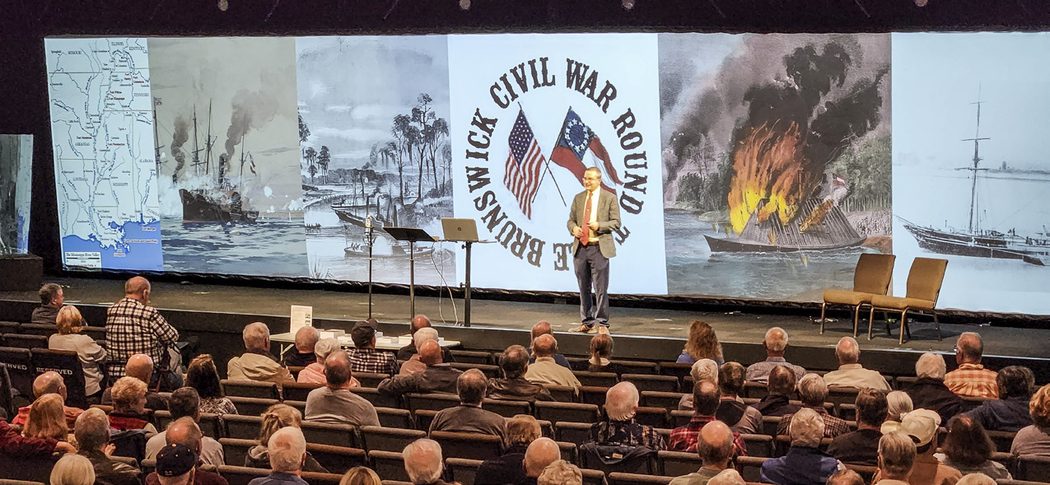
Neil Chatelain was busy over the winter break from classes with a Christmas trip to New Orleans to see family and do lots of research and writing. He had a blast speaking about his book Defending the Arteries of Rebellion at the Brunswick, N.C., Civil War Round Table on January 3. It was a wonderful group that had over 300 in attendance!
Stephen Davis’s new book is just out: I Thank the Lord I Am Not a Yankee: Selections from Fanny Andrews’s Wartime and Postwar Journals (Mercer University Press, 334 pages, $35 hardback). It’s a new edition of Andrews’ The War-time Journal of a Georgia Girl (1908) and her postwar diary (2002); rather, excerpts from both books, chosen by Steve as most expressive of her Confederate patriotism, Southern pride (even in defeat), and continued excoriation of Yankees.
Bert Dunkerly has been working with Appomattox Court House Historian Patrick Schroeder to edit Chris Calkins’ The Battles of Appomattox Station and Appomattox Court House (originally published in 1987). The book has been updated and has new maps and photos. Savas will be releasing it this spring.
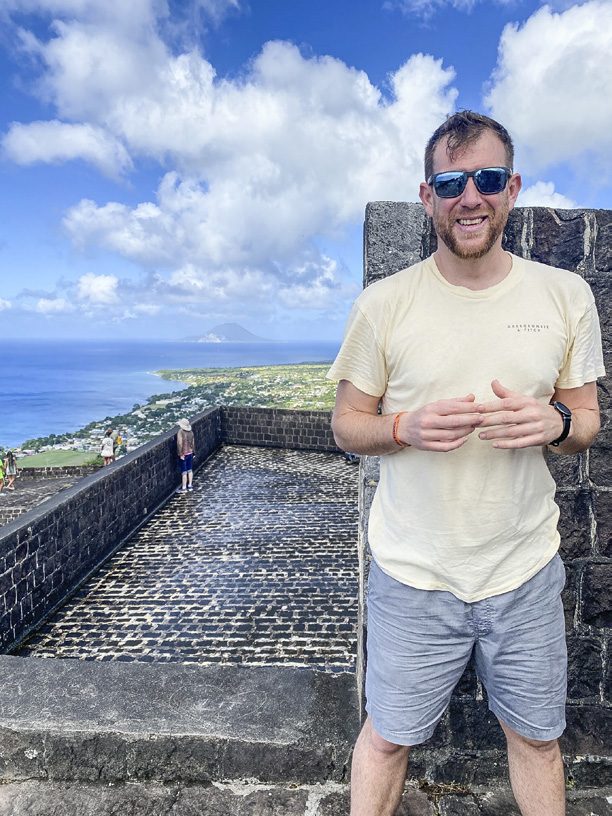
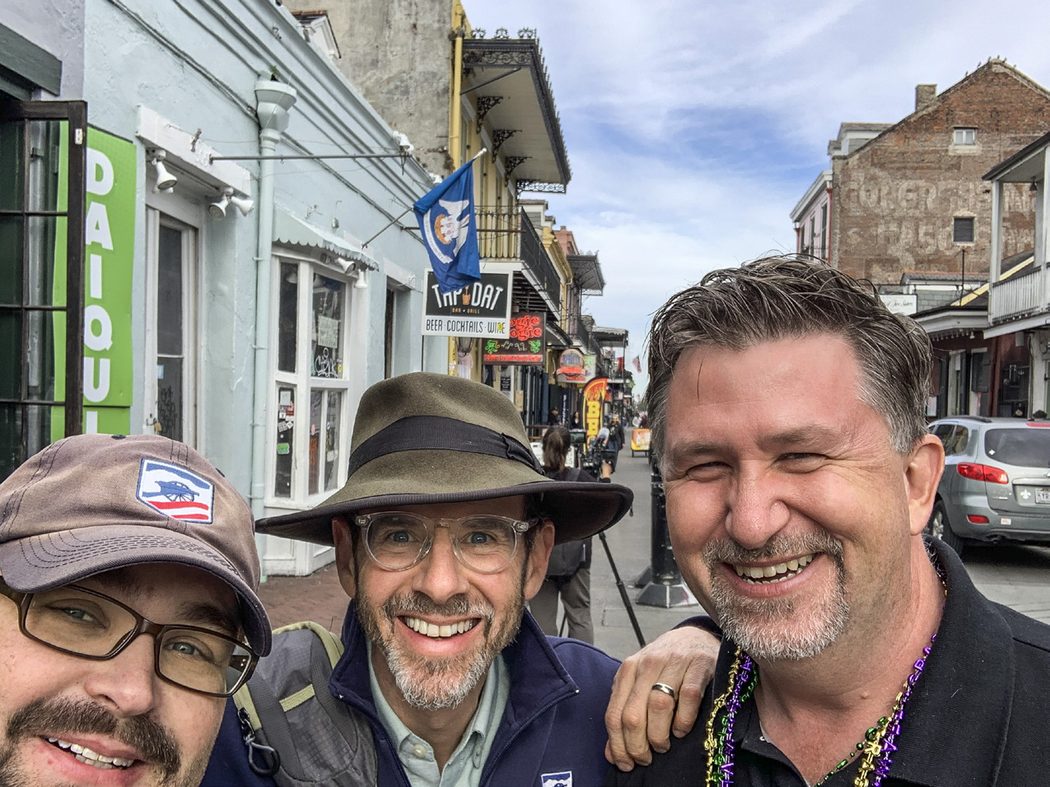
Phill Greenwalt writes from the Caribbean: “Off my right shoulder, where the cannon is Kris White, Garry Adelman, and Chris Mackowski made a cameo daytime appearance on Bourbon Street as part of a video project for the American Battlefield Trust.
pointing, is the island of St. Eustatius (Sint-Eustatius). On November 16, 1776, in response to the United States vessel Andrew Doria firing a salute, the governor of the Dutch island, Johannes de Graaff, ordered a reply salute fired by guns of the island’s defenses. This was the first salute given to an American vessel and flag following the Declaration of Independence signed that summer in Philadelphia. President Franklin D. Roosevelt presented a plaque to the island in 1939. Some cool American history in the warm Caribbean.”
Meg Groeling’s neighborhood has been hit hard by the heavy California rains. She says: “Still paddling.” Steward Henderson gave a Martin Luther King Day presentation at Jubilation in Fredericksburg, Va., on Monday evening: “African Americans in the Civil War: Predecessors to Dr. Martin Luther King Jr.” About 50 of their residents attended. Jubilation by the Silver Companies is a seniors’ luxury community. In February, he will present the “United States Colored Troops in the Overland Campaign” for the Chambersburg Civil War Seminars as part of a line-up that also includes ECW’s Dan Davis, Chris Mackowski, and Kris White, among others.
Pat Kelly-Fischer is looking forward to finally meeting some ECW folks in person in February, and taking advantage of being on the East Coast to visit the Monocacy and Antietam battlefields for the first time.
From Frank Jastrzembski and his work with Shrouded Veterans:
“Government-issued veteran headstones for Colonels George W. Gowen and John W. Kester recently arrived at St. Luke’s Episcopal Churchyard in Germantown, Penn. Gowen was killed at Petersburg, Va., in 1865. Kester died at the Friends Asylum in Philadelphia. Both markers will be installed this spring.
“Second, there’s an ongoing project to mark the grave of Brigadier General Jean Napoleon Zerman’s grave in Colma, Calif. His wife and grandfather will also be honored on the custom marker. You can read about Zerman’s fascinating life as a soldier of fortune and donate to this cause
Chris Kolakowski has appeared several times on the podcast Vanguard: Indo-Pacific, the official podcast of the Consortium of Indo-Pacific Researchers (most recently Episodes 10 & 11): https://anchor.fm/vanguardindo-pacific/episodes/Episode- 11-Lessons-from-World-War-IIin-the-Philippines-e1tdma9/aa95un6q.
Also, the Wisconsin Veterans Museum is partnering with the CWRT of Central Louisiana on a monthly series called Wisconsin Wednesdays, covering a variety of topics related to the Badger State in the Civil War. These happen on the 3rd Wednesday of each month. Check out the CWRT’s Facebook page for details: https://www.facebook.com/groups/245132430424589.
Chris Mackowski, Kris White, and Garry Adelman visited New Orleans in early January to film a virtual field trip for the American Battlefield Trust. Aimed at middle- and high-school students, the virtual field trip is intended to tell the city’s story through expert interviews and visits to its most famous and most historic sites. Kris is the project coordinator and Chris, the on-air host. The trip included a visit to Jackson Square, special access at the historic Cabildo, a walk through the French Quarter, a tromp across the Chalmette battlefield where the Battle of New Orleans took place, a riverboat cruise down the Mississippi, gumbo at the New Orleans School of Cooking, beignets at Café Du Monde, explorations of historic “cities of the dead,” live jazz, a behindthe-scenes visit to Confederate Memorial hall, and a tour the National World War II Museum. Because it’s a field trip for school students, Kris, Chris, and Garry confined their Bourbon Street visit to the daytime (pictured).
ECW Bookshelf
Hot off the press: Grant at 200: Reconsidering the Life and Legacy of Ulysses S. Grant, coedited by Chris Mackowski and Frank J. Scaturro, published by Savas Beatie.
Publishers/Authors Send your book(s) for review to:
“This is one of the coolest projects I’ve ever been able to work on,” Chris says. “It not only features essays by an A-list of Grant scholars, but we actually have contributions from all six living U.S. presidents.”
Grant at 200 celebrates the bicentennial of the birth of a man whose towering impact on American history has often been overshadowed and in many cases, ignored. This collection of essays by some of today’s leading Grant perspectives on Grant’s military career and presidency, as well as underexplored personal topics such as his faith and his family life.
With from all six living presidents, plus Chairman of the Joint Chiefs of Staff Gen. Mark A. Milley, former Secretary of Housing and Urban Development Jack Kemp, and former Secretary of State Colin Powell.
Proceeds from this volume will go to support the Ulysses S. Grant Association and the Grant Monument Association.
Charles W. Calhoun Ulysses Grant Dietz Alvin S. Felzenberg Curt Fields Gary W. Gallagher Ben Kemp Chris Mackowski John F. Marszalek Nicholas W. Sacco Frank J. Scaturro Ryan P. Semmes Timothy B. Smith Joan Waugh Ronald C. White Frank J. Williams
On the Emerging Civil War Podcast in January: •
The Podcast is available through Spotify, Apple Podcasts, and wherever available. You can also subscribe to our podcast through Patreon (https://www.patreon.com/ emergingcivilwar), are now also offering exclusive bonus content for subscribers. That’s just $3.99/month, and proceeds go toward defraying the production costs of the podcast.
In January, for Patreon-only content, we featured a talk Chris Mackowski gave at Grant Cottage about Ulysses S. Grant as a writer.
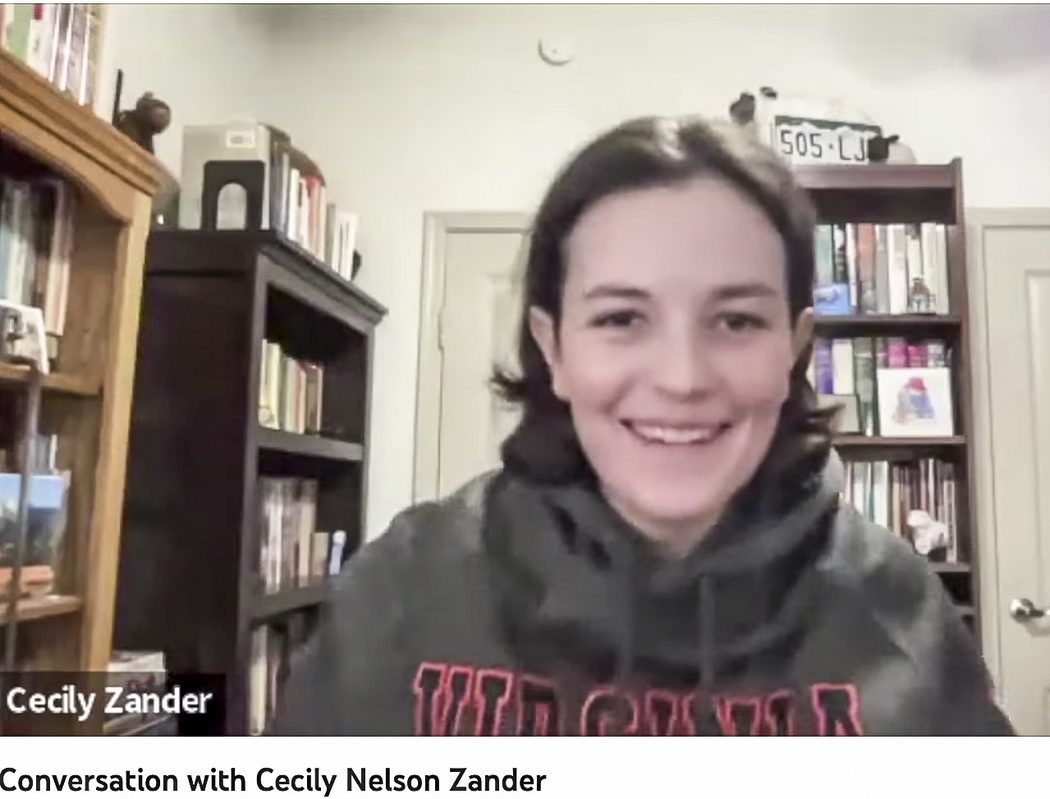
On the ECW YouTube page, we featured video versions of our discussions with Cecily Zander and Kris White. In addition: •
ECW Multimedia
Civil War Artillery Book 392 page, full-color book,
Civil War Artillery Projectiles
– The Half Shell Book.
talked about the impact of the Emancipation Proclamation on its 160th anniversary.
ECW’s new chief historian, Cecily Nelson Zander, shared her goals for her new position in a wideranging conversation that
$89.95 + $8 media mail for
also touched on the role of
the standard edition.
women in history and the value of public history for understanding the Civil War. Emerging Civil War
We visited Paducah, Kentucky, to discuss the death of hometown hero Col. Albert Thompson, killed just a few blocks from his own home.
We kicked off an ECW video swing around Mobile Bay.
Te Artilleryman is a quarterly magazine founded in 1979 for enthusiasts who collect and shoot cannons and mortars primarily from the Revolutionary War, Civil War to World War II.