The Stonewall Brigade at Chancellorsville
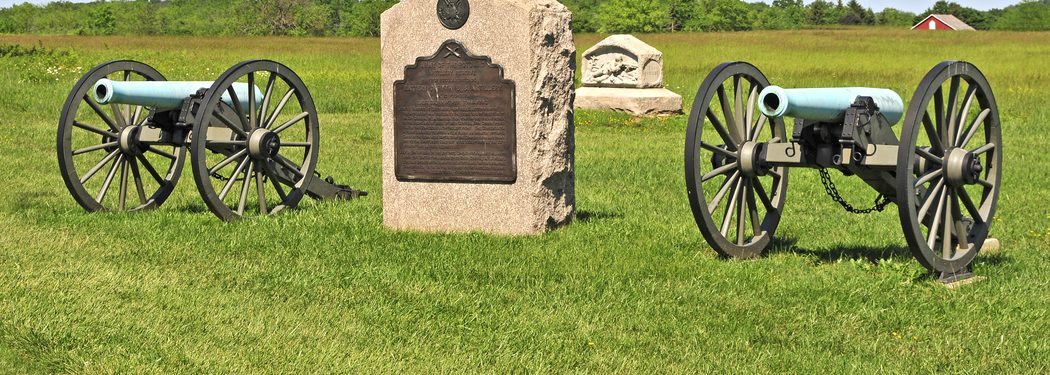
Central Virginia Battlefields Trust’s latest preservation campaign involves a two-acre property that witnessed retreating XI Corps soldiers conduct a fighting withdrawal across it, while Gen. Stonewall Jackson’s Confederates followed in close pursuit. This piece of land, designated as the “Stonewall Brigade III” tract, is contiguous with a 9.2-acre parcel saved in 2012, and near another 1.6-acre plot where the Stonewall Brigade bivouacked part of the night of May 2/3, 1863, preserved in 2016.
Although the Stonewall Brigade was part of the force comprising Jackson’s famous flank march, they were not engaged in the May 2 assault. Brig. Gen. Elisha Franklin Paxton received instructions that detached his regiments from their division and placed them under Gen. Fitzhugh Lee, who kept them positioned across the Orange Plank Road on the right flank of the attack force until the column moved forward. The Stonewall Brigade
Brig. Gen. Frank “Bull” Paxton served as commander of the Stonewall Brigade and fell leading his troops at Chancellorsville on May 3, 1863. (Public domain) eventually followed behind.
On the night of May 2, the Stonewall Brigade (2nd, 4th, 5th, 27th, and 33rd Virginia Infantry regiments), moved twice. Col. John Funk submitted his official report on May 6, and related that the Stonewall Brigade made camp at 11 p.m., and then two hours later moved again. Here, “the men worried and worn out by the rapid detour made that day and by want of rations, were permitted to rest for a few brief hours.”
At daybreak on May 3, increased picket firing alerted the Stonewall Brigade. After Gen. Henry Heth’s Division assaulted the entrenched Union line and were repulsed, the Stonewall Brigade, now part of the second Confederate battleline, along with Gen. Raleigh Colston’s Brigade and other units, attempted to take the position. Pvt. Ted Barclay, 4th Virginia Infantry, wrote home soon after the battle that, “We at first went on the left of the plank road, thinking the main body of the enemy were posted there, but soon we found out from pressure on our right that it was the enemy’s strongest point, so we had to cross the road covered by the enemy’s cannon.”
During the move, according to Col. Funk, the Stonewall Brigade encountered “a large number of men of whom fear had taken the most absolute possession. We endeavored to persuade them to go forward, but all we could say was of but little avail.” Apparently, these men were from Gen. Samuel McGowan’s South Carolina Brigade, as Lt. J.F.J. Caldwell mentioned in their brigade history that the Stonewall Brigade passed them, “some of them saying, with not pleasant levity, that they would show us how to clear away a Federal line.”
The Union troops the Stonewall Brigade now encountered behind a second line of improvised works were XII Corps soldiers under Brig. Gen. Thomas Ruger, who let loose a devastating volley. Paxton’s Virginians moved forward and returned the favor in kind and a furious firefight erupted. Col. Silas Colgrove of the 27th Indiana in Ruger’s Brigade wrote in his official report that, “I can safely say that I never witnessed on any other occasion so perfect a slaughter.” It was around this time that Gen. Paxton received a chest wound that killed him. Apparently, Paxton had expressed a premonition of death to one of his staff officers during the night before. In the dense smokey woods, a gap developed between the 2nd and 4th Virginia that Union reinforcements exploited, forcing the Stonewall Brigade to fall back to a previous line of works and reform. Pvt. Barclay explained that, “A piece of shell struck my knapsack, but was too spent to hurt me.”
Maj. Gen. Robert Rodes’ Division was the next to attack the Union position while the Stonewall Brigade served as part of their reinforcements. Gen. Stephen Ramseur’s Brigade charged the Federal works. After expending most of their ammunition, Gen. J. E. B. Stuart, now commanding in place of the wounded Jackson, ordered Col. Funk and the Stonewall Brigade to support Ramseur.
Col. Funk reported: “Seeing some confusion among the enemy who occupied the embrasures on the crest of the hill, I ordered the brigade to charge, which order they obeyed with the utmost enthusiasm, driving the enemy from his works and before them for three quarters of a mile. We took their works.” During the assault, Pvt. Barclay said, “We went over the breastworks with a yell which was answered by a shower of leaden hail.” He continued that, “I became almost unconscious of danger though men were falling thick and fast all around me.”
Forced out of their stronghold at a terrible price to both sides, the Federals fell back around the Chancellor House. According to Col. Funk, “Our ranks having been greatly reduced by the severe conflict of the day, onethird of [our] number having fallen, entirely out of ammunition and unsupported, the brigade was of necessity forced to retire, which they did like veterans.” Back behind the fieldworks, the Stonewall Brigade received
CVBT is currently campaigning to save two acres on the Chancellorsville battlefield where the Stonewall Brigade spent part of the night of May 2-3, 1863. (CVBT photo) rations and ammunition.
Pvt. Barclay, writing in another letter on May 12, explained, “Sunday night [May 3] we slept on the battlefield with the wounded and dead of both armies. Monday morning we moved in towards the enemy, who was now retreating toward the Rappahannock.” Maj. William Terry’s 4th Virginia moved north of Chancellorsville, filed into the woods and “slept on our arms by the main road east of Chancellorsville.” Lt. Col. Daniel Shriver, 27th Virginia, reported that, “On the morning of the 4th [of May], and during the whole of the day, we were employed in throwing up breastworks.”
Unconvinced by his subordinates that a coordinated offensive could secure victory, Gen. Hooker decided to retire across the Rappahannock River and abandon the once promising campaign.
According to historian Jeffrey Wert, Chancellorsville cost the Stonewall Brigade “55 killed, 430 wounded, and 9 missing, an even higher proportion than for [Lee’s] army as a whole.” The 5th Virginia’s commander, Lt. Col. Hazael Williams noted in his official report, “Never did our brave men behave with more gallantry, coolness, and deliberation than on this occasion.”
The mission of CVBT is to preserve land associated with the four major campaigns of: Fredericksburg, Chancellorsville, Mine Run, and the Overland Campaign, including the Wilderness, and Spotsylvania Court House. To learn more about this grassroots preservation non-profit, which has saved over 1,700 acres of hallowed ground, please visit: www.cvbt.org.
February 2023
THE fourth year of the war was also the year for the election of a President of the United States, and it would have been strange if an event of so much importance had not in some measure shaped the conduct of the campaigns of that year. If any one of the Southern States could he brought so effectually under the control of the Union army as to give plausible pretext to any considerable portion of the inhabitants, white and black, to form a quasi State government recognizing the authority of the United States, it would not only be received as an earnest of the success of the Union arms, but the State could be represented in the approaching convention for the nomination of a candidate for President, and take part in the election to follow.
Florida appeared to offer better prospect of success in such an undertaking than any other Southern State. Its great extent
of coast and its intersection by a broad and deep river, navigable by vessels of war, exposed a great part of the State to the control of the Union forces whenever it should be thought desirable to occupy it. The exigencies of the Confederate service had in a great measure stripped Florida of troops. If a column of Union troops could penetrate the country westward from Jacksonville, occupy a point in the interior, and break up communication between east, middle, and west Florida by the destruction of the railroad and bridges about the Suwanee River, the Southern Confederacy would not only be deprived of a large quantity of the food drawn from east and south Florida, but a point d’appui would be established for any of the inhabitants who might be disposed to attempt the organization of a State acknowledging allegiance to the United States.
President Lincoln’s views on By Samuel Jones Major-General C.S.A. Reprinted from an article written by Gen. Samuel Jones and Gen. Joseph R. Hawley in Battles and Leaders of the Civil War, Vol. 4, 1888, pp. 76-80. the subject are expressed in the following letter: “Executive Mansion, Washington, January 13th, 1864.
“ M A J O R - G E N E R A L GILLMORE:
“I understand an effort is being made by some worthy gentlemen to reconstruct a loyal State government in Florida. Florida is in your department, and it is not unlikely that you may be there in person. I have given Mr. Hay a commission of major, and sent him to you with some blank-books and other blanks to aid in the reconstruction. He will explain as to the manner of using the blanks, and also my general views on the subject. It is desirable for all to cooperate; but if irreconcilable differences of opinion shall arise, you are master. I wish the thing done in the most speedy way possible, so that when done it will be within the range of the late proclamation on the subject. The detail labor of course will have to be done by others; but I shall be greatly obliged if you will give it such general supervision as you can find convenient with your more strictly military duties. Yours very truly, “A. Lincoln.”
Promoters of Quality Shows for Shooters, Collectors, Civil War and Militaria Enthusiasts Chickamauga (Dalton) Chickamauga (Dalton) Civil War Show Civil War Show
February 4 & 5, 2023
Under these instructions General Gillmore, on the 5th of February, ordered General Truman
Seymour to proceed with a division of troops from Hilton Head to Jacksonville, Florida. Admiral Dahlgren, who seems to have been always ready to cooperate with the land forces, sailed with the expedition with a squadron of five gun-boats, and was in readiness, if needed, to cover the landing. No opposition was met with, however, and on the 7th General Seymour’s force of about seven thousand men landed at Jacksonville.
The objects of the expedition as reported by General Gillmore to the general-in-chief (who did not approve it) were: First. To procure an outlet for cotton, lumber, timber, etc. Second. To cut off one source of the enemy’s commissary stores. Third. To obtain recruits for the negro regiments. Fourth. “To inaugurate measures for the speedy restoration of Florida to her allegiance,” etc.
It was known that the few Confederate troops in east Florida were widely scattered, and no opposition was anticipated until reenforcements could arrive. Celerity of movement was therefore important. General
Middle TN (Franklin) Middle TN (Franklin) Civil War Show Civil War Show
December 2 & 3, 2023
Seymour promptly marched inland,—Colonel McCormick, commanding a picket at McGirt’s Creek, retiring,— captured five fieldpieces which the Confederates could not move for want of horses, and reached Baldwin, twenty miles from Jacksonville, February 9th, where he was joined by General Gillmore. Colonel Guy V. Henry, commanding a small brigade of cavalry and mounted infantry, marched westward, encountered a picket of about 150 men at the crossing of the south fork of the St. Mary’s River, which, with the loss of twenty-five of his men, killed and wounded, and without loss to the Confederates, he dislodged, and proceeded to within three miles of Lake City, when he was recalled, and on the 11th joined the main body, which had reached Barber’s plantation on the south fork of the St. Mary’s. Here the command was delayed for the lack of transportation. The railroad had been relied on for transportation, but there was only one engine on the road, and that in such wretched condition that it could not be used within several days, if at all.
From Baldwin General Gillmore returned to Jacksonville, and on the 13th to Hilton Head, whence he issued a proclamation announcing his occupancy of