April 2023
of cloth is manufactured weekly, and about 450 blankets. The latter, of which large numbers have already been furnished to the army, are quite equal to the English army blanket, many of which are made of shoddy, and superior to those of the Yankees.”
The article goes to say that about 130 workers were employed at the Crenshaw Woolen Company, 25 of whom were female, who earned wages of about $7.50 a week. “Several children” as young as 10 to 12 years were also employed “in the light and simple labor of filling shuttles.”. The male employees were principally foreigners relocated to Richmond “from the English, Irish, and German factories.” Their labors are superintended by experienced “overseers from England.” At a glance it is clear
the blockade of Southern ports was already causing shortages, in this instance, logwood dye, necessary to produce cloth for army blankets and uniforms; more alarming, the factory’s workforce was not comprised of local men, an early indicator of labor shortages to come. The workforce available in Richmond during late 1861 was already limited to women, children, and foreigners. Hence, for the home front, the war’s most dramatic and immediate effect could be summarized as the shortage of men. It was estimated that women had to use substitutes for 75% of their household goods and scarcity quickly became a fact of life. The inevitable result to the economy of severe shortages and continued printing of paper money was runaway inflation in the cities.
The war also tested the strength of the rural Southern Appalachian economy, producing scarcity and contributing to serious setbacks in agricultural production by 1862. While many rural Southerners had been subsistence farmers, these were also businesses involved in the local exchange of goods and services, in other words, a barter economy not fully dependent on currency. Local citizens traded with merchants and drew on the specialized skills of millers, tanners, and blacksmiths. Many rural communities were moreor-less self-sufficient on a subsistence level. As the war progressed, however, rural civilians also dealt with scarcity and hyperinflation. Local citizens became increasingly bitter as farmers and merchants drained the local food supply to seek high prices elsewhere and were paid in currency, a thing largely unknown previously in the rural Appalachian mountain region. Yet even as the war brought economic chaos, it also, paradoxically, revealed how thoroughly Southern Appalachia could rely on trade networks between different regions to survive. As the war dragged on, the two armies themselves foraged local food supplies down to levels that were not selfsustaining for some local areas. Continued habitation in some of these localities could not be maintained after mid-1863.
Still, after mid-1863 the war and the Southern Confederacy continued for nearly another two years. History has somewhat slighted the role of Southern nationalism, or at least the extent to which Confederate civilians desired a life free from the political machinations of their Northern neighbors. Historians generally work backwards from Appomattox for their explanations. Others resign themselves to the national obsession with Confederate military success in the Eastern Theater and the genius of Confederate Generals Robert E. Lee and Thomas J. Jackson, and others, while being less impressed with the Western Theater’s military leaders. It is important to note the style and substance of Confederate military strategy sprang from the expectations and
will of the Confederate Home Front.
Gary M. Gallagher, noted in The Confederate War (Harvard Press, 1999) that Confederate civilians accepted the shortcomings of their political leaders and made sacrifices for a shared vision of their own homeland. This story is a seldom told part of American history that has not been adequately recognized or appreciated. The facts of U.S. Civil War history and the effects on the Confederate home front are not always politically correct, but it is a part of American history none-the-less.
Craig L. Barry was born in Charlottesville, Va. He holds his BA and Masters degrees from UNC (Charlotte). Craig served The Watchdog Civil War Quarterly as Associate Editor and Editor from 2003–2017. The Watchdog published books and columns on 19th-century material and donated all funds from publications to battlefield preservation. He is the author of several books including The Civil War Musket: A Handbook for Historical Accuracy (2006, 2011), The Unfinished Fight: Essays on Confederate Material Culture Vol. I and II (2012, 2013). He has also published four books in the Suppliers to the Confederacy series on English Arms & Accoutrements, Quartermaster stores and other European imports.
The Vermont Brigade at the Wilderness
Few brigades, Confederate, numbers of encountered the trying situations that the Vermont suffered while fighting on the battlefields that Virginia Battlefields Trust works to preserve.
Green Mountain State men fought at Fredericksburg December 1862, and at Second Fredericksburg Chancellorsville In the late fall of 1863, they participated in the Mine Run Campaign. At Court House, the First Vermont Brigade, as they were sometimes known, had three regiments that participated in Col. Emory Upton’s May 10, 1864, attack on the Mule Shoe, and then battled again on May 12 and 18. Above all those engagements, it was the Vermont Brigade’s participation in the Battle of the Wilderness that stands out as probably their most difficult test.
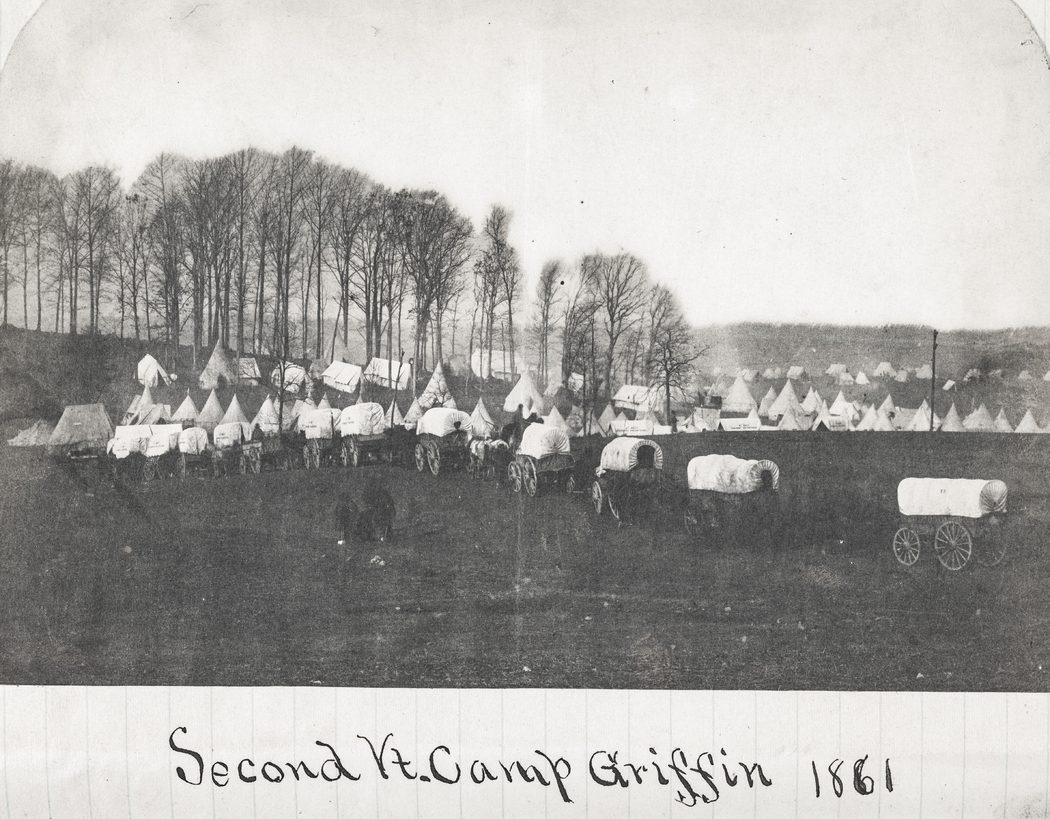
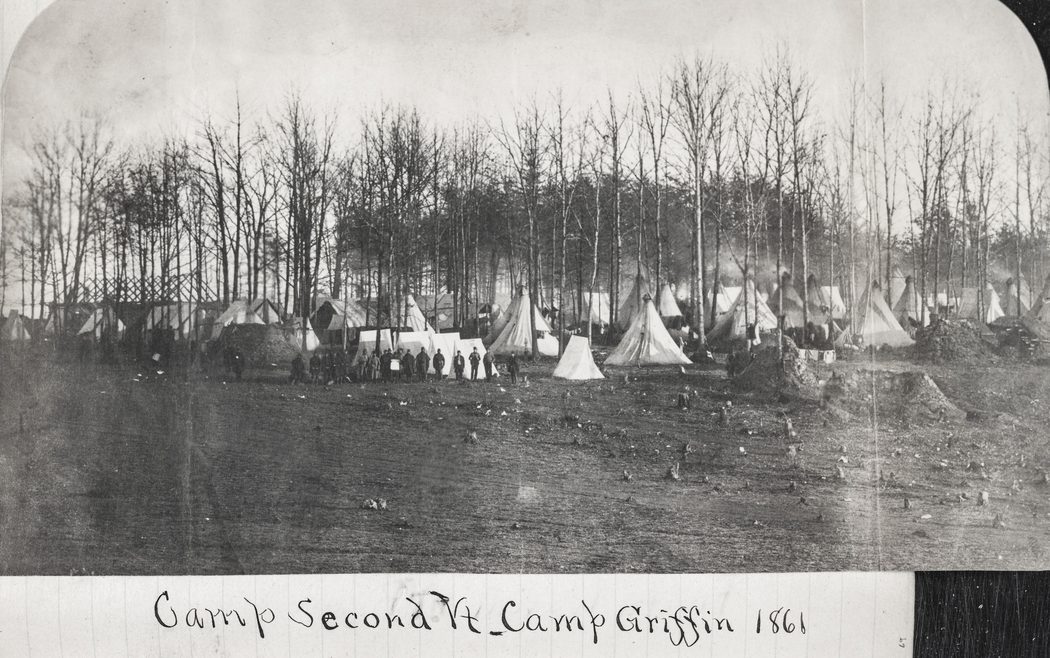
The Vermont Brigade formed in fall of 1861, under the charge of native son, William F. “Baldy” Smith. For the majority of the war the respected unit consisted of the 2nd, 3rd, 4th, 5th, and 6th Vermont Infantry regiments. For a time in 1862 and 1863, the orphaned 26th New Jersey fought with the Vermonters, but by the summer of 1863, it was back to an all Vermont brigade. The 1st Vermont Heavy Artillery joined the unit as infantrymen during the fighting at Spotsylvania Court House and stayed with it through the end of the war.
By the time of the Battle of the Wilderness, the Vermont Brigade had already earned a reputation for combat toughness on the march. Their grit came partly through solid leadership and desperate trials by fire at Williamsburg, and then during the Peninsula Campaign, especially at Savage’s Station in the Seven Days’ Battles. Largely unengaged at Antietam and held in reserve at Gettysburg, they fortunately missed the worse of those two monumental clashes. In August 1863, they were
Union sustained casualties
and among the troops ordered to New York City to guard against, and suppress, the draft riots.
After several months spent in their Culpeper County winter quarters, all was hustle and bustle
on May 4, 1864, as the Vermont Brigade broke camp and headed off on another campaign, this time under a new overall commander, Lt. General Ulysses S. Grant.
Detached from the Sixth Corps, the Vermont Brigade and the other two brigades from Maj. Gen. George Washington Getty’s Division, stopped briefly at Wilderness Tavern, but received orders to quickly move forward to the intersection of Orange Plank Road and Brock Road. There the Vermonters saw Confederate infantry brigades moving in their direction and pushing the Federal cavalry. Fighting in the