April 2022
On February 22, shortly before reaching Chesterfield County, 18 Union soldiers were found dead with a sign stating “Death to all foragers” left on their bodies. This action prompted General William T. Sherman to send letters to Union Major-General Howard and Confederate General Wade Hampton.
On Feb. 28, 1865, at • Pageland, South Carolina (near the North Carolina line) a Union soldier, Pvt. Robert Woodruff, 30th • Illinois, was found dead, his skull brutally bashed in; Federals assumed that Woodruff had been foraging and was killed by Rebels; Union officers gathered a group of Confederate prisoners and had them draw lots; James M. Miller, 3rd Battalion, South Carolina Reserves, drew the death warrant; Miller was given an hour to make his peace.; perhaps he penned a letter to his family (at age 48, he was married and father of nine); his only request was that he not be shot in the face; and before the fatal volley, as observed by one Federal, Miller, “stood like a man, a soldier, and a Christian.”
Dr. Robertson took his tale all the way to Five Forks Cemetery near Kershaw, South Carolina, where a grave marker reads:
2. Lucas, Sherman and the
3. Sherman to Hampton, Feb.
6. Hirshson, White Tecumseh, 7. Edward
8. James I. Robertson, Jr., “The
Stephen Davis of Cumming, Georgia, is author of seven books related to the Atlanta Campaign, including the Emerging Civil War paperbacks A Long and Bloody Task (2016) and All the Fighting They Want (2017). His two recent volumes on John Bell Hood (Mercer University Press, 2019, 2020) have won the Fletcher Pratt Award of the New York CWRT, the Richard Barksdale Harwell Award of the Atlanta CWRT, and the Douglas Southall Freeman Award of the Military Order of the Stars and Bars. His latest book, with Bill Hendrick, The Atlanta Daily Intelligencer Covers the Civil War, will be released this summer by the University of Tennessee Press. P. Hirshson, The White Tecumseh: A Biography of William T. Sherman (New York: John Wiley & Sons, 1997), 277; Nathaniel Cheairs Hughes, General William J. Jr., Hardee: Old Reliable (Baton Rouge: Louisiana State University Press, 1965), 273; Marion Brunson Lucas, Sherman and the Burning of Columbia (College Station: Texas A & M University Press, 1976), 42; Burke Sherman’s March Davis, (New York: Random House, 1980), 149.
Burning of Columbia, 64, 67, 76, 128.
24, 1865, OR, vol. 47, pt. 2, 546.
to Sherman, February 27, OR, vol. 47, pt. 2, 596-97.
Wade Wellman, Giant in Gray: A Biography of Wade Hampton of South Carolina (New York: Charles Scribner’s Sons, 1949), 170. 276.
G. Longacre, Gentleman and Soldier: A Biography of Wade Hampton III (Nashville: Rutledge Hill Press, 2003), 230.
War in Words,” Civil War Times Illustrated, vol. 17, no. 5 (August 1978), 16; and in vol. 18, no. 6 (October 1979), 14.
Sherman’s Troops Sack Columbia
“...General good order and quiet attended the entry, but, as the troops were halted for several hours in Main-street, stores and dwellings soon became objects of much attention, and the work of plunder commenced. From this time until the last Yankee left town, person nor property were safe from the impolite intrusions upon their welfare. Stragglers, “bummers,” pontoon men, and the riffraff of the army, were to be met in every street and almost every house. If they wanted a pair of boots they took, them from your fee. Watches were in constant demand -- in several instances being snatched from the persons of the best ladies in the city. Gentlemen on the street quickly learned to appreciate the old phrase “tempus fugit.” Our cashier, the well-known Notary Public, P.S. JACOBS, Esq., was one of the pupils. He is said to have received two lessons; price -- a watch each. Ear and finger rings were taken by force, and, in isolated cases, the dresses of ladies were torn from their bodies by villians [sic], who expected to find jewels or plate concealed. Search for silver and provisions was made in every conceivable place. Ramrods were used as probes to indicate where boxes were buried, and gardens, outhouses, cellars, garrets, chimneys and nooks never thought of by anybody but a thief in search of plunder, were turned, so to speak, inside out. In one instance it is reported that a box of valuables worth a large amount was found under a door step. We learn that the estimate of this character of property stolen is about two millions of dollars. Many of the robbers who perpetrated personal violence were intoxicated by liquor found in the city. Rev. Mr. SHAND, the Episcopalian clergyman, while conveying a trunk containing the communion service of silver from the church to the South Carolina College, was accosted by a Yankee and a negro, who compelled him, under a threat of death, to give it up, which was done. While one of the cups was afterward being used for drinking whisky, a Federal soldier (an Irishman) recognized the sign of the cross upon it, took it from the fellow and carried it to Rev. Dr. O’CONNELL, the Catholic clergyman, by whom it was restored to the owner. This description of pillage continued until the troops left.
In the afternoon, the column which had occupied Main-street, moved into quarters in the various public grounds and vacant lots. No fires occured [sic] on Thursday, save such as were ignited by our own officials. The first alarm on Friday was given soon after the entry or the enemy, and proceeded from the burning of a row of cotton on Main street, between Washington and Lady streets. In fifteen or twenty minutes afterward, the jail, which had be [???] d as a Confederate prison, was set on fire. The bells rang, the engines promptly rallied, and proceeded as usual to their work, which was uninterrupted, except by drunken soldiers, who here and there cut the hose with their pocket knives; but all efforts to stay the flames were unavailing. Among the prisoners released were MORRIS, who murdered HICKS, several men confined on the charge of counterfeiting, and, it is said, a Federal prisoner. Why he was not removed with his comrades does not appear. It is reported that he subsequently married a lady in Columbia.” – Daily South Carolinian March 19, 1865.
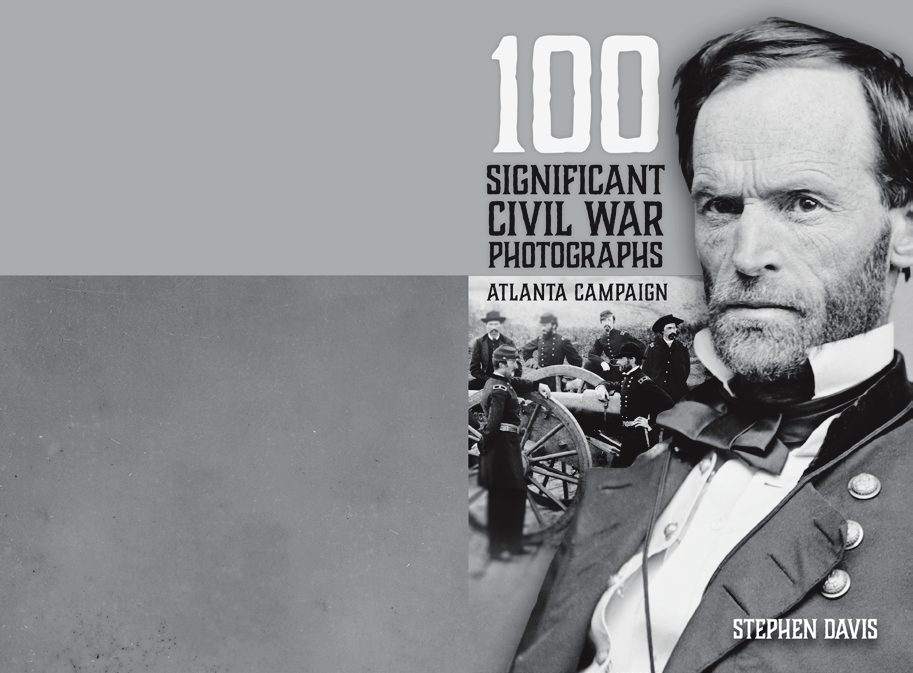
100 Significant Civil War Photographs: Atlanta Campaign presents a riveting collection of George Barnard’s camera work. Most of the photographs are from Barnard’s time in Atlanta, mid-September to mid-November 1864, during the Federal occupation of the city.
With this volume, Stephen Davis advances the scholarly literature of Barnardiana.
Women’s History Month at Weston Manor
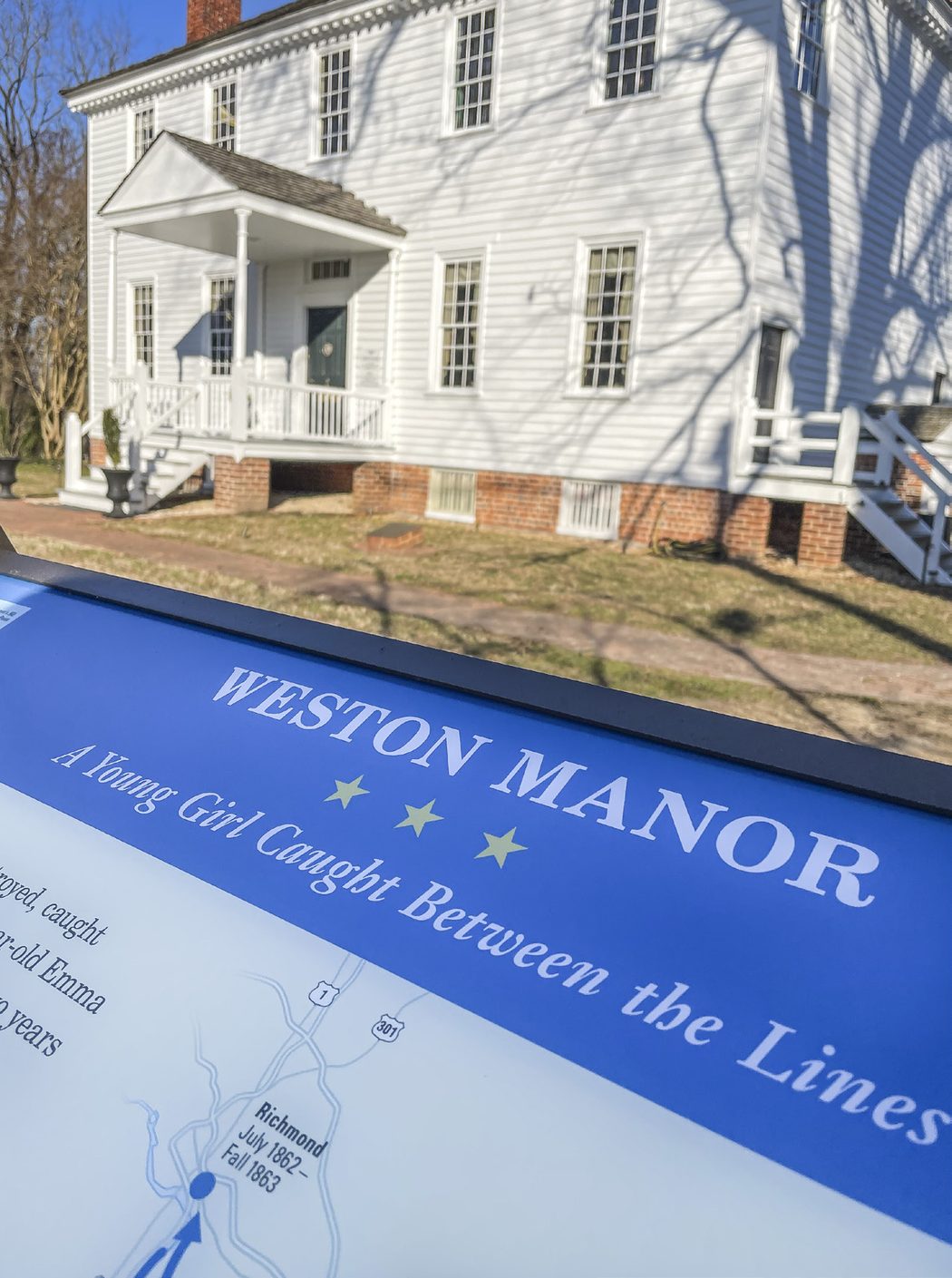
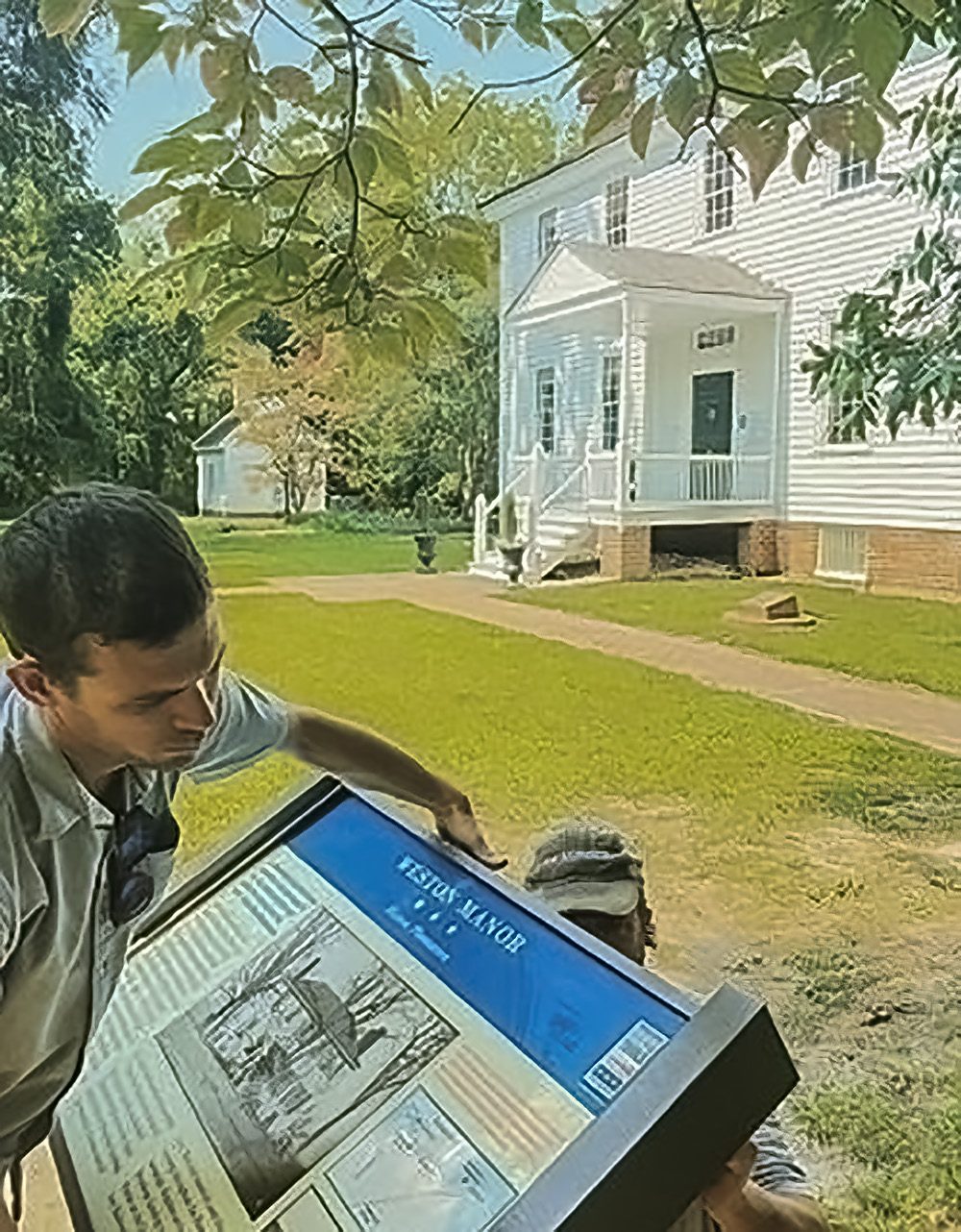
Civil War Trails, Inc. has teamed up with the Historic Hopewell Foundation, Inc., and the City of Hopewell, Va., to launch a new Civil War Trails sign at Weston Manor. The new story recounts the heart-wrenching experiences of twelve-year-old Emma Wood and her family. The sign was installed last month in advance of Women’s History Month beginning March 1, 2022.
Hopewell offers five Civil War Trails sites, including Weston Manor. These sites are networked with over 500 others in Virginia and over 1,400 across six states. The Civil War Trails program encourages visitors to stand in the footsteps of history, exploring each unique landscape and story through the eyes of those who were there; Weston’s new sign is a great example of this approach to storytelling.
The new sign was researched and originally written by Historic Hopewell Foundation (HHF) board members Robin Somers-Strom and Daniel Jones. “Through our research and interpretive narratives, we at HHF strive to personalize the diverse lives and rich experiences of Emma, and all who lived and worked to sustain life at Weston Manor, including the enslaved,” said Robin. The proposed new sign then went through a rigorous review process to ensure it resonated with a variety of audiences.
The sign is the first of several updates being planned for the Civil War Trails sites in the Hopewell-Prince George region. The work is made possible by the participation of the City of Hopewell that sponsors each site, allows for product updates, maintenance, and the collaborative marketing efforts. “Our program is unique in that the signs are always being updated, offering something new for travelers.” said Drew Gruber, Executive Director of Civil War Trails, Inc. “Stories like Emma’s are relatable to many, especially families who have been forced to move and adjust to difficult circumstances.”
Each Civil War Trails site is marketed internationally by state tourism regional destination marketing organizations, and municipal partners. This means educational product of a much larger economic development mission. “We see self-guided outdoor tours like Civil War Trails as very important to tourism in our region…” said, Becky McDonough, CEO of the Hopewell-Prince Chamber. “Civil War Trails has helped us update the stories which are now found in places of historic context and economic return.”
Civil War Trails® has been working with communities since 1994 to share their stories and connect visitors with small towns and big stories across a network that now spans six
states. Travelers look to Trails to put them in the footsteps of the generals, soldiers, citizens, and the enslaved who found themselves in the midst of this Civil War.
From the Editor
I was pleased to open the March 2022 issue of Civil War News to see a review by Joe Truglio of our ECW 10th Anniversary book The Summer of ’63: Vicksburg and Tullahoma. “I found this book full of valuable information on the battle and also valued the opinions of authors I admire and respect,” Joe said.
We admire and respect Joe. As a member of the Robert E. Lee Civil War Roundtable and former president of the Phil Kearney Civil War Roundtable, both in New Jersey, Joe has been a stalwart friend to ECW since our very earliest days. When I
did a talk for the Colonel Henry Ryerson Civil War Round Table in northern New Jersey, Joe made the trek up to see me. He had commented so frequently on our blog posts that, when he introduced himself, I recognized his name immediately.
That encounter made Joe the first ECW reader I ever met in person, a distinction I still look back on with great fondness and nostalgia and I’m pleased to call him my friend to this day. In fact, the symposium wouldn’t be the symposium without Joe, and his pals Hank and Chris, bunking up in the Civil War House and spending the weekend with us.
A few days before I saw Joe’s kind review in the paper, I got word from the Civil War Roundtable Congress about another friend, Wally Rueckel. The Congress established a pair of awards, one of which honors a CWRT that exhibits innovation: The Wally Rueckel Innovation Award. Wally is a founding member of the Congress and a founder of the Brunswick CWRT in Southport, North Carolina, the largest CWRT in the world with more than 1,300 members. “Talk about innovation, and Wally and his namesake award should quickly come to mind,” said Congress President Mike Movius, himself a good friend of ECW’s. Wally’s another guy I’ve known a long time. He has worked hard to network the CWRTs of North Carolina, and his energy has been matched only by his friendliness.
The Congress also established the Dr. John Bamberl Phoenix
Award for re-invigorating a “dark” CWRT. John’s another absolutely swell guy.
When Joe referenced “authors I admire and respect,” we would be remiss if we didn’t say the feeling was mutual. ECW enjoys the success it enjoys today because of the many warm and wonderful personal relationships so many of us have developed over the years with folks like Joe and Wally, and John and Mike, Hank and Chris, and YOU. We are deeply grateful for your support and friendship. Please know that we admire and respect you.
In gratitude, — Chris Mackowski, Ph.D.
Eighth Annual Emerging Civil War Symposium at Stevenson Ridge
What if ECW had a symposium inspired by its latest book, Great “What Ifs” of the American Civil War? And what if that symposium included keynote speaker Garry Adelman talking about the great “what ifs” of Gettysburg? What if other Civil War rock stars like Gordon Rhea and Brian Matthew Jordan were on the docket, not to mention ten other ECW all-stars?
Find out the answers to these and other compelling Civil War What-Ifs August 5-7, 2022, at the Eighth Annual Emerging Civil War Symposium at Stevenson Ridge, held in Spotsylvania, Va. Tickets are $225 each, available here: https://emergingcivilwar.com/2022-symposium/.
News and Notes
Sarah Kay Bierle recently made a short trip to the Carolinas! She enjoyed hiking at Bentonville Battlefield.
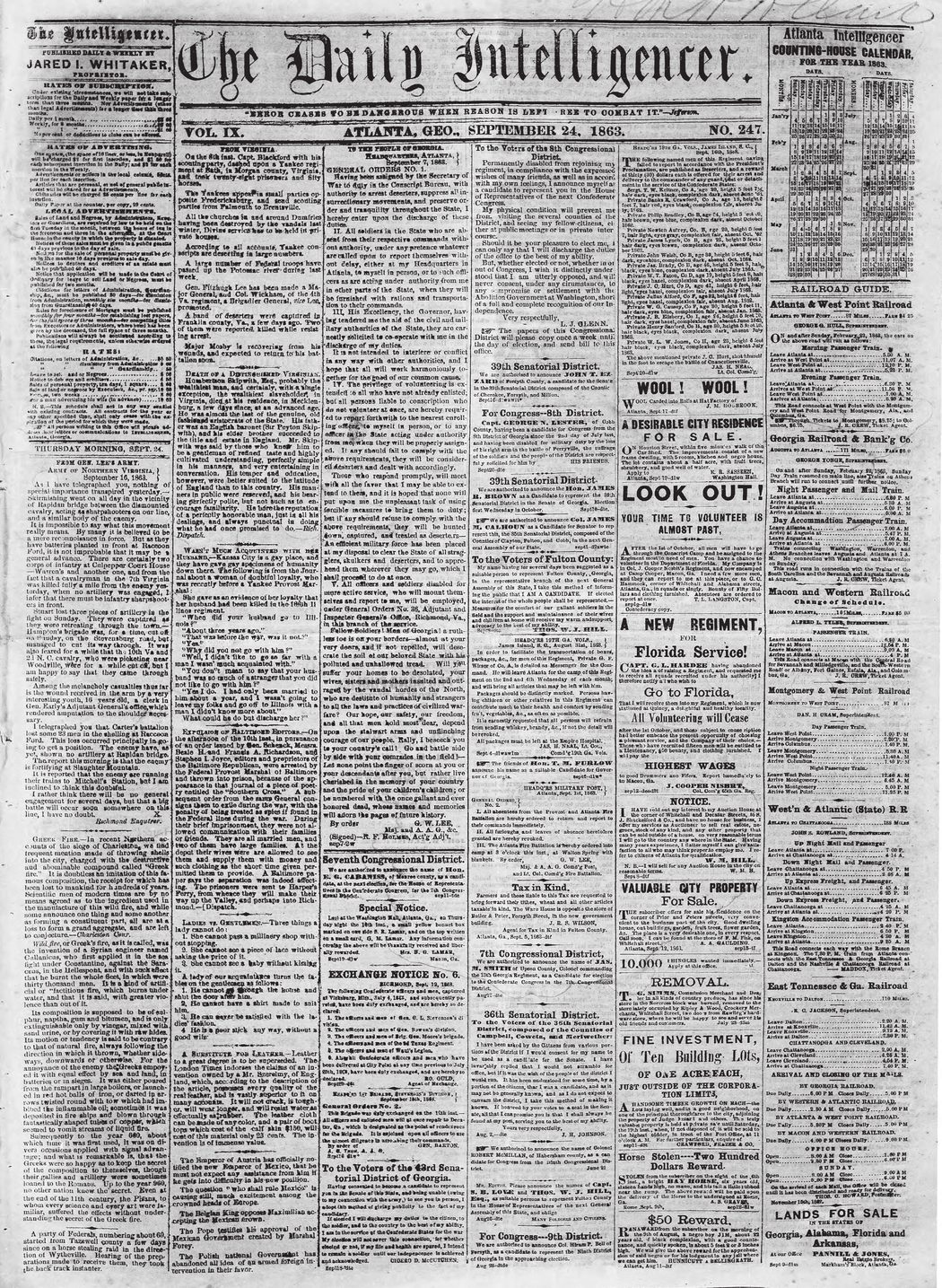
Stephen Davis, ECW’s book review editor, has returned to Jack Melton’s Civil War News as a contributing columnist. His monthly “Critic’s Corner” in the CWN March issue spotlighted Thomas Cooper DeLeon’s Four Years in Rebel Capitals (1890).
Bert Dunkerly spent a few days touring sites in Charleston, Savannah, and the low country. He did not see alligators but did find beer.
Dwight Hughes received another great review for his new ECW Series book Unlike Anything That Ever Floated: The Monitor and Virginia and the Battle of Hampton Roads, March 8-9, 1862, in the Winter issue of Civil War Navy magazine: “Unlike Anything That Ever Floated is an excellent read. There is something for everyone here and even if well acquainted with the battle you will find something new. It is highly recommended.”
Chris Kolakowski has joined the Consortium of Indo-Pacific Researchers as a lead for their military history efforts. The Consortium is a volunteer
Chris Mackowski spoke on “Abraham Lincoln as a Writer” to the Fredericksburg, Va., chapter of the Sons of Union Veterans on Lincoln’s birthday, February 12.
On Saturday, February 20, three folks with ECW ties spoke Civil War Seminar’s one-day online “Leaders and Leadership” conference, organized by ECW alum Eric Wittenberg: •
(Here’s a shout-out to our friend Gordon Rhea, who spoke about Jeb Stuart.)
Emerging Civil War had our annual retreat over Presidents Day weekend. This year, we converged on Gettysburg for a couple days of beers, and camaraderie. Fourteen of us gathered in person for the full weekend, with several others Zooming in for the day on Saturday. We thought we’d share pictures of some of the fun on pp. 30-31.
Emerging Civil War
From the ECW YouTube page:
In February, for Black History
Chris Mackowski on “Stonewall Jackson’s Arresting Leadership Style” Dave Powell on “William S. Rosecrans and the Spirit of Innovation in 1863”
Dr. Zachery Fry: “Martinets and McClellanites: Regulars, Volunteers, and Leadership Challenges in the Union Army”
The 2022 ECW Retreat
workshops, battlefielding,