-- --- .-.. / --- -. / .--- .-.-.- -.-. .-.-.- / ...- .- -. / -.. ..- --... .-. More on J.C. Van Duzer
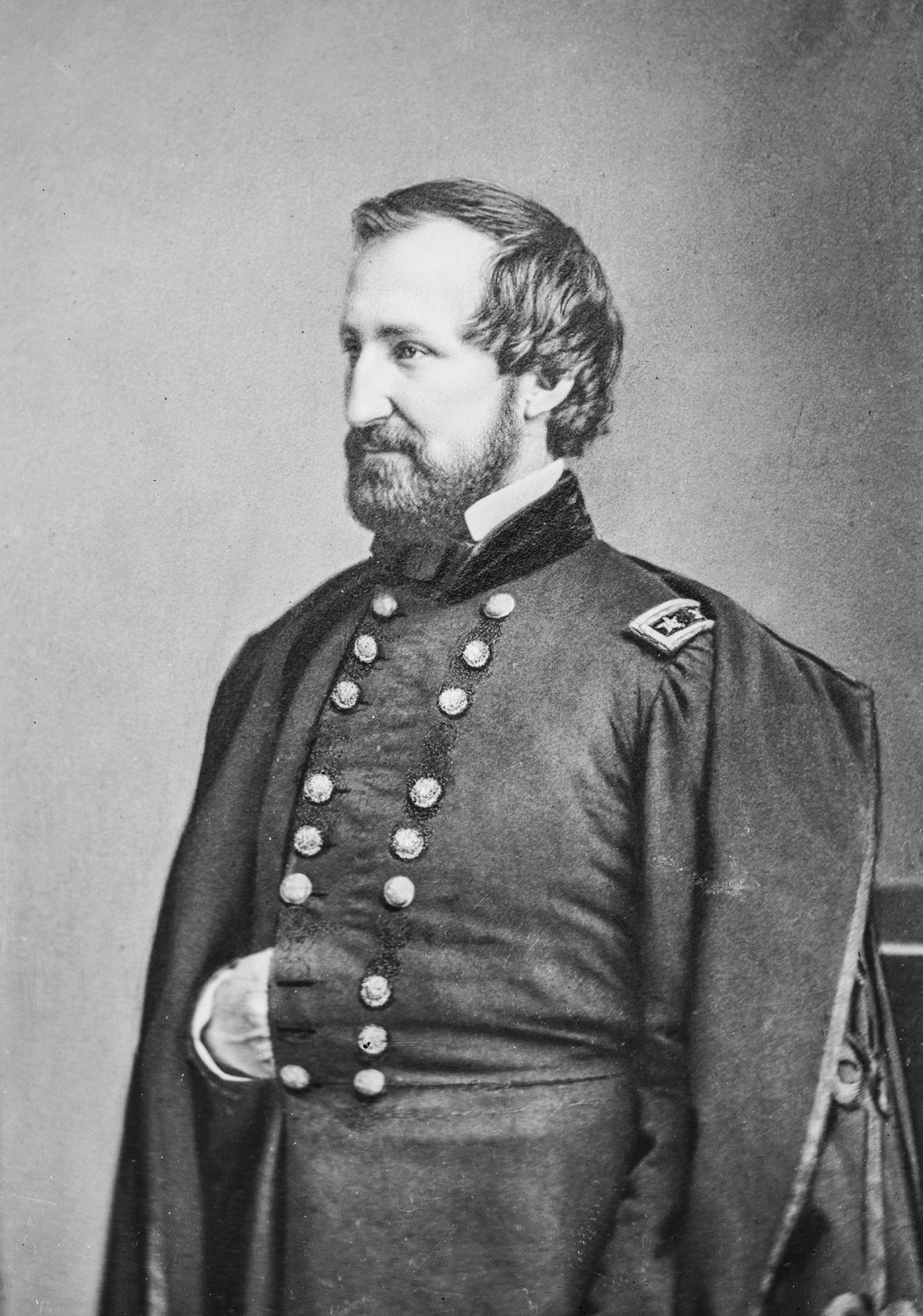
Last month’s column told the story of J.C. Van Duzer, the telegraph superintendent who got crosswise with Grant during the Mississippi Central Campaign in November 1862. This month we follow Van Duzer, still with the United States Military Telegraph, but now working in the Army of the Cumberland under Maj. Gen. William Rosecrans.
As we study the war’s battles and campaigns, we frequently read dispatches sent by telegraph. Federal and Confederate officers in all theaters of war communicated with officials in their two capitals and other distant places. Officers within a field army also telegraphed each other, even as they marched from place to place during a campaign and even in the midst of battle. The work to build and maintain this telegraphic infrastructure was difficult and often dangerous. The dispatches sent by and to Van Duzer after his transfer open a window through which we can observe the operations of this vital service.
We left Van Duzer in December
GEORGIA’S CONFEDERATE MONUMENTS In Honor of a Fallen Nation Gould B. Hagler, Jr.
This unique work contains a complete photographic record of Georgia’s memorials to the Confederacy, a full transcription of the words engraved upon them, and carefully-researched information about the monuments and the organizations which built them. These works of art and their eloquent nation’s profound grief, praise the soldiers’ bravery and patriotism, and pay homage to the cause for which they fought.
1862, sitting in St. Louis and lamenting his exile from Grant’s Department of the Tennessee. He next appears in the Official Records on April 2, 1863, as Rosecrans methodically prepared for his advance from Murfreesboro. Van Duzer, in Nashville, sent a message to Rosecrans reporting trouble. “Rebels captured a labor train, 4 miles north of Franklin, Ky.” The rail was blocked and the telegraph line cut, “object supposed to be capture of freight train from north.”
This railroad supplied Rosecrans’s army, so whatever was on that freight train probably never reached Murfreesboro. This minor attack caused only a slight interruption. Still, the railroads and telegraph lines were a regular target, and such attacks added to Van Duzer’s work.
As Rosecrans moved from Murfreesboro in late June, the telegraph lines moved with him. Van Duzer reported that he opened an office at the general’s headquarters in Tullahoma just three hours after headquarters were established. Lines were continuously extended and offices opened in numerous Tennessee and northern Alabama locations.
The army stayed connected to bases of supply and to higher commands; the army’s individual commands were connected to each other. To conduct this work Van Duzer employed some 40 men.
In August Van Duzer reported to Rosecrans that two men were captured at Fort Henry by “a dozen rebel guerrillas” aided by local sympathizers. A week earlier a repairer had been killed. Van Duzer, who signed the message “Capt. and Asst. Supt. U.S. Military Telegraph,” wrote: “I can’t keep the lines up unless I am allowed to retaliate, and furnished the force necessary.”
In September, as Rosecrans maneuvered Bragg out of Chattanooga and pursued him into Georgia, Van Duzer kept up. His frequent dispatches reported on extensions of the
“Our advance entered Atlanta 2 hours since.” This message from Van Duzer to Eckert was sent on the afternoon of Sept. 2. It is erroneously marked as received at 4:30 p.m. on Sept. 1. The correct date of receipt was either Sept. 2 or Sept. 3. lines, the opening of offices, and the disruptions caused by Confederate attacks.
The dangers and disruptions were about to become more severe. Van Duzer reported that during the two days of the Battle of Chickamauga his men were often under fire, as they built and repaired lines. On the 20th, operators were driven from their location at the widow Glenn’s house and swept up in the chaos that followed the Confederate breakthrough.
On the night of September 21-22, after the retreat to Chattanooga, Van Duzer’s men helped prepare for the siege by running trip-wires outside the Federal works. Afterwards Van Duzer headed up the effort to connect Rosecrans’s army to the outside world by stringing a line to Bridgeport, 40 miles to the southwest. Confederate sharpshooters fired on the workers from the south bank of the river. One expert rifleman, Van Duzer wrote, “killed everything he shot at, man, horse or mule; he killed 3 men and wounded 2, and killed about a dozen mules.” Darkness provided some protection, but as the telegraph builders labored at night so did the sharpshooters, who fired in the direction of the noise.
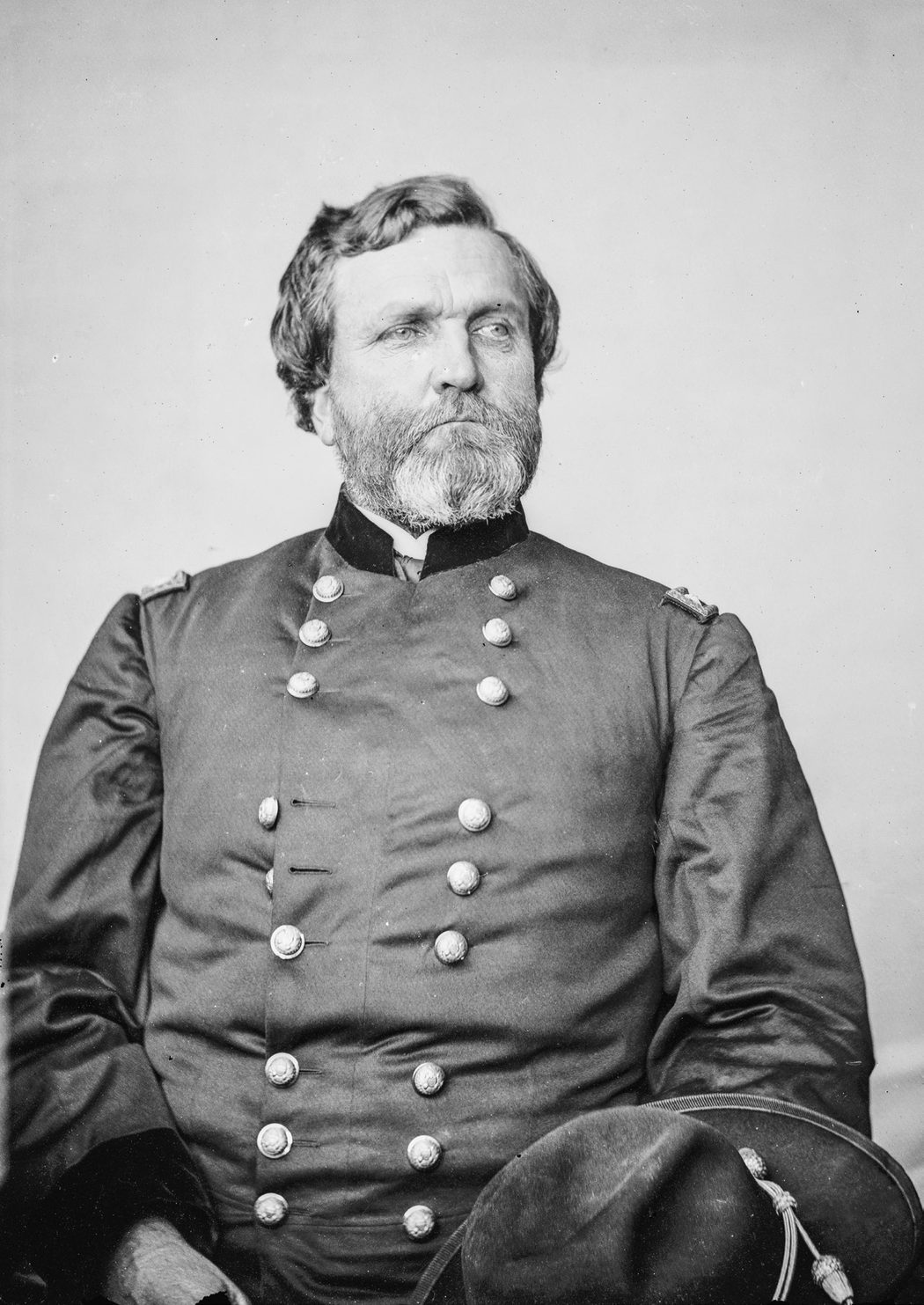
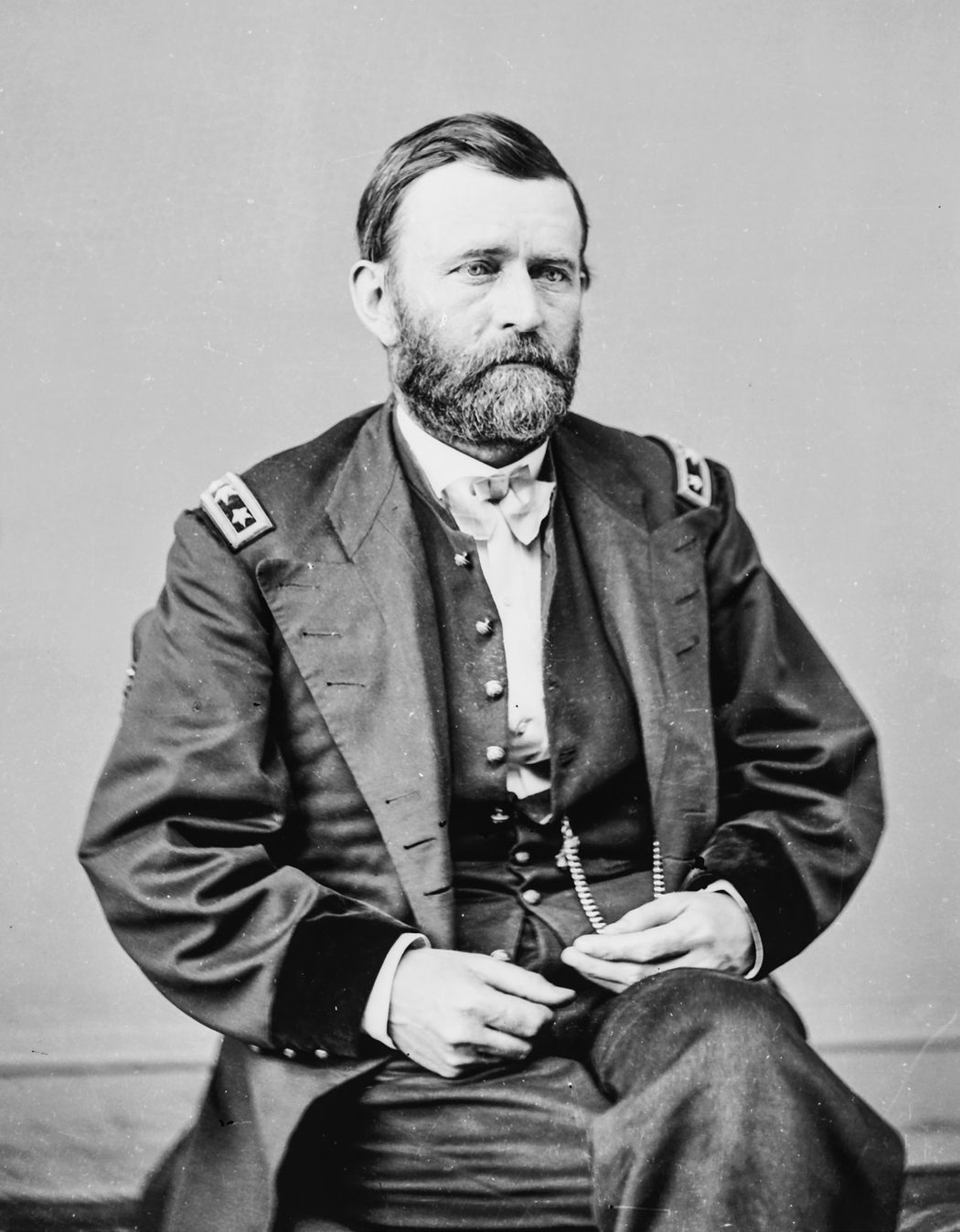
On October 18 General Rosecrans sent his last message to Van Duzer, ordering him to “open communication with the cavalry division near Flint River.” That was the day Grant took command of the newly formed Military Division of the Mississippi. He immediately fired Rosecrans and replaced him with Maj. Gen. George Thomas.
In November the reinforced army in Chattanooga broke the siege in the Battle of Missionary Ridge. The Confederates retreated into Georgia. The Federal forces, soon enlarged to three armies under Gen. William T. Sherman, prepared for the Atlanta Campaign against the Army of Tennessee and its new commander, Gen. Joseph Johnston.
In January 1864 the telegraph line was extended from Chattanooga to the Federals’ forward position in Ringgold, Ga. Redundancy strengthened connections to the Federal rear, as both Nashville and Louisville were linked to Chattanooga by three separate routes. As Sherman’s force moved south, Van Duzer and his team went along, keeping the commander’s headquarters wired to his rear and with his subordinate commanders.
As one would expect, much of what Van Duzer wrote in his dispatches to Washington pertained directly to the telegraph system. However, much did not. In addition to reports on equipment and personnel, the work to extend and repair the lines, and Confederate efforts to tear up what he had built, Van Duzer sent updates on the military action. Fighting was the business of the generals, not telegraphers, but it seems that the
December 2022
telegraph men liked to share the buzz with each other.
Most dispatches went to Maj. Thomas Eckert. One of Van Duzer’s operators informed Eckert on May 15 that Sherman was “confident of bagging all the rebels in Resaca.” The next day Van Duzer reported that Johnston’s (unbagged) force had evacuated to the south. Other dispatches tell of Confederates deserting at Adairsville; inquire about Grant’s progress in Virginia; report on “marauding parties” in the Federal rear; and describe the Confederate works at Kennesaw Mountain.
The buzz between the telegraph men traveled fast, often faster than reports from the generals to their higherups. On June 14 Van Duzer told Eckert that Federal signal men had read Confederate flag signals and learned that Gen. Leonidas Polk was killed. The chief of staff, Gen. Henry Halleck, got the same news from Sherman the next day.
Sometimes the buzz was accurate, sometimes not. A June 22 dispatch included this news: “Prisoners taken today say Johnston called to command Army of Virginia. Lee made general-in-chief, vice Bragg. Ewell in command in our front.”
A few hours after the fighting at Kennesaw Mountain, Van Duzer advised Eckert of Federal casualties. On July 11 he reported that “Rebels last night withdrew entirely from west bank of Chattahoochee, and burned bridge.”
On the 19th, at 11:30 p.m., from his camp on Peachtree Creek, Van Duzer telegraphed some important news: “Johnston is relieved by Hood.” Sherman sent the news to Halleck late on the 20th; Halleck received it at 12:45 p.m. on the 21st.
July 20 was the day new army commander Gen. John Bell Hood attacked at Peachtree Creek. That night Van Duzer told Eckert that “Enemy has assaulted several times today and has been severely repulsed each time.” The message was received at 11 a.m. the next day. Sherman sent news of Peachtree Creek to Halleck at 8:30 p.m. on the 21st. Halleck received the message soon before lunchtime on the 22nd, an hour or two before Hood’s second attack began east of Atlanta.
As every reader knows, the efforts to drive the Federals back failed. After the August 31 fighting at Jonesboro, Hood was compelled to evacuate Atlanta, and did so the following day and through the night of September 1-2. Van Duzer conveyed the news to Eckert on the afternoon of September 2. Sherman wired the news to Halleck at 6 a.m. on the 3rd.
Many of Van Duzer’s telegraphs during the Atlanta Campaign, and after the fall of the city as well, reported on disruptions to the telegraph lines and efforts to repair the damage. An October 30 message indicated that he would soon have no concern with the lines between Atlanta and Chattanooga. “I am informed, by order of General Sherman, that Atlanta will not be occupied a week hence, and I prepare to withdraw to Chattanooga.”
During all this time Van Duzer was located in a variety of
places, sometimes with the army as it progressed through north Georgia, sometimes in the rear at Chattanooga. After the capture of Atlanta, he began to operate in Nashville.
Thomas took his army to Nashville after Sherman began his March to the Sea. Grant was growing impatient with Thomas as he prepared to assault Hood’s army entrenched just south of the city. Grant was on the verge of firing Thomas when, on December 15, he received a message reporting on Thomas’s successful attack that day. The message came from J.C. Van Duzer, the man Grant had arrested two years earlier. Thomas kept his command.
I first met John C. Van Duzer back in Mississippi when he was arrested and wrote about that episode in November. This month we have seen that after that trouble Van Duzer worked with success, first with Rosecrans and later with Thomas and Sherman, from early 1863 until the end of 1864. In his report of January 20, 1865, Thomas gave Van Duzer high marks for his performance. In March 1865 Van Duzer was
Visit our new website at:
promoted to the superintendency of telegraphs for the Division of the Mississippi. He continued his work until May 1866, when he was mustered out as a Brevet Lieutenant Colonel. He died in 1898 and is buried in Lakeview Cemetery in Escanaba, Michigan.
Sources: Most of the dispatches discussed in this column are in the Official Records, volumes 30 and 38 of series 1. Some documents not in the OR are contained in Military Telegraph during the Civil War in the United States, by William R. Plum, Jansen, McLung & Co., 1882.
Remembering our deceased soldiers on Memorial Day is a long-held tradition across the country. By placing flowers or a flag on a grave we acknowledge their sacrifice. But not all our honored soldiers rest beneath the stars and stripes. Some of our heroes vanished into obscurity.
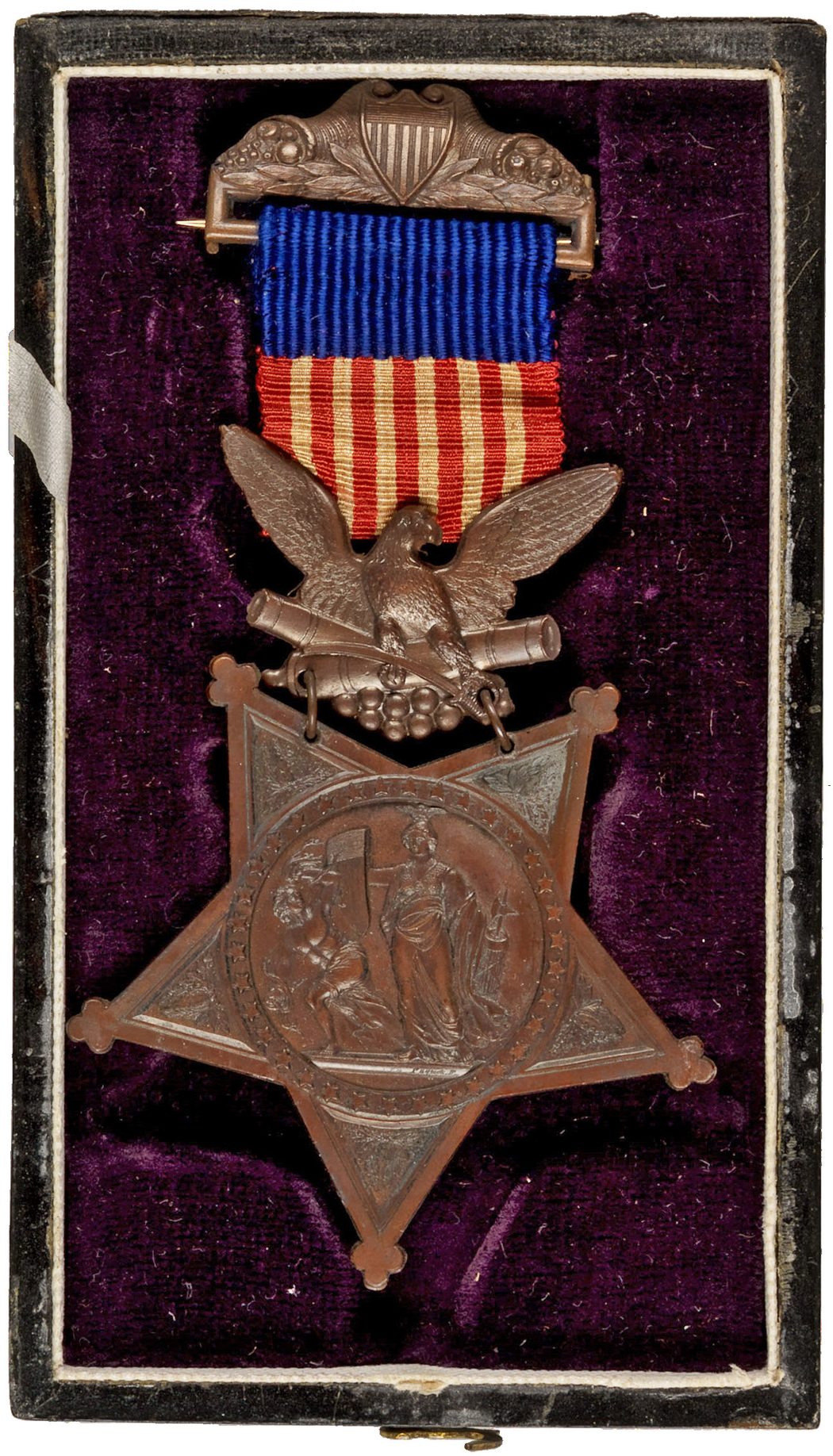
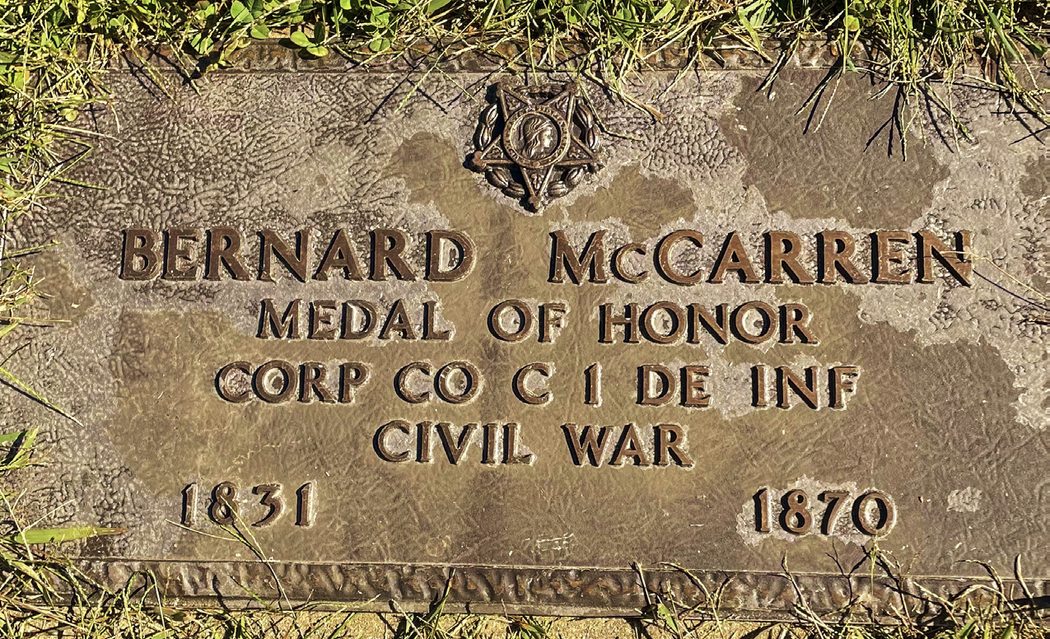
Corporal Bernard McCarren was one of many who won the Medal of Honor at Gettysburg. McCarren didn’t live long after the war. He died of dysentery in 1870. He left behind a wife and no children. The Irishman was buried in the Old Cathedral Cemetery in Wilmington, Del., where most local Irish Catholics were laid to rest. In the 1880’s McCarren’s neglected corpse went missing for well over a century.
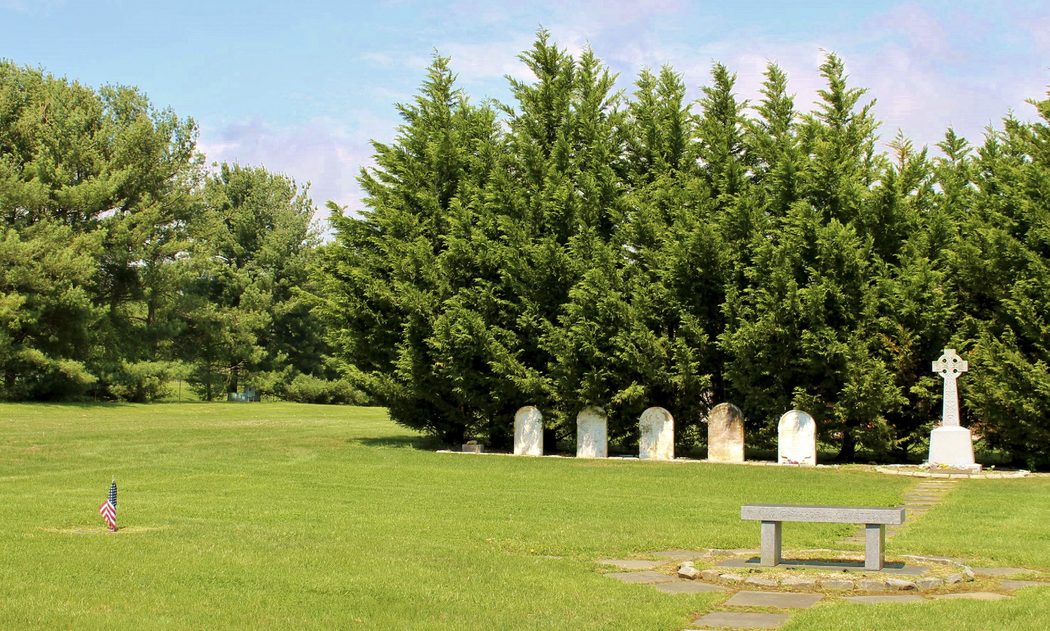
After the Civil War the Old Cathedral cemetery fell into disrepair. The diocese urged the families of those buried in Old Cathedral grounds to move the remains to the New Cathedral Cemetery on Lancaster Avenue. Leaving the task to individual families to move the remains opened the door to neglect. As a result, closing the cemetery around 1882 resulted in a botched effort to reinter all the dead at the new location. Corporal Bernard McCarren’s remains were left behind along with hundreds of other bodies.
McCarren rested beneath an empty dirt lot for decades unbeknownst to anyone. In 1954, the lot was sold by the diocese to a hospital. The new owner paved over the former cemetery for a parking lot; McCarren’s body remained lost for five more decades. Drivers parked their automobiles for years on the lot in Wilmington, never knowing Bernard reposed just below the surface along with hundreds of other forgotten bodies. Finally, in 1998, a construction crew resurrected his abandoned bones.
Removing the bodies from the old cemetery to the new grounds took years. The diocese thought all the bodies had been successfully removed and the job completed. Cities grew rapidly in the years after World War Two. Wilmington wasn’t any different. The diocese sold what they believed to be an abandoned lot to the new hospital located next to the former cemetery. The hospital paved over the land to construct the parking lot. Patrons of the hospital had no idea they parked their cars over a burial ground. Neither did city officials or hospital administrators.
In 1998, expansion once again brought more upgrades around what is now Christiana Hospital. More buildings to expand the hospital meant new plans for the parking lot. In digging up the lot, shocked construction crews discovered hundreds of old bones. All construction came to a halt as archaeologists arrived on the scene.
Officials found nearly 2,000 bodies remained from the Old Cathedral Cemetery. Records at the New Cathedral Cemetery on Lancaster Avenue revealed that McCarren’s body was never buried in the new cemetery. After so many years, identifying the bodies wasn’t possible. The archaeologists carefully removed all the bones from the parking lot.
McCarren was born in 1830 in Ireland. Like so many patriotic Irishmen, McCarren rushed to answer President Lincoln’s call to arms to save the Union. The 18-year-old Irish immigrant followed another Irishmen, Captain Thomas Smyth, into the 24th Penn. Regiment. Bernard served for three months in that regiment. When that term ended, he enlisted for three years with now Major Smyth in the 1st Delaware Infantry. Smyth quickly rose to Colonel. The regiment served bravely in all major battles in the eastern theater losing 12 officers and 146 men killed or mortally wounded. Their sacrifices earned them the designation as one of the 300 best fighting units in Colonel William Fox’s post war study. At Gettysburg, the 1st Delaware Civil War Medal of Honor. McCarren was awarded the Medal of Honor for action at Gettysburg, Penn., on July 3, 1863. His citation reads “Capture of flag.” served in Colonel Thomas Smyth’s Second Brigade, Third Division, as part of General Winfield Hancock’s II Corps.
The regiment marched to Gettysburg as part of General Alexander Hays’s Division. Bernard McCarren and the 1st Delaware Infantry took part in the thick of the fighting at Gettysburg. On the second day, the regiment spent most of the day fighting around the Bliss Farm well in front of the main line on Cemetery Ridge. Things got much hotter for the Delaware regiment on the third day of the battle.
The 1st Delaware lay in the path of Pickett’s Charge on July 3, 1863. Along with the 12th NJ and the 14th Conn., the Delaware boys held the low stone wall at the Inner Angle just south of the Bryan Farm house. To their left, William Arnold’s battery of ordnance rifles engaged Confederate batteries in the terrific cannonade preceding the charge. The divisions of Generals George Pickett, Isaac Trimble, and James Pettigrew soon emerged from the woods in fine order to attack the Union center. A mass of 13,000 gray clad soldiers went forward seeking to split the Union line into two separate units.
Pickett aimed for the copse of trees. General Trimble and General Pettigrew directed their attack at the Inner Angle held by Hays and his division. When nearing the Union line, Trimble and Pettigrew faltered after heavy musket fire, accompanied by canister from Arnold’s guns, decimated the oncoming Southerners. While Pickett breached the Union line, the gray wave in front of Colonel Thomas Smyth’s brigade came to a halt. The 1st Delaware saw a golden opportunity.
After halting the Alabama boys of General James Archer’s Brigade, the Delaware soldiers leaped over the stone wall and counter charged the broken Southerners. A stiff fight