June 2022
Gen. Kilpatrick even “asked” for some of the family silver. Catharine wrote that “when the general condescends to anything of the kind you cannot expect anything more from the men.”
The GCWHT marker in Waynesboro describes the Nov. 27 fighting there when Wheeler’s force pushed Federal cavalry through town toward the south. Some railroad equipment was burned but damage that day was minimal. A stronger force of Federal cavalry, accompanied by an infantry division, returned and on Dec. 4 drove Wheeler from Waynesboro and “pursued to Brier Creek, destroying the railroad and wagon bridges. Thereafter the combined Federal cavalry and infantry force marched southeast toward Jacksonborough. Only then were Confederate authorities convinced that Sherman’s objective was Savannah.”
The army continued its march. On Dec. 8 the XIV Corps came to Ebenezer Creek, a rain-swollen tributary of the Savannah River. Moving with the corps were hundreds of escaped slaves. On
December 9 the corps crossed the creek on a pontoon bridge as the refugees were held back, as ordered by the corps’ commander, Maj. Gen. Jefferson C. Davis. After the soldiers crossed, the bridge was cut loose from the north bank and pulled across, stranding the refugees. As Confederate cavalry approached, many of the unfortunates tried to cross the stream. Some reached the other side. Some drowned. Some were killed by the cavalry. Some were captured and returned to bondage. How many? No one knows.
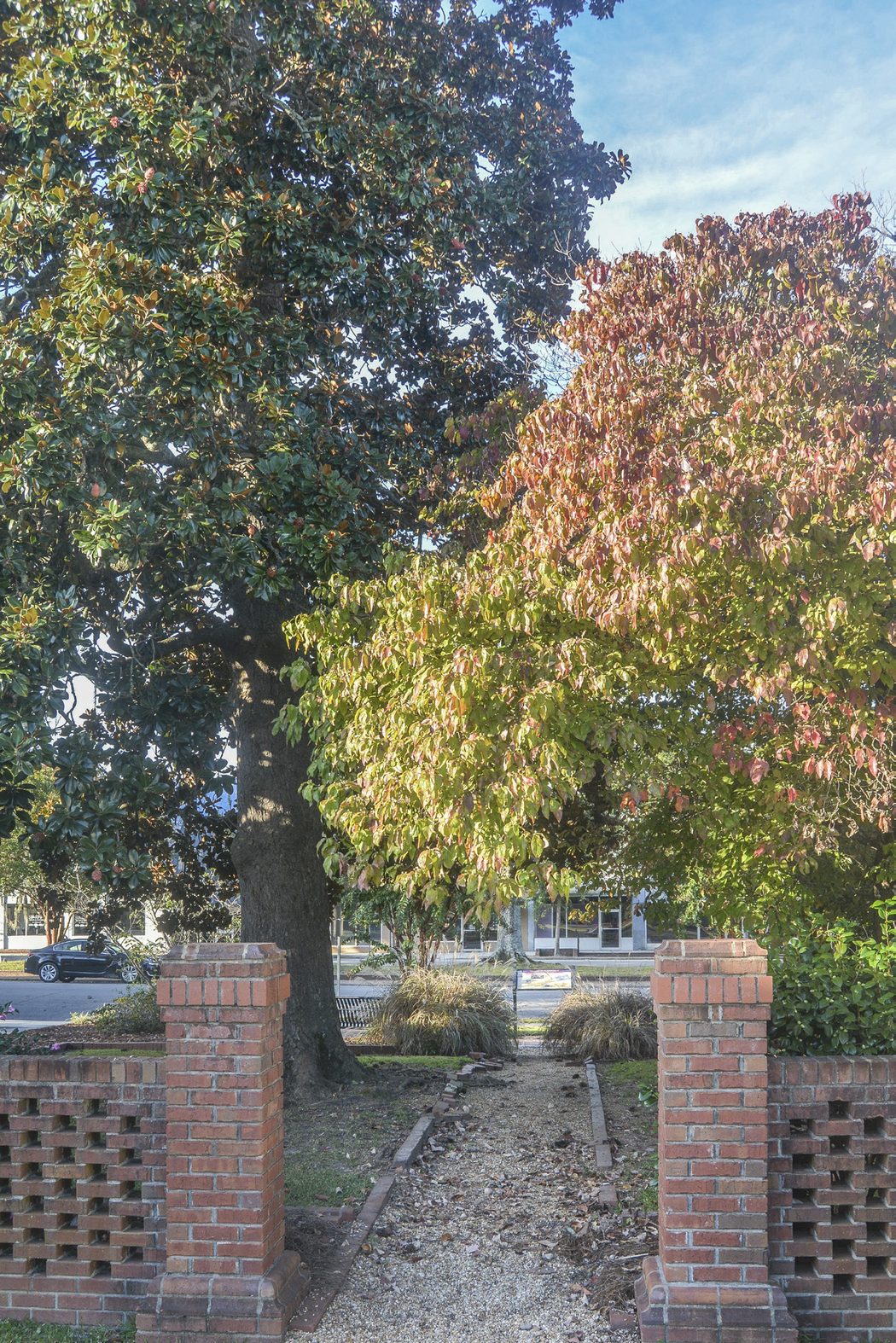
A sergeant in a Minnesota regiment wrote that the “barbarous act has created a deep feeling against [Gen. Davis] in this division.” Some soldiers mentioned the incident in letters home. One wrote to his congressman and another protested to the Senate Military Committee. The incident made the news in Northern papers. After Savannah was taken, Secretary of War Edwin Stanton went personally to investigate. Davis told Stanton that removing the The XIV Corps passed through Jacksonborough, now a ghost town, on Dec. 5. There was no action here, but the GCWHT marker quotes a Federal officer’s assessment of cavalry commander Judson Kilpatrick: “the most vain, conceited, egotistical little popinjay I ever saw.”
bridge was a military necessity. Sherman backed Davis and “the matter was quietly dropped.”
Having crossed this last obstacle before Savannah, and having rid itself of much of the human impedimenta, the XIV Corps moved on. The two corps of the Left Wing and the two of the Right Wing approached Savannah, held by a Confederate force of about 9,000 under Maj. Gen. William J. Hardee.
Seeing the Confederate works protecting the city, Sherman “determined that a siege of Savannah was inevitable,” according to the marker in Pooler. “Savannah was completely invested by December 12, 1864.” On the 13th the Federals took Fort McAllister, at the mouth of the Ogeechee River, and established communication with the navy. However, there was no siege and no assault. While Sherman settled in for the siege, Hardee’s men and numerous laborers were constructing a pontoon bridge across the mile-wide Savannah River.
According to Burke Davis, in Sherman’s March, “The task of bridging the great river was begun by thousands of laborers, slaves, Federal prisoners, Confederate troops and a few civilians.” On the night of December 20 the Confederates crossed the rickety bridge while artillery fired from the Confederate works so that the Yankees “could not sleep, build fires or launch an attack.”
By daybreak on Dec. 21 the Confederates were all in South Carolina. Savannah was Sherman’s. A wide swath of Georgia had felt the impact of
GEORGIA’S CONFEDERATE MONUMENTS In Honor of a Fallen Nation Gould B. Hagler, Jr.
This unique work contains a complete photographic record of Georgia’s memorials to the Confederacy, a full transcription of the words engraved upon them, and carefully-researched information about the monuments and the organizations which built them. These works of art and their eloquent nation’s profound grief, praise the soldiers’ bravery and patriotism, and pay homage to the cause for which they fought.
a huge Federal army. South Carolina would be next as Sherman’s march continued.
*Don’t forget to pronounce the S in Louisville. We are in Georgia, not Kentucky.
Gould Hagler is a retired lobbyist living in Dunwoody, Ga. He is a past president of the Atlanta Civil War Round Table and the author of Georgia’s Confederate Monuments: In Honor of a Fallen Nation, published by Mercer University Press in 2014. Hagler speaks frequently on this topic and others related to different aspects of the Civil War and has been a regular contributor to CWN since 2016. Hagler served for several years on the GCWHT Board of Trustees. He can be reached at gould.hagler@gmail.com.
Pearce Museum
Civil War Collection
pearcemuseum.com/collections/ civil-war/ for an overview of the archives, and bookmark https://pearcecollections. pastperfectonline.com for use in searching this collection. One note, the letters, not yet digitized, will require researchers to request specific records using the form found at https://www.pearcemuseum.com/archives/ research-request-form.
During the sesquicentennial, the museum produced a fourvolume set containing many of the letters from their collection. Covering the Eastern, Western, and Trans-Mississippi Theaters of war, researchers may purchase the books ($25 each plus shipping) by contacting Museum Director Ann Zembala at 903- 875-7438 or ann.zembala@navarrocollege.edu. Every book contains letters, in chronological order, for the years covered in each volume. An index lists the writers’ names, and an appendix provides a brief bio for each writer.
As noted in the introduction to volume one, “The letters were not chosen based solely on their military content. Instead, they were chosen based on the writers’ personal experiences, political opinions, emotional reactions, cultural differences, ethics, and patriotism.” Thanks to Holly Beasley Wait, previously one of the editors for the first three volumes and, current Director of the National Civil War Naval Museum in Columbus, Ga., for informing this writer of these books. Appreciation to Director Ann Zembala with the Pearce Museum for providing instructions on ordering the books!
Continued good luck in researching the American Civil War!
June 2022 21
Day by Day
Until now, a daily account (1,630 days) of Georgia’s social,
through the
political, economic, and military events
Civil War in
during the Civil War did not exist.
In Day by Day through the Civil
War in Georgia, Michael K. Shaffer strikes a balance between the combatants while remembering the struggles of enslaved persons, folks on the home
front, and merchants and clergy
attempting to maintain some sense of normalcy. Maps, footnotes, a detailed index, and bibliographical references will aid those wanting more.