Tracing Sherman’s March to the Sea: “Forage of every kind in superabundance” Part Two of a Four- Part Series
Readers of last month’s column marched with the Army of the Tennessee from Atlanta to the Oconee River, about halfway on its journey to Savannah. Maj. Gen. O.O. Howard’s two corps, the XV and the XVII, are now across that stream. We resume our trek across Georgia, following the route marked by Georgia Civil War Heritage Trails.
The first GCWHT interpretive marker we see is at the New
GEORGIA’S CONFEDERATE MONUMENTS In Honor of a Fallen Nation Gould B. Hagler, Jr.
This unique work contains a complete photographic record of Georgia’s memorials to the Confederacy, a full transcription of the words engraved upon them, and carefully-researched information about the monuments and the organizations which built them. These works of art and their eloquent nation’s profound grief, praise the soldiers’ bravery and patriotism, and pay homage to the cause for which they fought.
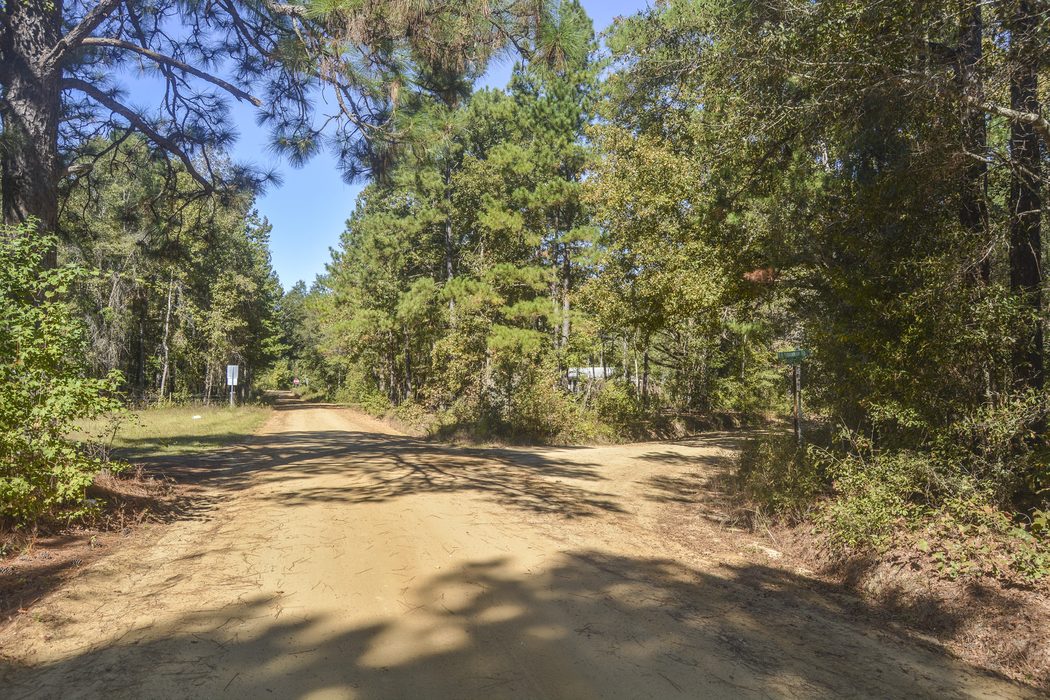
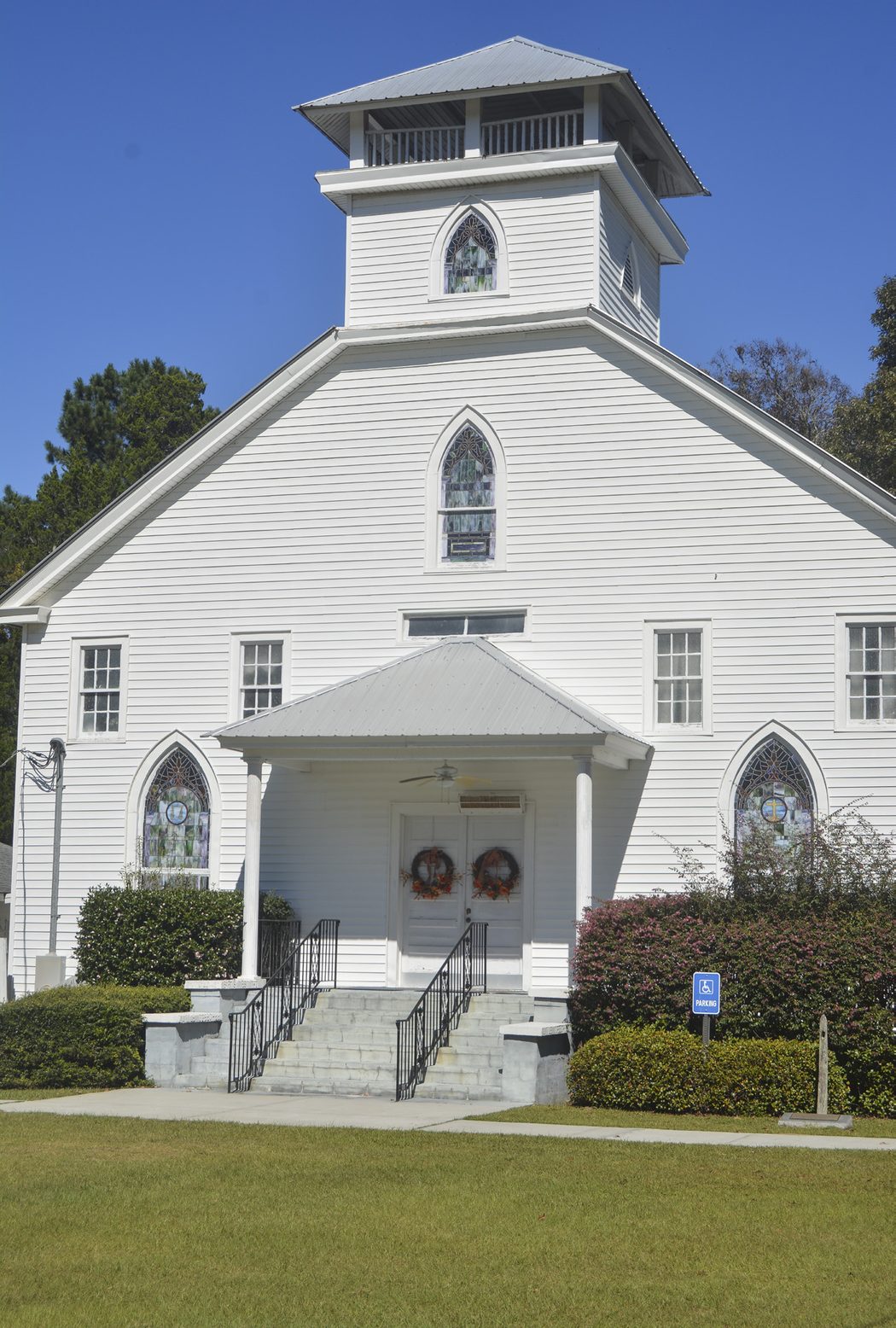
Hope Methodist Church, on an unpaved section of the Old Savannah Road. Here the routes of Sherman’s two wings nearly converged. On November 28, Sherman, who had been traveling with the Left Wing, crossed over to the Right Wing to visit to Maj. Gen. Francis Blair, commander of the XVII Corps. That night the corps, with Sherman still present, camped near the church. According to the marker, Blair and other officers “reportedly camped in the church, even taking their horses inside and tethering them to columns. To stay warm they burned hymn books, church records, and some of the building’s wood sidings in a stove in the middle of the
church.”Citing the diary of Maj. Henry Hitchcock, a member of Sherman’s staff, the marker states that Sherman spent the night outside. How he stayed warm is not explained.
On the November 29 the corps continued toward the coast, moving along the Savannah Road and stopping at Tarver’s Mill and the nearby Tarver Place Plantation. Major Hitchcock recorded that the mill was soon emptied of its plentiful supply of cornmeal while a correspondent from Harper’s Weekly sketched the scene. The marker displays the rendering.
Sherman met with Howard at the nearby plantation, where the two generals and their staffs ate their midday meal. The plantation’s numerous outbuildings were soon stripped of forage, corn, and fodder. “Judge Tarver was not present,” the marker states, “so Sherman advised the Tarver women to quickly gather as much food as they could…and take it into their home.” Sherman posted a guard at the house and after a two-hour rest continued on.
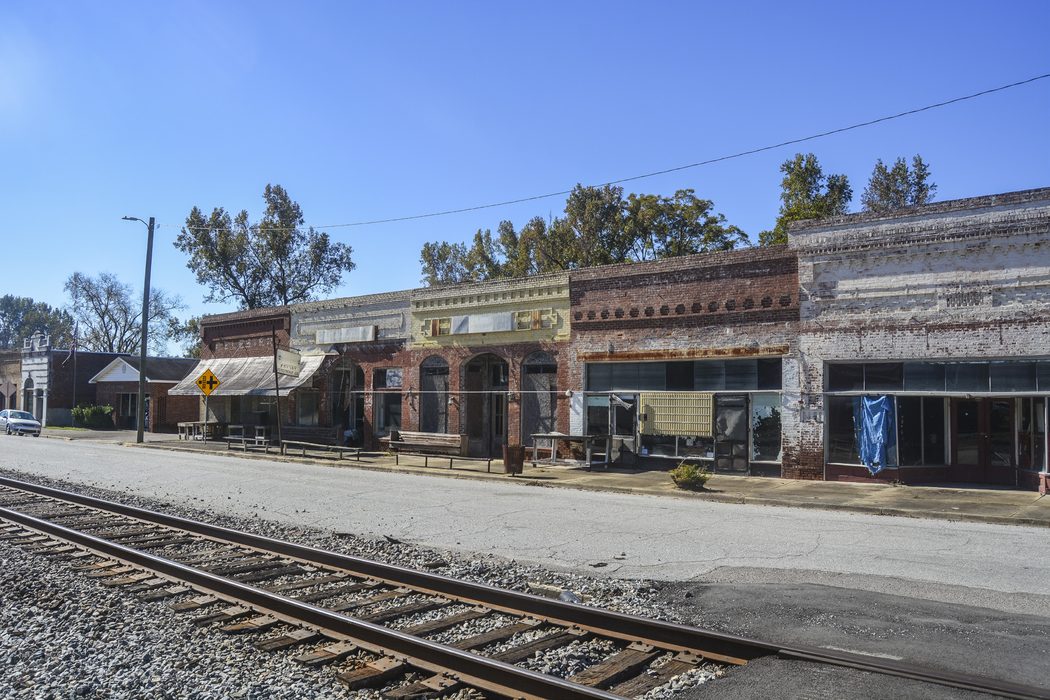
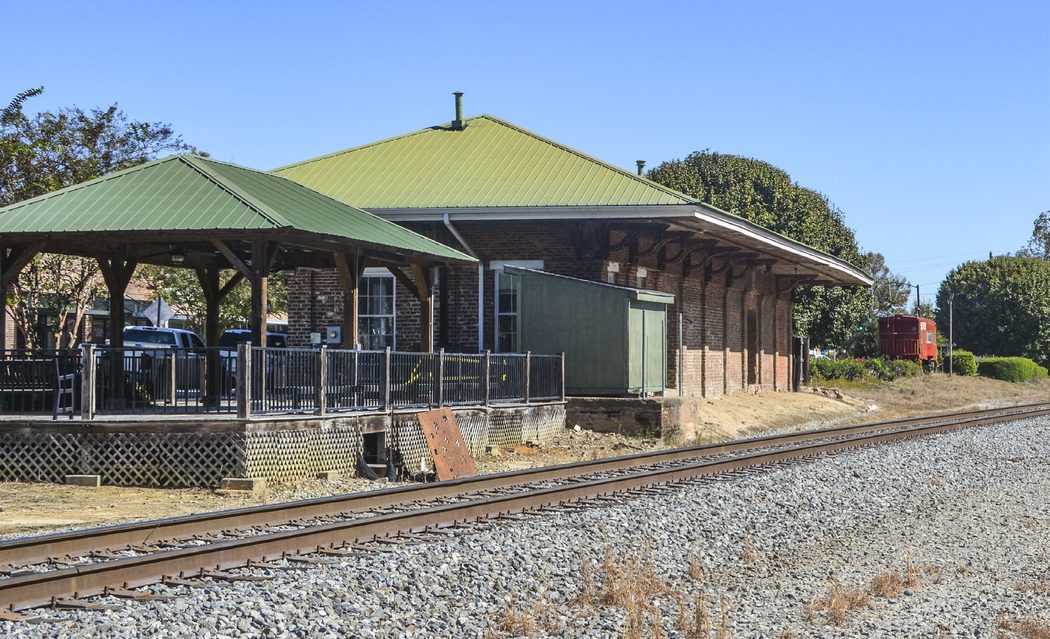
East of the plantation was a station on the Central of Georgia Railroad, Speir’s Turnout, named for James Speir, who granted land for the railroad right-of-way. The town was renamed Bartow after the death of Col. Francis S. Bartow at the First Battle of Manassas. The marker in Bartow tells the visitor about three graves in the cemetery. One grave is that of a Federal soldier who died as he and other prisoners were being transported to a prison camp. The body of the unidentified soldier was taken from the train in Bartow. “The townspeople gave him a Christian burial in the cemetery on Church Street about 300 yards to the north of the depot.” The other two graves entomb the bodies of James Speir’s two sons. “They were killed a year apart in Virginia and brought home in a mule-drawn wagon by a family servant.”
Forces from the Left Wing wrecked the rail from Davisborough to Bartow and camped in Bartow on November 28 while the XVII Corps in the Right Wing marched eastward on the Savannah Road.
In his diary Maj. Hitchcock described the XVII Corps’ march along the road, writing that there were “good (sandy) roads, fine pure air, no difficult hills.” The 11,000 men made a pleasant camp among the pines and found “forage of every kind in super abundance.” The XVII Corps turned left to cross the Ogeechee River and approached Millen on the river’s left bank, along the Central of Georgia, while the XV Corps continued along the right bank.
At Millen the Central of Georgia met the line running north to Augusta. Blair’s infantry entered the town on December 2 and commenced to wreck the important rail junction. The GCWHT marker displays a sketch by the Harper’s correspondent showing the depot in flames as the soldiers looked on. Major Hitchcock wrote of the “late town of Millen” and stated that the destruction of the junction was “a terrible blow to J.D. & Co.”
We have moved along with the Federals for 50 miles or so since New Hope Church and have not seen any reference to any Confederate forces. That will change at Little Ogeechee Creek, where both the railroad and the Louisville* Road crossed the creek near its confluence with the Ogeechee River. There a Confederate force under Maj. Gen. LaFayette McLaws hoped to block Sherman. The Confederates destroyed the railroad bridge and built a defensive line on the south side of the creek. The XVII Corps, moving along the left bank of the river, neared the Confederate works on December 4. A small probing force drew fire. There were a few casualties, and 70 Federals were temporarily surrounded.
The Confederates, numbering only 4,000 men, were facing an entire Union corps. McLaws knew that the XV Corps, on the other side of the Ogeechee, was approaching from his left. The XX Corps, part of the Federal Left Wing, was not far away on McLaws’s right. McLaws recognized that retreat was his only option. He withdrew the night of December 4.
The GCWHT marker states that the Federals advanced across the creek. “For two days Federal soldiers camped all around present day Oliver. On December 7th General Sherman and the 17th Corps continued south…on the Louisville Road.”
As they moved unimpeded along the road toward Savannah, the Federals came to the small town of Guyton. The marker here presents the story of the Guyton Confederate Hospital, founded in
April 2022
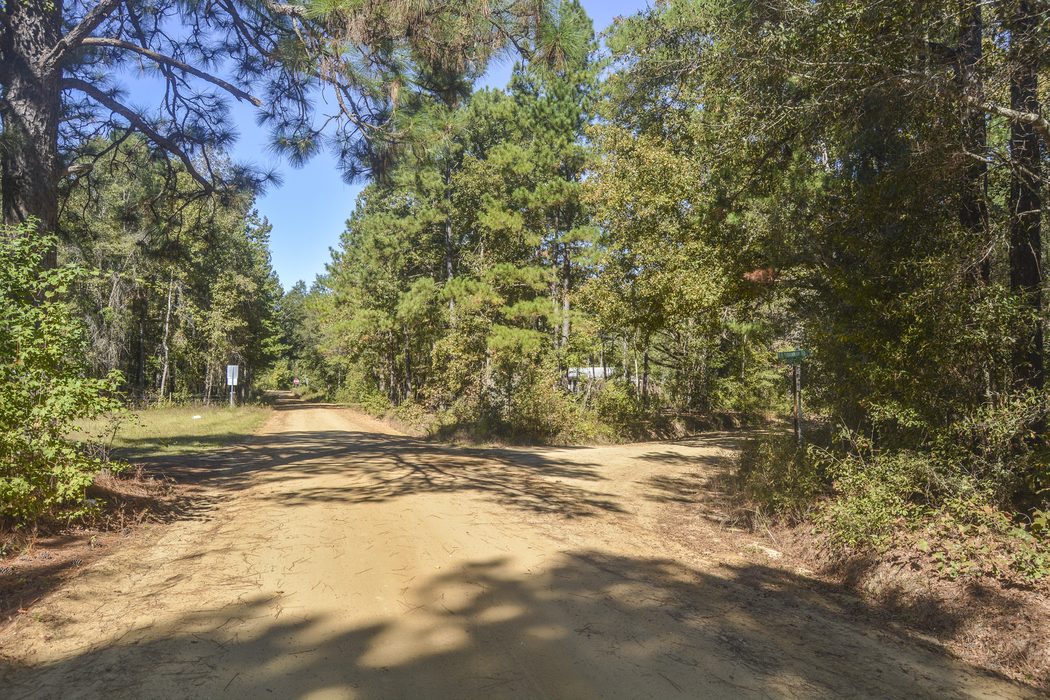
In some areas the modern paved highway follows the historic route of the Old Savannah Road. In other places the historic route remains much as it was in 1864. (All photos by Gould Hagler)
May 1862. By the middle of the following year, the facility had 270 beds and a staff of 67. The Methodist church was used for additional space when necessary. It is interesting to note that the U.S. Sanitary Commission issued a post-war report giving high marks to the Guyton facility, which was “well-constructed and salubriously located.” Guyton’s low mortality rate relative to general hospitals in Macon and Atlanta was attributed to “hygienic conditions and the relative locations of the various hospitals.”
A nearby cemetery contains the remains of 26 unknown Confederate soldiers, “some of whom were too ill to identify themselves.” The hospital was evacuated soon before the XVII Corps entered the town on December 8.
Nearer Savannah, a marker in a community park in Pooler tells of an incident that occurred near Pooler Station on December 9, when Sherman learned that an officer had been seriously wounded by a torpedo buried in the road. Sherman wrote of the matter in his memoirs,
“There had been no resistance at that point, nothing to give warning of danger…. This was not war but murder, and it made me very angry.” Sherman ordered that Confederate prisoners be
forced to “march in close order along the road, so as to explode their own torpedoes, or to discover and dig them up.” The scene amused Sherman, who “could hardly help laughing at their stepping so gingerly along the road, where it was supposed sunken torpedoes might explode at each step, but they found no more torpedoes till near Fort McAllister.”
All the markers we have seen on this leg of the trail have related to the XVII Corps. As we approach Savannah we can join the other corps of Howard’s army, the XV, commanded by Maj. Gen. Oosterhaus. After the XVII crossed the Ogeechee upstream west of Millen, the XV remained on the right bank and proceeded toward Savannah below the route taken by Blair’s Corps.
A marker tells the story of the Savannah and Ogeechee Canal, built in the late 1820s, that connected the two rivers and provided power to a variety of industries. Oosterhaus’s force came to the Ogeechee near the western terminus of the canal. One division crossed the river on December 7 and 8, using a pontoon bridge upstream from the canal. Moving downstream, the division cleared the east side, driving away the few Confederates in the vicinity. The Federals threw another pontoon
bridge across the river and repaired a burned bridge. Soon the entire XV was across.
The XVII Corps was in Pooler, a few hundred yards from the outlying Confederate protecting Savannah. The Left Wing, after its long march, was nearing that place. The marker sums up the situation:
Slaughter on the Mountain
160th Anniversary Reenactment 160th Anniversary Reenactment 160th Anniversary Reenactment of the Battle of Cedar Mountain of the Battle of Cedar Mountain of the Battle of Cedar Mountain August 5-7, 2022 Culpeper, Virginia
US and CS troops are wanted for a reenactment of the first battle of the Second Manassas campaign on the actual battlefield!
Recreations of battle actions on Saturday, Aug. 6 and Sunday Aug. 7. “By December 12th the entire Federal army was in position near Confederate-held Savannah. General Sherman’s next move was to make contact with the Federal navy waiting off-shore with needed supplies.”
Sherman’s two armies are now before Savannah, having marched across the state in less than a month, and are about to establish communication with a
Visit our new website at:
base of supply. The Confederates behind the works in Savannah are all but isolated. The end is near.
Next month we will go back in space and time to trace the progress of Sherman’s Left Wing, and see what Georgia Civil War Heritage Trails has to tell us of this army’s march, of the scant Confederate troops facing it, and of the civilians in its path, and in its wake.
*The road ran between Savannah and Louisville, the Georgia state capital between 1796 and 1807. We will visit Louisville in a future column on Sherman’s Left Wing. Meanwhile, readers should remember to pronounce the S in Louisville. “Louieville” is in Kentucky.
I N S I DE E V E RY I S S U E
Want to Advertise in
Email us at:
160 pages of the best selection of historical reenactment items from Medieval era to Civil War era. Includes over 60 pages on our famous tents and a 4-color section.