The Mine Run Campaign
Confederate Gen. Robert E. Lee expected the Union Army to move along the axis of the Orange and Alexandria Railroad, as the armies had been doing all fall of 1863. He had the Army of Northern Virginia watching the Rapidan River from Liberty Mills, below Orange Court House, all the way down river to Raccoon and Mitchell’s Fords. Maj. Gen. George Gordon Meade had other plans in mind. He intended to cross the Rapidan down river, move on Orange Court House, get behind Lee, and attack on ground of his choosing.
On November 26, 1863, the Army of the Potomac moved out from their camps around Rappahannock Station and crossed the Rapidan further down river. The I and V corps crossed at Culpepper Mine Ford, the II Corps at Germanna Ford, and the III and VI crossed over Jacob’s Fords. Meade’s plan was to have the II Corps move down the Orange Turnpike to Robinson’s Tavern, the III and VI corps deploy on the right flank of the II Corps, the V Corps move down the Orange Plank Road to New Hope Church, while the I Corps filled in the gap between the II and V corps.
Due to poor roads, a river swollen by recent rains, and the III Corps getting lost, instead of being near Robinson’s Tavern by dark, the Army of the Potomac was barely across the Rapidan. The delay gave Robert E. Lee and the Army of Northern Virginia a chance to intercept the Union Army.
By the morning of Nov. 27, Lee had his army in motion. Maj. Gen Jubal Early, commanding the Second Corps of the Army of Northern Virginia had his division, then under Brig. Gen. Harry T. Hayes, marching toward: the Orange Turnpike, towards Robertson’s Tavern. When his skirmishers encountered the Union II Corps advanced men just west of the Tavern, both armies decided to wait for reinforcements before bringing on a more general engagement.
Early’s other Division, under Maj. Gen. Edward Johnson’s Division was also making its way towards Robinson’s Tavern, along the Raccoon Ford Road (today’s Zoar Road). Near the intersection with Jacob’s Ford Road (modern Indiantown Road) Brig. Gen. George H. Steuart’s Brigade came under attack from the Union III Corps near William Harrison Payne’s farm. As Johnson consolidated his division to fend off the attack, Maj. Gen. William H. French brought up more of the III Corps
Late in the afternoon, before French could decide what he was going to do, Johnson attacked across the entire front. As daylight was quickly fading, the fighting went back and forth, both sides taking heavy casualties. Nightfall ended the fighting, with the Confederates withdrawing to Raccoon Ford Road, and the Federals falling back into the wood line. Johnson took about 550 casualties while French lost nearly 950 men.
On the Orange Plank Road, Maj. Gen. J.E.B. Stuart’s Confederate cavalry and Brig. Gen. David Gregg’s Union cavalry encountered one another near New Hope Church, late in the morning. By mid-afternoon, Lt. Gen. A.P. Hill’s Third Corps, had relieved Stuart while Gregg’s men held out until the Union V Corps, under Maj. Gen. George Sykes arrived. Other than some preliminary skirmishing, both armies moved their men into position and waited to see how things would develop.
On the 28th, George Meade ordered the army to advance down the Orange Turnpike only to find the positions held by Lee’s army the day before were deserted. As they came over the last rise approaching Mine Run, they could see the Army of Northern Virginia entrenched on the high ground just beyond the river. As the day wore on heavy rains hampered Meade’s advance and the Confederates continued improving their position while their skirmishers and sharpshooters harassed the Union troops.
That evening Maj. Gen. Gouverneur K. Warren, commanding the II Corps, proposed a movement around Lee’s right flank. The next morning Warren led his corps, and a division of the VI Corps around Meade’s left and down the Plank Road. As he crossed Mine Run, he deployed his men in a line of attack.
At the same time Stuart was conducting reconnaissance beyond the Union left flank and trying to figure out what Meade was up to. He attacked Union cavalry near Parker’s Store, in Warren’s rear. Stuart drove the enemy from the field, taking nearly 100 prisoners, and learning about Warren’s plans. He quicky returned to Confederate lines and informed Lee. Warren, concerned that Lee was attempting to flank him, delayed his assault. Before Warren could resume his advance, daylight ran out on his efforts.
Warren spent much of the night planning an assault for the next morning. During the night A. P. Hill, realizing the weakness of his line, strengthened and extended it below the Plank Road. As morning dawned, and the time of the attack drew near, Warren discovered how busy the Confederates had been during the night. The position now seemed so formidable that Warren called off his attack.
Shortly before 9 a.m. Meade learned what Warren had done. He quickly issued orders cancelling a planned assault on the Union right. That evening he held a council of war where it was decided that they had lost the element of surprise and the initiative. An attack would not be made.
On the morning of December 2, Hill’s men advanced only to find that the Army of the Potomac was gone. They had slipped out of their lines during the night and retreated, marking the end of the Mine Run Campaign.
November 2022
As was said by a gunboat captain to Union Secretary of the Navy Gideon Welles, “Battles are won by two qualities, the ability to endure and ability to injure.” Special skills could also be factored into this equation.
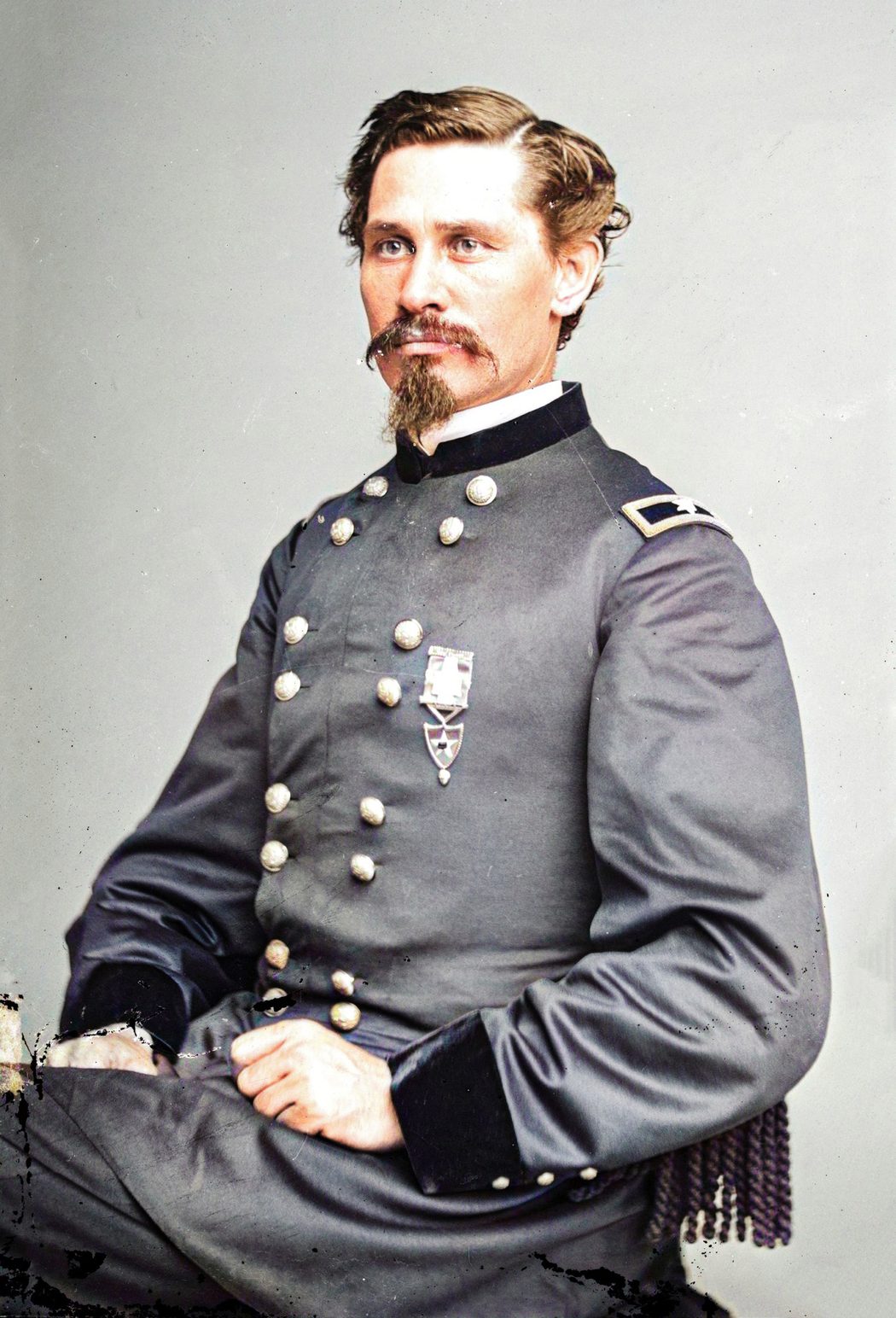
Orlando Metcalfe Poe graduated from West Point in 1856; sixth in his class. He had special skills particularly in engineering. Born in 1832 on an Ohio farm, the ‘lighthouse man’ as one author would call him gained recognition that continues to this day according to the National Park Service.
McClellan’s staff
Having excelled in math he was first appointed to the Corps of Topographical Engineers and stationed in Detroit where his extensive survey work of the Great Lakes ended when the Civil War began. The so-called ‘visionary engineer’ became a trusted member of McClellan’s staff; with principal duties that included surveying positions, sketching routes, and preparing battlefield maps. He was credited with significant contributions to various Union successes in Ohio, West Virginia, and Washington, D.C.
As one example, in the Western Virginia Campaign’s 1861 Battle of Rich Mountain, Poe was in the advance and observed the Rebel front covered by entanglements created from underbrush, a defensive addition called abatis or slashing. The Records contain a Official report to Colonel H. Bache, Commanding, Topographical Engineers from First Lieutenant Poe that explained a sketch map; “The drawing of the main work was reduced from one made by the enemy and captured by us, [it] was verified upon the ground by myself. Otherwise, we would have been without any sketch claiming to be accurate, for there was no time in which to make a survey.”
His career suffered however when McClellan fell out of favor. Historian Bruce Catton wrote of the general’s political and military difficulties that Lincoln reportedly said, while likely making McClellan wince, “As we say out West, if a man can’t skin, he must hold a leg while somebody else does.” Poe did not receive the brigadier general’s rank he expected and was also transferred to the Western Theater.
Sherman’s aide
As his exceptional skills became more recognized Poe rose to be Sherman’s Chief Engineer. In this position, and following orders for operations in the South, he built the roads and bridges that made the March to the Sea possible. Eventually Poe was named brevet brigadier general.
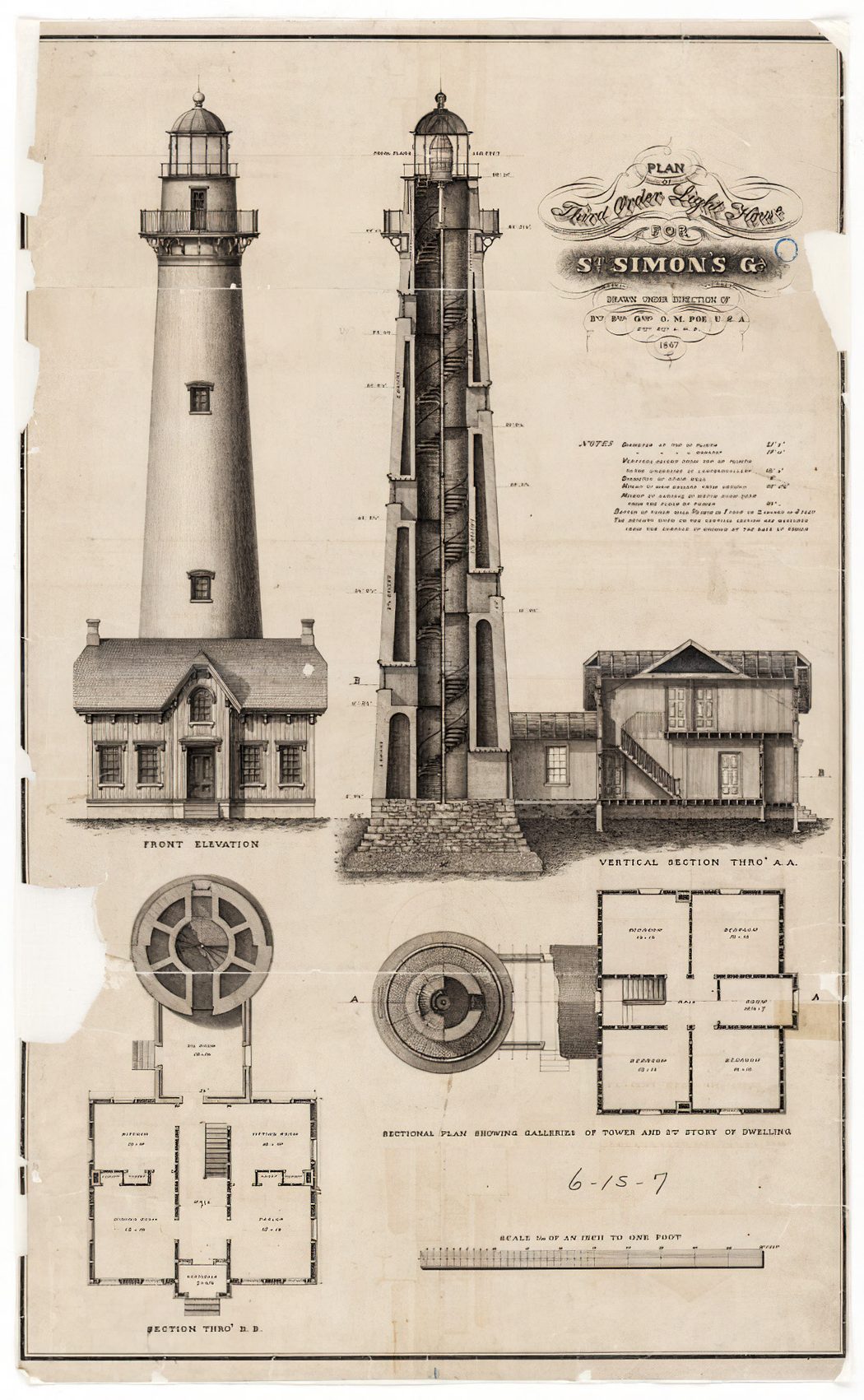
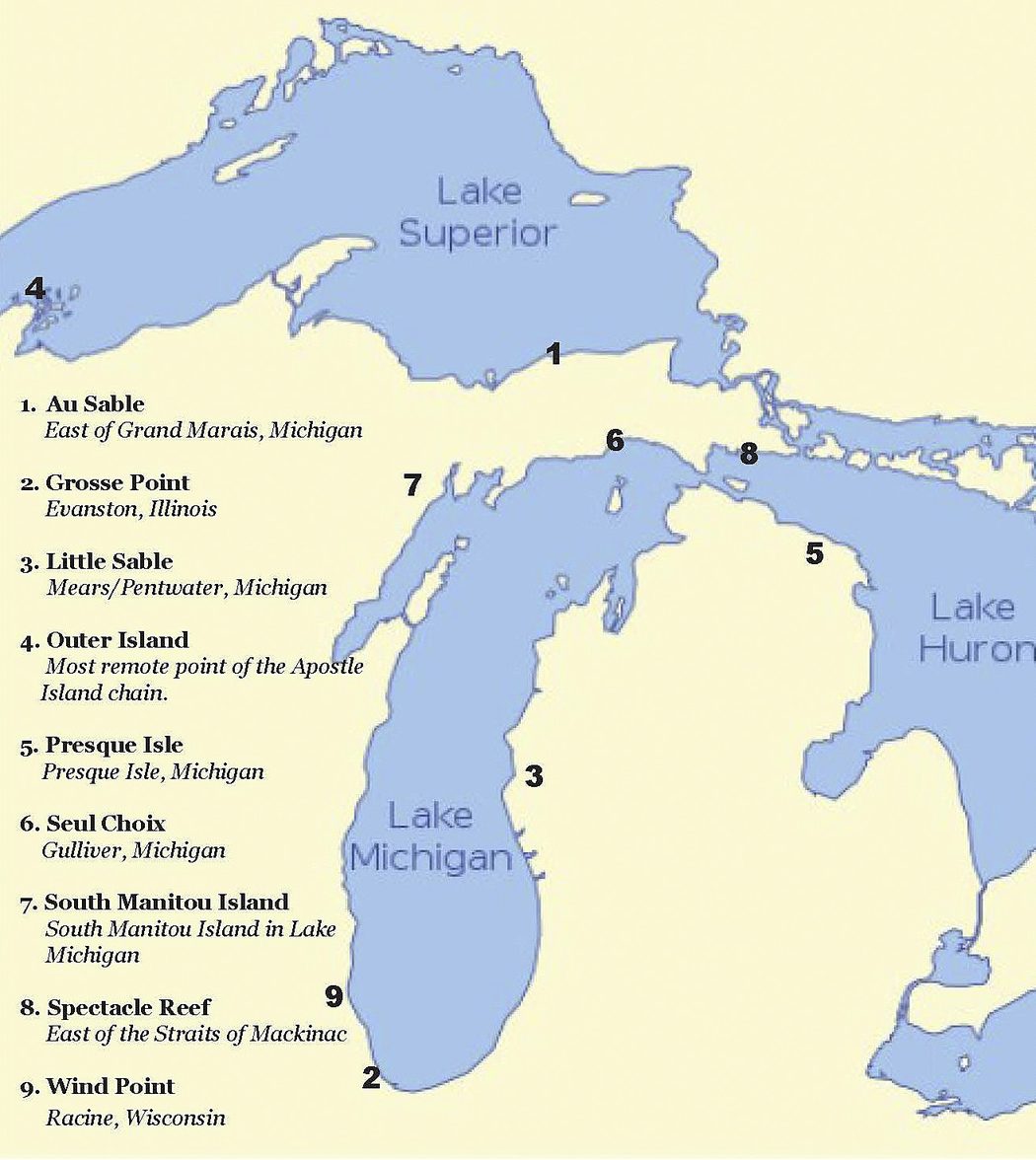
In 1865, with the war over, he became Engineer Secretary of the Lighthouse Board which included responsibility for all lighthouse construction. Poe designed what became known as the “Poe style” tower with a gentle taper from bottom to top, “featuring graceful embellishments such as masonry gallery support corbels and arch topped windows” rarely found on lighthouses. Not said to be one who skimped on costs, his Spectacle Reef Lighthouse at the treacherous waters of Lake Huron on the eastern end of the Straits of Mackinac, was the most expensive construction project of its day. The well-known Au Sable
Light Station, a site preserved by the Park Service, contains one of his remarkable ‘towers’ that continue to guide mariners along the shores of Lakes Superior, Michigan, and Huron. Four years and eight lighthouses later, he returned to Sherman’s staff as an aide advising on the engineering and security for four transcontinental railroad lines. In 1884, upon Sherman’s retirement, Poe returned to the Great Lakes where he designed massive locks for shipping.
Poe died in October 1895, apparently due to injuries suffered during his lock-building efforts and is buried in Arlington Cemetery.
Author’s Note: Paul Taylor, in addition to editing selected Poe letters to his beloved wife Eleanor published as “My Dear Nelly” by Kent State University Press, also wrote about Orlando Poe for the Michigan Historical Review in 2010 and the Michigan History Magazine in 2014.