The Battle of the Wilderness – Grant & Lee: Emotions of the Mantle of Command
In the lead up to the Battle of the Wilderness that occurred on May 5-6, 1864, the Union and Confederate press, civilian population, elected officials, and the soldiers in each army stated distinct views of their two respective military commanders who were about to clash. Newly promoted and commissioned on March 9, 1864, to the rank of Lieutenant General and General of all Union armies, Ulysses S. Grant moved east. He established his headquarters in the field with the Army of the Potomac commanded by Major General George G. Meade. Confederate General Robert E. Lee, who had commanded the Army of Northern Virginia since June 1, 1862. Lee’s Army was considered in the South as THE army that represented the Confederate States of America government.
Both generals were successful in their theaters of battle well before May 1864. Grant earned great successes in the Western Theater by vanquishing and forcing the surrender of two Confederate armies and setting the stage for the Atlanta Campaign. Lee’s successes in the Eastern Theater enhanced the South’s morale, despite two failed Northern invasions, and kept alive hope for independence by repelling the Army of the Potomac and protecting Richmond, the Confederate Capitol.
The coming campaigns and battles in the East between Grant and Lee were promoted as a clash of titans with each side confident of ultimate victory. Much was expected of them. Both Grant and Lee felt that mantle of responsibility with an intense desire to succeed.
The Battle of the Wilderness was the first clash between these two premier opposing Civil War generals. Moments during specific times on May 6, the second day of the battle, brought both Grant and Lee to feel the mantle and full weight of command by the ferocity of the fighting. These burdens were soon exhibited by their emotions. In turn their respective responses and subsequent actions can be said to have steeled their resolve for the stresses and battles to come over the next eleven months.
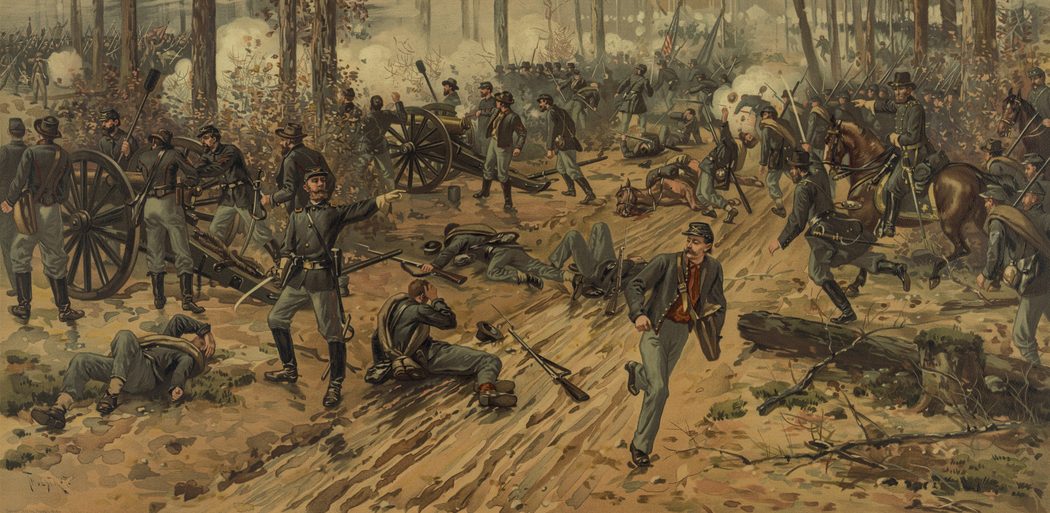
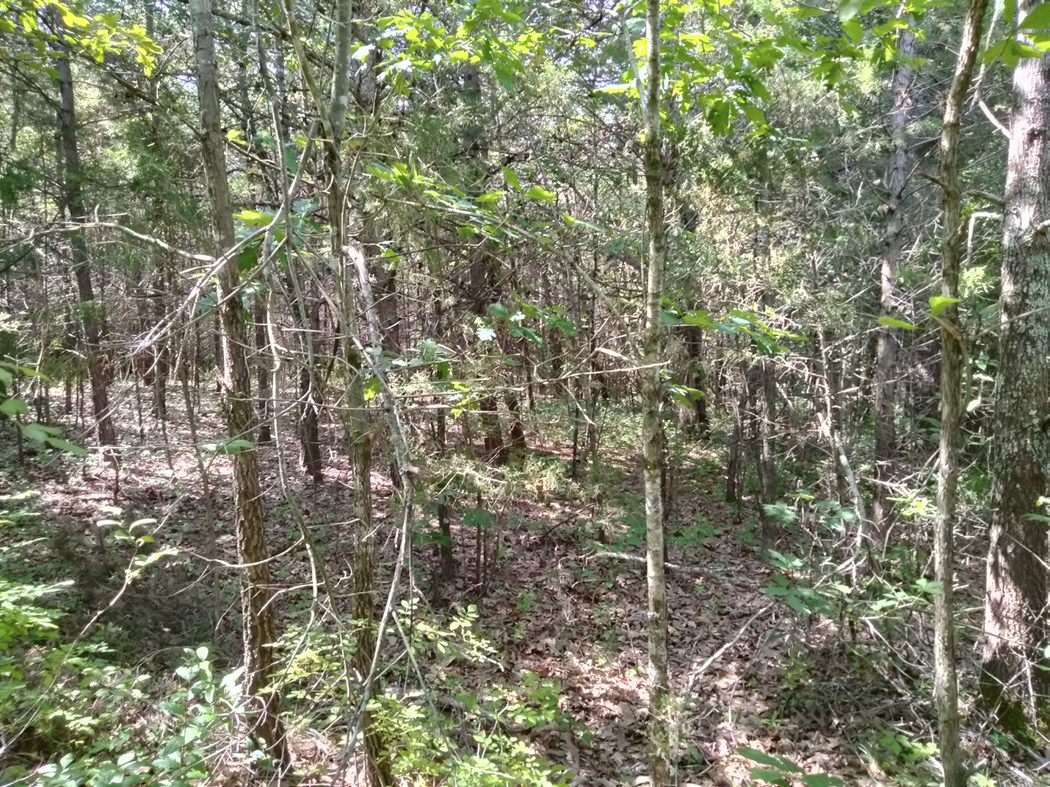
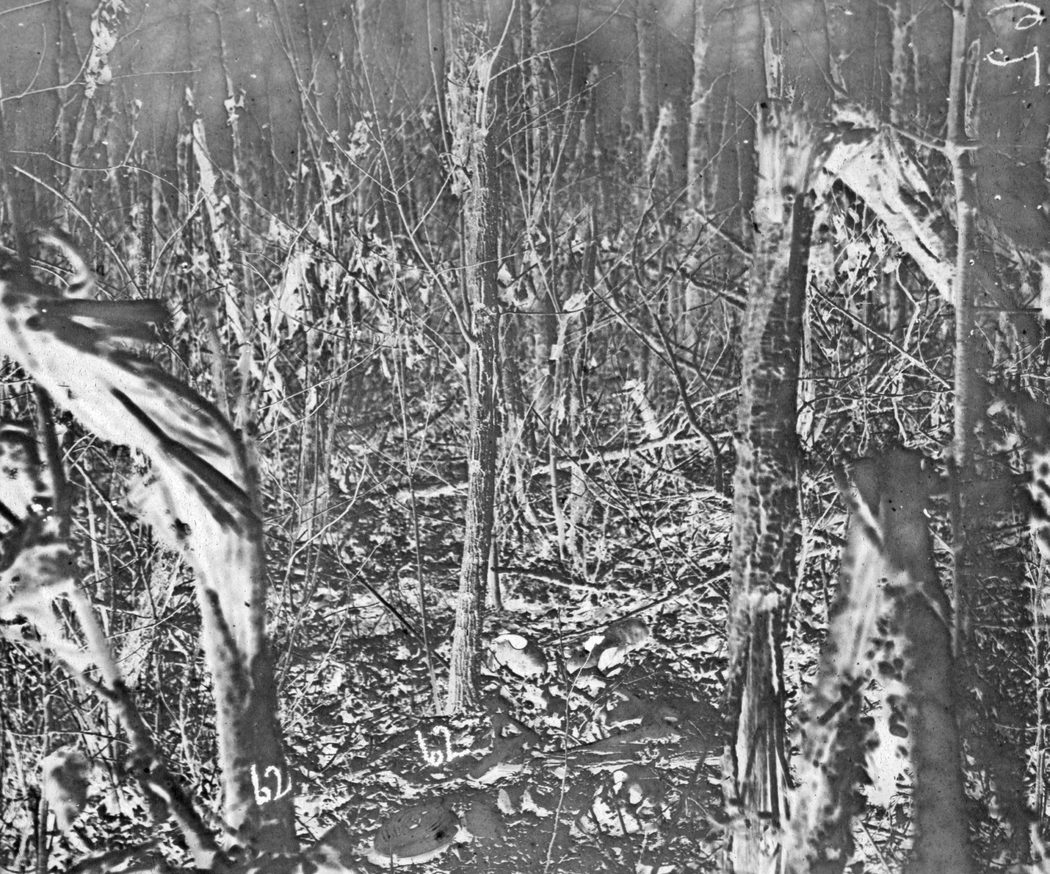
On the morning of May 6, the Federal II Corps, along with elements of the V Corps, launched a withering attack on the Confederate Third Corps along the Orange Plank Road. The Confederate infantry was pushed through the woods and into the Widow Tapp field, the last defensive line thinly held by
Colonel William T. Poague’s 16gun artillery battalion. General Lee was there observing the action. As Poague’s guns were working to slow the Federal advance, and as Lee sought to rally fleeing Third Corps soldiers, the Confederate First Corps commander, General James J. Longstreet, leading his anxiously awaited reinforcements, arrived on the field.
Lee met Longstreet and was seen grasping his hand and saying he was glad to see him because the Federals had broken the line. Further accounts say that Lee showed an emotion not seen before. A staff member recalled that he had not seen Lee so excited with anxiety and angst “upon his countenance.” Other witnesses wrote that Lee had a white handkerchief in his hands and would wipe his eyes. Lee exhibited demonstrable relief when Longstreet’s First Corps soldiers literally saved the day and the Army of Northern Virginia. Longstreet’s lead unit was the Texas Brigade. Lee’s immediate response to his relief was to lead the charge by the Texans. The soldiers’ response was to plead with Lee to let them do the gruesome work. This became the first Overland Campaign “Lee to Rear” event that is marked by monuments on the Widow Tapp field.
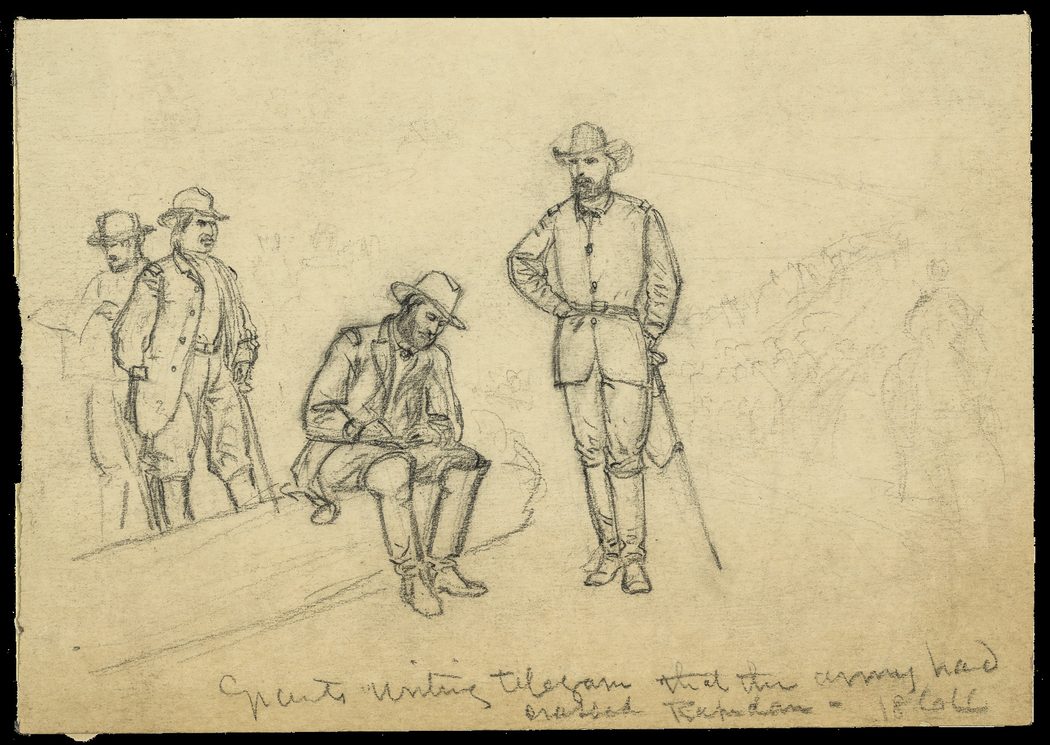
On the Federal side, General Grant established his headquarters for the Battle of the Wilderness on a slight knoll above the Orange Turnpike, today’s Virginia State Route 20. The reports of the carnage, casualties, and violence of the two days of the battle reached his headquarters. Outwardly Grant remained calm, but his nervous puffing of many cigars and whittling of sticks that destroyed his new gloves exhibited that he felt the strain of command. Grant maintained a firm demeanor while ordering troops to reinforce the threatened flank.
When an excited staff officer urged him to retreat, claiming that Lee would cut him off from a river ford, Grant exploded. The famous response by Grant to Confederate General John Gordon’s flank attack was written by his aide-decamp, Lieutenant Colonel Horace Porter, “Oh, I am heartily tired of hearing about what Lee is going to do. Some of you always seem to think he is suddenly going to turn a double somersault, and land in our rear and on both of our flanks at the same time. Go back to your command and try to think what we are going to do ourselves, instead of what Lee is going to do.”
As Gordon’s flank attack appeared to dissipate on the evening of May 6, Grant still showed a calm attitude, but his
October 2022
Chief of Staff, John Rawlins, is quoted as saying he saw Grant go into his tent and throw himself face down on his cot and vent feelings that showed he was deeply moved. Grant’s staff was also disturbed by this. Despite Gordon proceeding with a second attack, Grant slept through it. Grant awoke later, left his tent after his staff retired for the night, and commented to the New York Times reporter Sylvanus Cadwallader that Lee had given “sharp work” to the Federal forces.
Grant had his emotional reaction to the horrific battle and probably thought of the implications of failure. Grant’s response showed his resolve to be successful by his laconic comment as well as ordering the movement the Army of the Potomac south on the Brock Road to Spotsylvania Court House on May 7, and eventually to Appomattox.
The locations where Grant and Lee had these little known but consequential human reactions that steeled their resolve are preserved by the National Park Service. The Grant Headquarters site was first preserved by the Central Virginia Battlefields Trust in 2001, and subsequently acquired by the National Park Service in 2019. The property on the south side of Orange Plank Road where the Texas Brigade and Longstreet’s other First Corps troops met Lee was preserved by CVBT in 2021.
Send your book(s) for review to:
Our collection of Colt fi rearms and accessories, revolvers, pistols, carbines, accoutrements, photography, edged weapons and swords are of the highest quality. As taught by my father before me, we sell original quality items that are backed by our family guarantee.