One of the best illustrations of the Confederacy’s lack of manufacturing capacity when compared to that of the Union is the small number of revolvers produced in the South during the American Civil War. At least eleven Southern companies were established for the purpose of manufacturing revolving handguns during the War, but the total output of all these companies by the most generous of estimates was slightly less than 9,500 pieces. By comparison, Colt manufactured and delivered some 58,955 M1860 Army revolvers during 1863 alone, and delivered a total of 127,157 of his handguns between 1861 and 1863. The most successful Confederate handgun manufacturer, Griswold & Gunnison, delivered an estimated 3,700 revolvers circa 1862–1864, about 6% of Colt’s output during 1863 alone! Nearly 70% of all Confederate handguns were manufactured by three manufacturers; Griswold & Gunnison (approximately 3,700), Leech & Rigdon (approximately 1,500) and Spiller & Burr (approximately 1,450). Only one other maker, Rigdon & Ansley is believed to have reached the production output of 1,000 pistols. The other makers delivered no more than about 500 pieces with many delivering only a handful of revolvers. Interestingly, the four most productive companies were located in Georgia at some point during the war, with both Leech & Rigdon and Spiller & Burr relocating there from Mississippi and Virginia, respectively.
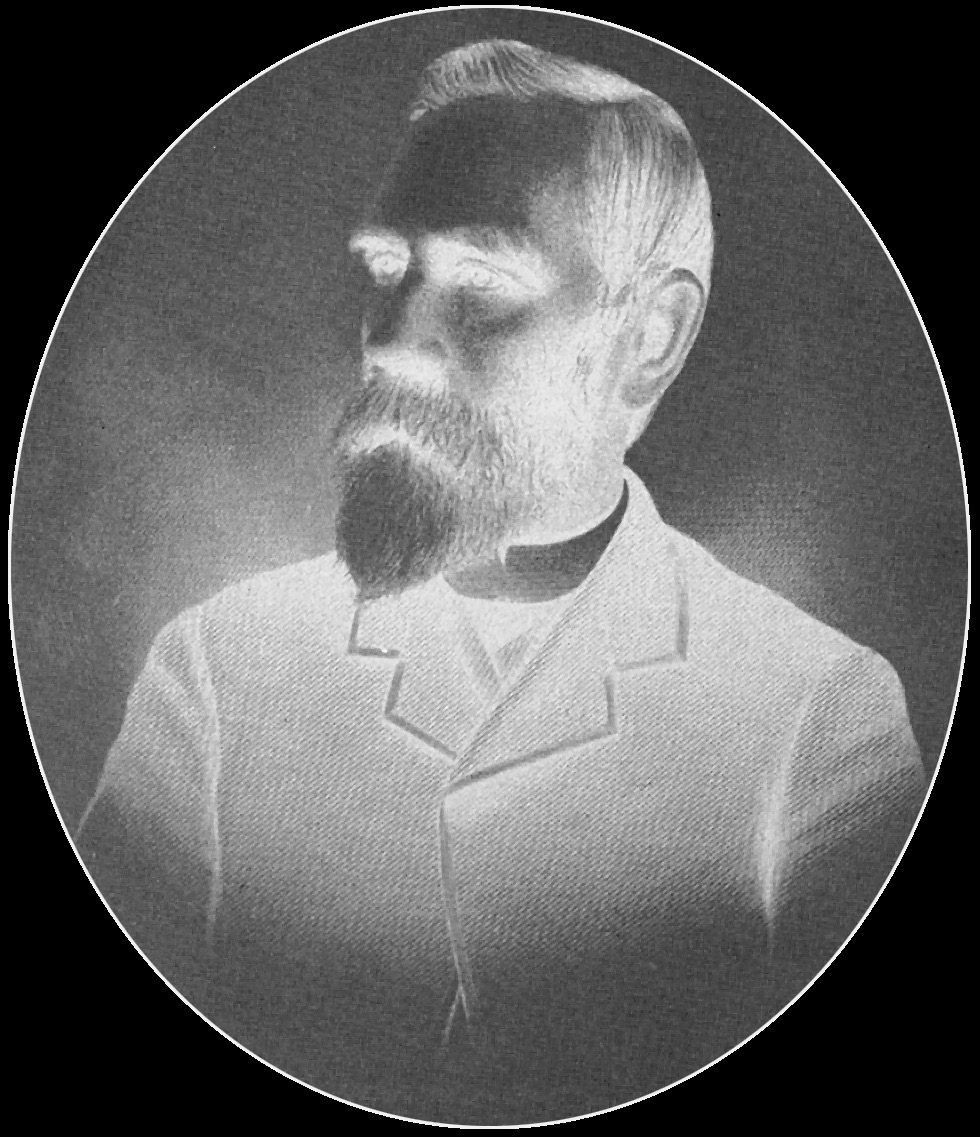
The firm of Spiller & Burr was initially established in Richmond, Va., at the beginning of the war for the express purpose of producing revolving pistols for the Confederacy. The company was a partnership between former Baltimore businessman Edward Spiller and Richmond steam engine manufacturer David Burr. The key to the potential success of the firm lay in a third partner, Lt. Colonel James Burton of the Confederate Ordnance Department. Burton was literally a world-famous machinist, firearms manufacturer, and designer with a resume in large scale military arms production that was unequalled during the period. Burton started his work in the world of small arms in 1844 when, at the age of 21 he went to work at Harpers Ferry as a machinist in the Rifle Works that had been established some two decades earlier by John Hall. Hall’s facility was a state-of-the-art manufacturing center based upon the concept of interchangeable parts and assembly line production. During his decade long tenure at Harpers Ferry, Burton was greatly influenced by Hall’s work and would eventually rise to become the Acting Master Armorer.
He would also be responsible for the United States adopting conical, expanding base ammunition. Known generically as the Minié Ball, due to its introduction by French inventor Claude Minié, it was actually Burton’s modified version of the projectile that was adopted by the US Ordnance Department in 1855, ushering in the era of smaller caliber rifled longarms for use by all US troops. Interestingly, with his career skyrocketing during his short time at Harpers Ferry, Burton accepted a new job in 1854 with the Ames Manufacturing Company, which not only produced small arms, but also the machines to manufacture them.
The following year, Burton took on the daunting task of becoming the Chief Engineer of the newly established British Royal Small Arms Manufactory at Enfield Lock, known as RSAF Enfield. His initial project involved installation of the new manufacturing machinery and establishing the assembly line at Enfield. Burton remained in this position through 1860, when he was hired by the firm of J.R. Anderson & Company to oversee installation of equipment to produce small arms in the old Virginia Manufactory facility in Richmond. The following year Burton was made the armory’s superintendent. In that role he subsequently supervised the installation of machinery the state of Virginia had captured when it took over the Harpers Ferry Armory in April 1861. In an ironic turn of events, Burton set up the very equipment that he had formerly overseen as Master Armorer at Harpers Ferry in a facility dedicated to arming the forces opposing the will of the United States of America to preserve the Union.
With Burton’s wealth of experience, and with his direct line of communication to the Confederate Ordnance Department, Spiller & Burr were undoubtedly confident that they would be able to establish their factory and secure a large contract to produce handguns for the Confederacy. To that end a contract to manufacture 15,000 .36 revolvers “on the pattern of Colt’s pistols” was granted to Spiller & Burr on November 20, 1861. The only delay in beginning the manufacture of the guns was obtaining the necessary machinery, which Burton was to supervise the installation of, while at the same time attending to his duties at the Richmond Arsenal. The plan went somewhat awry the following May, when Burton was transferred to Macon, Ga., to establish an armory there. Spiller & Burr followed Burton and established their factory in Atlanta, about 80 miles north of Macon. By the end of 1862, the firm had managed to produce only a small number of sample revolvers, estimated at less than fifteen. These guns were subsequently shipped to Richmond for inspection by Major Downer, the newest superintendent of the Richmond Armory. While Downer’s assessment of the pistols was essentially positive, he suggested a few minor changes that would be significant improvements to the guns.
Although the contract specifically called for production based “on the pattern of Colt’s pistols,” the product delivered by Spiller & Burr was in fact a near identical copy of the Whitney “Navy” revolver, with the significant difference that the frame, grip strap, and back strap were all cast as a single piece from brass, rather than being made of steel as were the Whitney guns. It is generally believed that the change was made because Spiller & Burr acquired the plans and some machinery to make the pistols from the S.C. Robinson Company of Richmond. The firm had intended to produce the handgun, but decided instead to concentrate on manufacturing a Sharps pattern, breechloading carbine.
Like the Whitney, the Spiller & Burr was a six-shot, single action percussion revolver with twopiece wood grips. The gun had an octagonal barrel and a toggle link loading lever. Similar to the Whitney, the linked loading lever included a cylinder arbor pin secured by a rotating wingnut that allowed a curved keyway cut into a screw to be aligned. The Spiller & Burr was such a close copy that it included the space between the front of the cylinder and the frame as on the Whitney revolver where only the threaded end of the barrel came in close contact with the cylinder; the loading lever was retained by the early Whitney style ball detent system. Downer’s commentary noted several minor defects that he felt should be corrected and one major defect that he felt was essential to be remedied. His comments were as follows:
“I have examined the pistols made by Messrs. Spiller and Burr and Co. and find no defect which will but remedy themselves as the machines and tools become adapted to the work required, except as are incidental to the model. I think the style of the catch of the ramrod is faulty and I would recommend a spring and catch like that of the Colt’s pistol. I would also recommend a slot cut in the base of the cylinder between the nipples in which the face of the hammer will fit. The caliber of this pistol is somewhat smaller than the Colt’s. I think rounding of the muzzle of the pistol is an improvement. I would beg to suggest however that I think a plain brass mounting is superior to plated.”
Author William Gary in his work Confederate Revolvers noted that one of the “First Model” Spiller & Burr revolvers survives today (#13) and has a plated frame, a ball catch lever, no safety slots on the rear of the cylinder, exposed barrel threads, a thinner brass frame with a gap at the front, and a bore slightly smaller than .36 caliber. All of Downer’s recommendations, as well as some later ones from James Burton were eventually Obverse overall view of 2nd Model Spiller & Burr revolver #517. All photos by Tim Prince.
Butt of #517 showing the serial number. Lt. Colonel James Burton. Left: Close up of the frame and triggerguard showing the subtle variation in brass coloration with the composition of the triggerguard slightly different from that of the frame. Also note the simple toggle style rammer and the serial number on the cylinder.
Inside the frame of #517. Note the rough finishing of the interior and the cryptic “M” mark on the lower right rear of the frame.
Above: Close up of the interior of the triggerguard showing casting flaws and rough finishing on areas of the revolver that were of no importance to the gun’s functionality.
taken to heart by Spiller & Burr. The “Second Model” Spiller & Burr revolvers were subsequently produced with thicker brass frames and top straps that were not plated, with no gap forward of the cylinder, but with safety slots on the cylinder rear, a Colt style loading lever catch, and a consistent .36 caliber bore.
The next batch of Spiller & Burr revolvers delivered to the Macon Arsenal in the spring of 1863 for inspection is believed to be “First Model” as well. Of these forty revolvers, thirty-three (about 83%) were rejected by Burton for, to quote Gary, “such serious and fatal defects that they could not be repaired.” Gary noted that the newly re-designed Second Models started the serial numbering system over again at 1, thus the first fifty to sixty revolvers of the Second Model series share numbers with earlier, First Model guns. He further noted that only two “First Models,” #13 and #23, were known to Gary when his Confederate Revolvers was published.” It appears that the issues involved in modifying and strengthening the guns so disillusioned Spiller & Burr that in June 1863 they asked the Confederate government to buy out their operation and take over production. When the Confederacy declined, Spiller & Burr continued producing the revolvers at a snail’s pace, eventually delivering some 840 pistols by January 1864. That same month, the Confederacy acquiesced to the firm’s request and took over, then moved the operation to Macon. Once relocated, some additional 400 to 600 revolvers were completed. It is generally believed that most later guns were assembled and finished from completed parts on hand at the time of the takeover. As Sherman’s Bummers approached Macon during the end of 1864, the Macon machinery was packed up for transport further south but was never reassembled, ending production of the Spiller & Burr revolver, with a grand total of between 1,250 and 1,450 being produced over a slightly less than two-year period.
Like most Confederate made revolvers, the Spiller & Burr handguns show a combination of crudeness in fit and finish with a level of workman-like quality in the areas that truly mattered. The cast brass frames often show minor flaws, and nearly always show the tool and file marks of their hand finishing. The frames vary in coloration based upon the exact composition of the brass used to cast them, with some showing a decidedly redder color than others due to high copper content. While tool marks might be present on the interior, the exterior is usually well-polished, and the fit of metal parts is fairly good.
The octagonal barrels were blued, and while they usually vary between 6-inches and 7-inches in length, the seven-groove gaintwist rifling is typically well cut and consistent. Like so many Confederate-made arms, the Spiller & Burr often shows cryptic letter markings on concealed surfaces, with the letters M, J, G, and E often found on the frame under the grips. The guns are typically serial numbered on all the major components, with the cylinders only numbered on about half the surviving examples. The barrels of approximately 20% of the production are marked SPILLER & BURR on the top flat, near the frame, but the majority of production was unmarked. Roughly half the extant examples are stamped C.S. on the lower front of the frame, with the mark found on both the right and left sides. It is not clear if this represents an inspection/acceptance mark or not. The only thing that appears to be consistent about Spiller & Burr markings is that they are not consistent, and even the serial numbers that are the most consistent of the markings, are not always present everywhere they are expected to be and are sometimes present in places where they are not expected.
The Spiller & Burr revolver pictured in this article is a very nice condition gun in terms of Confederate firearms which often show heavy wear and use. The gun is numbered 517 and a great example of a “Second Model” revolver. Like so many Spiller & Burrs, the gun is unmarked with the exception of serial numbers and a single cryptic mark, the letter “M” on the frame under the left grip. The barrel of this example measures 6-inches from the muzzle to the front of the frame and 6-15/16-inches to the face of the cylinder. The latter measurement is the most standard way of measuring a revolver’s barrel length.
The gun is well documented as it is listed by serial number on page 74 of the seminal 1963 book Confederate Handguns, written by William Albaugh III, Hugh Benet Jr., and Edward Simmons. The gun has a nice collection provenance back to the Howard Mansard collection in the 1950s and was subsequently owned by R.A. Pritchard Jr, Don Tharpe, and a private foundation that loaned this gun to the Frazier History Museum in Louisville for roughly two decades.
Tim Prince is a full-time dealer in fine and collectible military arms from the Colonial Period through WWII. He operates College Hill Arsenal, a web-based antique arms retail site. A long time collector and researcher. Tim has been a contributing author to two major book projects about Civil War era arms including The English Connection and a book on southern retailer marked and Confederate used shotguns. Tim is also a featured Arms & Militaria appraiser on the PBS Series Antiques Roadshow.