Lincoln signed the bill into a law that stipulated a fine of up to $10,000 and a two-year term in prison as the potential punishment for accepting bribes from contractors. The senate further opened an investigation into Simmons’ conduct which determined that his actions were “entirely inexcusable.” With pressure mounting on him, Simmons resigned on Sept. 5, 1862, before the senate could vote to expel
160 pages of the best selection of historical reenactment items from Medieval era to Civil War era. Includes over 60 pages on our famous tents and a 4-color section.
“The STORIES BEHIND THE PICTURES”
3 ways to order YOUR COPY!
Name Shipping Address City
him, which they almost assuredly would have done.
Schubarth would make eight additional deliveries in 1863, the last on October 14. In all he would deliver 9,450 guns, with only 4,463 (47%) being “1st Class.” The balance of the guns delivered were either “2nd Class”
Significant
Civil War
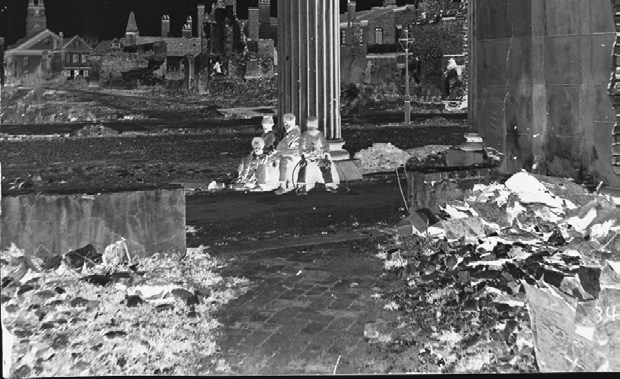
Photographs CHARLESTON IN WAR By Stephen Davis & JACK W. MELTON JR
(4,915 or 52%) or “3rd Class” (72 or slightly less than 1%). While most sources indicate that Schubarth delivered a total of 9,500 guns between December 1862 and October 1863, the detailed breakdown above indicates that he only delivered 9,450. The missing 50 guns appear to be from the April 24 delivery that included only 950 guns, not the full 1,000 as did all the subsequent deliveries. It is possible that 50 guns were simply not accepted, thus they were not paid for, even though they were technically “delivered.”
Research by arms collector, historian, and author George Moller suggests that only about 500 Schubarth arms were delivered with Schubarth marked locks. It is hypothesized that the balance of the guns delivered were either marked by Providence Tool or Alfred Jenks, further suggesting that at least some guns Schubarth submitted were not even assembled by him, but rather produced by other makers. Moller suggests that at least some Schubarth deliveries were produced by the Norwich Arms Company. With less than 10,000 guns delivered by Schubarth, and only an estimated 500 or so produced with his lock markings, these
“The best little book on Barnard”
are incredibly scarce guns today. Slightly more than 448,000 contract U.S. M1861 rifle muskets were delivered by contractors between 1862 and 1865, so Schubarth produced guns represent only about 2% of those M1861 contract arms. Thus, Schubarth marked guns only represent about 1/10th of 1% of all contract M1861s.
Due to Schubarth’s inability to deliver his arms on the specified timeline, his contract was not renewed and no extension was granted. Thus, no further arms were delivered after Oct. 14, 1863. Schubarth returned to his gunsmithing and hardware business in Providence at the conclusion of the failed contract, where he worked until 1866. He then gave the shop over to his brother. Schubarth moved to New York City where he lived until his death in 1908. While Schubarth’s contract work for the U.S. government during the Civil War can rightfully be looked at as a failure, his legacy was the passing of a new law that would help limit the graft in U.S. military contracts.
The Schubarth contract U.S. Model 1861 rifle musket pictured in the accompanying photos is one of the extremely rare C. D. Schubarth marked The American Civil War was the first war in which both sides widely used entrenchments, repeating rifles, ironclad warships, and telegraphed communications. It was also the first American War to be extensively photographed. Mathew Brady, Alexander Gardner and Timothy O’Sullivan are famous for having made iconic photographs in the Civil War’s eastern theater. George N. Barnard deserves to be ranked in this top tier for his photographic work in the war’s western theater. A civilian photographer hired by Gen. William T. Sherman’s chief engineer to take pictures of fortifications around Atlanta, Barnard took several hundred of them in and around the city in the fall of 1864. His most famous is the site of Union Maj. Gen. James B. McPherson’s death in the battle of Atlanta, July 22, 1864. Thus far, no comprehensive, definitive listing has been made of the photographer’s work. For this book we have chosen a hundred images we deem “significant.”
South Carolina residents add 9% sales tax Historical Publications LLC 520 Folly Road, Suite 25 PMB 379
examples. The lock of the gun is marked with a {Spread-Winged Eagle} between the hammer and bolster and under the bolster in three lines: U.S. / C.D. SCHUBARTH / PROVIDENCE. The tail of the lock is dated 1863; the breech is also 1863 dated. Interestingly, despite being fully sub-inspected, the gun bears no sub-inspection or final inspection cartouches on the counterpane of the stock; the wood is so crisp it is clear that no such mark was ever applied suggesting that this particular gun may be one of the 50 missing guns from the April 1863 delivery. While it is not clear exactly why, this gun was simply not accepted for some reason. It is worth noting that, like many U.S. M1861 contract guns produced under the earliest contracts issued during 1861, the gun is mounted with the M1858 style rear sight, rather than the later M1861 pattern rear version. The M1858 pattern was used on early production M1861 rifle muskets at Springfield through July 1861. The sight has the concave curved tops to the sight leaves as well as the exposed tension screw; these were changed after adopting the Elisha Root designed M1861 rear sight in July 1861. Many contractors who re
Ordering info: $19.95 plus $3.50 s&h
ceived their p a t t e r n
I still travel over 100,000 miles a year attending all major antique arms and Civil War shows as well as all major auctions of historical arms and Civil War. I provide services in securing the finest items with guaranteed authenticity to the most discerning Institution or collector. My fees are reasonable and well worth the "peace of mind" of having qualified written authenticity report on valuable objects.