New Jersey Governor Rodman Price, who viewed himself rather grandiosely, apparently decided to capitalize on his Adjutant General Thomas Cadwallader’s interest in evolving weapons technology. In 1856 he dispatched Cadwallader on a tour of Europe, with instructions to study, take notes, and make comments on the status of European armies and their weaponry to “obtain correct information as to the most improved arms, tactics and drill, applicable to the efficiency and improvement of our militia system.”
At the same time, the Federal
government assigned a credentialed arms expert and ordnance officer of vast experience, Major Alfred Mordecai, who had previously traveled abroad on inspection tours, to conduct the same mission. Price and Cadwallader were evidently unaware they were duplicating the Federal effort or didn’t care. To his credit, for the first leg of his trip, the adjutant general picked Samuel Colt, the famed firearms inventor who began his small arms manufacturing career in Paterson, N.J., but by then was located in Hartford, Conn., as a traveling companion.
Cadwallader and Colt toured the Royal Small Arms Factory at Enfield Lock together, and the adjutant general correctly reported that the British government had adopted the “American System” of firearms manufacturing, with precise machinery creating interchangeable parts. In the past, when firearms needed maintenance in the field, replacement parts had to be hand fitted, so the “American System” was a decided improvement. Cadwallader described the manufacturing process in some detail, including the use of American Blanchard lathes
by Joe Bilby
to produce gun stocks of identical dimensions. At the time of the adjutant general’s visit, Enfield was producing the Model P53 rifle-musket, the AK-47 of its day that would become one of the nineteenth century’s iconic military small arms and, supplied by private contractors, the second most common arm used by both sides during the American Civil War.
Cadwallader subsequently visited the British supply depot and production site for artillery pieces and artillery and small arms ammunition at Woolwich before crossing the channel to France, where he was impressed with the quality of the soldiers in the French army (over the British) but lamented the dictatorship of Napoleon III. On a more practical level, he submitted a series of questions to French ordnance officers regarding firearms cost, cartridge making, bullet diameter and lubrication, gun finishes, arms making machinery, and trends in artillery.
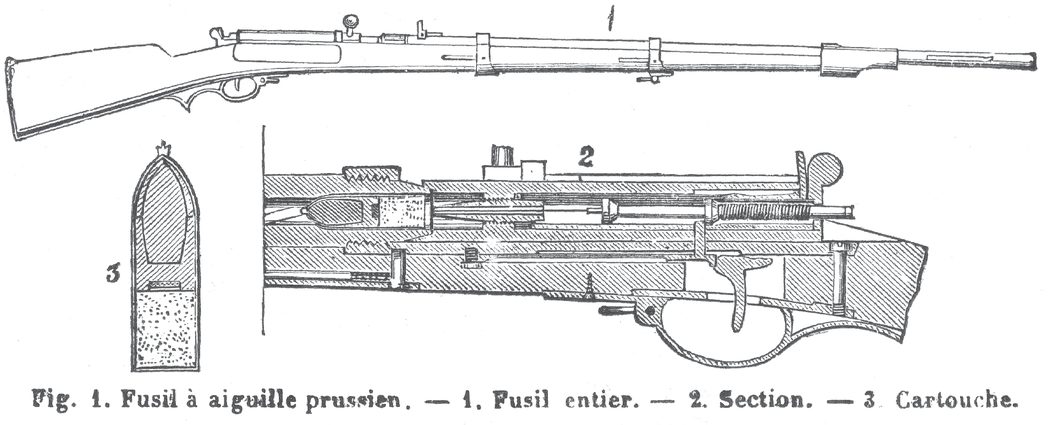
Leaving France, the adjutant general traveled through Belgium, where he visited the Waterloo battlefield and moved on to the German principalities along the Rhine and then Prussia, which impressed him considerably with the size and apparent quality of its army. Cadwallader was particularly interested in the fact that the Prussian army was using the breech-loading Dreyse “needle gun,” which increased the infantry’s rate of fire dramatically. In Austria, he asked the American ambassador to forward a description of Austrian weapons manufacturing to him in Trenton, but it was apparently lost in transit. In a brief side trip to Piedmont, he concluded that the “Sardinian troops …will distinguish themselves…whenever called upon.”
The interaction between Cadwallader and Price suggests that they viewed themselves as valuable contributors to national as well as state policy. The adjutant general’s conclusions at the end of his trip were that the political situation in Europe was dicey, most governments tended toward the despotic, and that America should not get involved in any “entangling alliances.” Following this bit of foreign policy advice to the governor, the adjutant general returned to his usual annual report recommendations, including, once again, increasing the number of uniformed militia companies and requesting they be paid for drilling, with the money to come from a tax on military age men who chose not to drill. As in the past, neither Price nor the state’s Assembly or Senate was eager to initiate this policy. One writer described the New Jersey militia at the outbreak of the Civil War as “a system of shreds and patches.”
Rodman Price had a dubious background. As a naval quartermaster in California after the Mexican War, he dabbled in local politics and appears to have speculated with Federal money. Recalled to explain his actions, the ship bearing evidence sank in a storm, leaving Price with a clean slate. He was elected to one term in Congress and then as governor, the last post of his political career. With the outset of the Civil War, he advocated New Jersey joining the Confederacy, which no doubt embarrassed his son, a Union officer. The former governor was finally arrested based on new evidence about his California activities. Released due to ill health, his case never came to trial, as he passed away on June 7, 1894.