“The woods in front were so thick that it was impossible to see more than 20 steps from our line.”
Located west of I-95, in central Virginia’s rapidly urbanizing heart, lies 36 acres of once-tangled backwoods, land that played a key role during the opening day of the May 1864 Battle of the Wilderness. Bordered on the north by the residential subdivision known as Lake of the Woods, on the west and east by privately owned tracts, and on the south by busy Virginia State Route 20, it is a major part of telling the story of the Overland Campaign’s opening engagement.
On May 5, 1864, divisions of the Confederate Second Corps straddled the Orange Turnpike (Route 20) near the acreage which we are now referring to as General Battle’s Counterattack. National Park Historian Bert Dunkerly researched and described the May 5th action in this area as follows:
“Extending [General Edward] Johnson’s line to the south was the division of General Robert Rodes. Shortly after noon, two divisions of General Gouverneur K. Warren’s Union V Corps launched an attack against Johnson’s and Rodes’ line. One of Warren’s divisions, under General Charles Griffin, attacked down the Orange Turnpike through Saunders’ Field, while the other, under General James Wadsworth, attacked through the woods to Griffin’s left (south). Wadsworth’s line overlapped Rodes’ and as the attack developed, Rodes struggled to hold back the overwhelming Union force that threatened to turn his flank. Reinforcements rapidly approached, along the Turnpike, in the form of General John B. Gordon’s Georgia Brigade and General Junius Daniel’s North Carolina Brigade. Both units left the Turnpike and pushed cross country, moving southeast, to reach the threatened Confederate right flank. Splashing across Wilderness Run, they slammed into Wadsworth’s brigades and sent the Union troops fleeing in retreat, thus stabilizing the Confederate line.
“To the north, along the Turnpike, Griffin’s division clashed with Johnson’s men just to the east of the [General Battle’s Counterattack property], in what is now park property. General John M. Jones’ Confederate brigade extended south from the road and confronted General Joseph Bartlett’s brigade of Union troops. Jones himself was struck down in the attack and his brigade broke to the rear under the weight of the attack. Bartlett punctured the Confederate line and pushed further beyond Johnson’s line. Elements of the 20th Maine managed to push nearly ¼ mile farther into the Confederate rear before falling back.
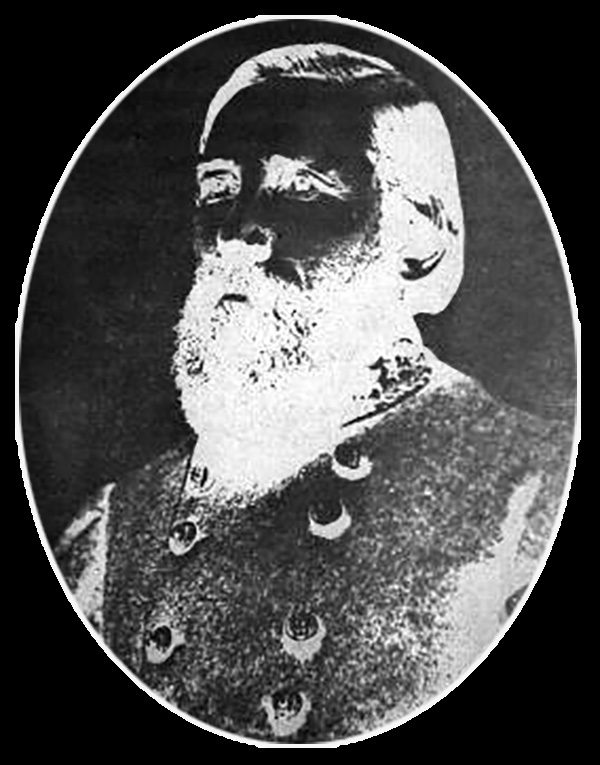
“Alabama troops positioned north of the Turnpike on [General Battle’s Counterattack property] under General Cullen A. Battle attacked southward into Bartlett’s exposed flank and forced him to retire back across Saunders’ Field. With the Confederate line re-established, Griffin’s men fell back to their lines.”
General Cullen A. Battle’s 6th, 3rd, 5th, 12th, and 61st Alabama Regiments, launched their counterattack against Bartlett’s brigade from the General Battle’s property. The Counterattack Union advance, along the Orange Turnpike, was thwarted by this action.
According to an account by a 3rd Alabama soldier, “Orders were given for regimental commanders to move up rapidly to the crest of the hill and hold it at all hazards in case Jones gave way. The woods in front were so thick that it was impossible to see more than 20 steps from our line, and all though that General Jones held the crest of the hill. Our enemy soon hurled a heavy column against General Jones, sweeping down on his flanks and it became evident that he was pressing our men back. At this juncture, Battle’s brigade moved up at a double-quick, but instead of finding Jones on the hill, his men were scarcely thirty steps beyond the branch. While crossing the branch the line became broken and scattered and the cry from the road of ‘[f]all back,’ ‘surrendered,’ and ‘cut off,’ caused such confusion to both lines that the 3rd and 6th Alabama became involved in the general difficulty.”
He continued, “About that time, the 6th and 61st Alabama swung around from the left of the road, struck the enemy on the flank, drove him handsomely and inflicted heavy loss. The 12th Alabama, being on the extreme left, did not come into contact with the enemy. While driving the Yankees, the 6th and 61st captured two pieces of artillery and a large number of prisoners.”
The American Battlefield Trust (ABT) has contracted to purchase this Wilderness property that is within the Civil War Sites Advisory Commission’s defined Core Battlefield Area and just west of the National Park Service Saunders Field battlefield. Having received both state and federal grants, there is still a $49,000.00 shortfall in covering the cost of this property with an impending closing date of April 2021.
As with all struggles, one that is coordinated holds the best chance of a positive outcome. The Central Virginia Battlefields Trust has partnered with ABT in a coordinated effort to raise the remaining needed funds. This is not CVBT’s first partnership with ABT as both organizations enjoy a symbiotic relationship. Several previous acquisitions, including CVBT’s donation of one million dollars towards the Fredericksburg’s Slaughter Pen farm and several Chancellorsville property partnerships have been realized.
I have recently walked this 36acre tract and viewed the historic earthworks and road traces still remaining. There is nothing like standing on a battlefield and visualizing the history in your mind’s eye. Embedded in this ground are the stories of those who gave so much, and, in some case everything; we need to tell what happened here.
Preserving this site of the Confederate General Cullen A. Battle lined up his brigade of Alabamians and rushed to combat from the 36 acres ready for preservation.
Confederate counterattack adds an essential piece to our understanding of the opening volleys in this battle. With ever looming development pressure along Route 20 (Orange Turnpike) opportunities to save battlefield land in this area of Virginia must be acted upon quickly.
So, what is our plan of attack to save this important piece of history? We (CVBT) have offered to raise half the remaining $49,000 balance. We need to raise $24,500.00 before April 2021 to meet the closing date. I was pleased to be asked by ABT President David Duncan to assist in this project and continue our ongoing partnership to preserve this country’s history for generations to come.
Tom Van Winkle serves as the president of CVBT and has been an advocate for preservation for many years. Central Virginia Battlefields Trust has been saving land at Fredericksburg, Chancellorsville, The Wilderness, and Spotsylvania Court House for twenty-five years.
Premier Auction
Fine, Historic, & Investment Grade Firearms
Historic Civil War Confederate “Stars and Bars” Nine-Star First National Flag Well-Documented D Company No. 13 Colt Model 1847 Walker Percussion Revolver Documented as Owned by Texas Pioneer and Confederate Cavalry Veteran John Z. Leyendecker with Extensive Research
Colt Model 1861 Navy Revolver with Pearl Grips
Napoleon Cannon Documented Cased Pair of Historic
National Treasure Ulysses
Civil War Confederate Columbus
and Silver and Gold Plated Colt
Model 1860 Army Percussion
Revolver with Carved Mexican
Eagle Grip Exhibition Quality Engraved
Remington New Model Army Percussion Revolvers with Relief
Historically Significant,
S. Grant’s Civil War Appointment as Major General Authorized by Abraham Lincoln and Secretary of War Edwin Stanton, Formerly from Carved Russian Imperial
Coat of Arms Grips Presented to the Czar of Russia by First Lady Mary Todd Lincoln
Extremely Rare New Haven Arms Company Iron Frame Henry Lever Action Rifle Historic, Documented Ames Gilt and Silver Mounted Model 1840 Foot Infantry Officer’s Sword and Scabbard with Presentation Inscription to George B. McClellan, Later General-in-Chief of the Union Armies, Citing His Leadership in the Mexican-American War
Desirable Civil War Era LeMat Percussion “Grape Shot” Revolver