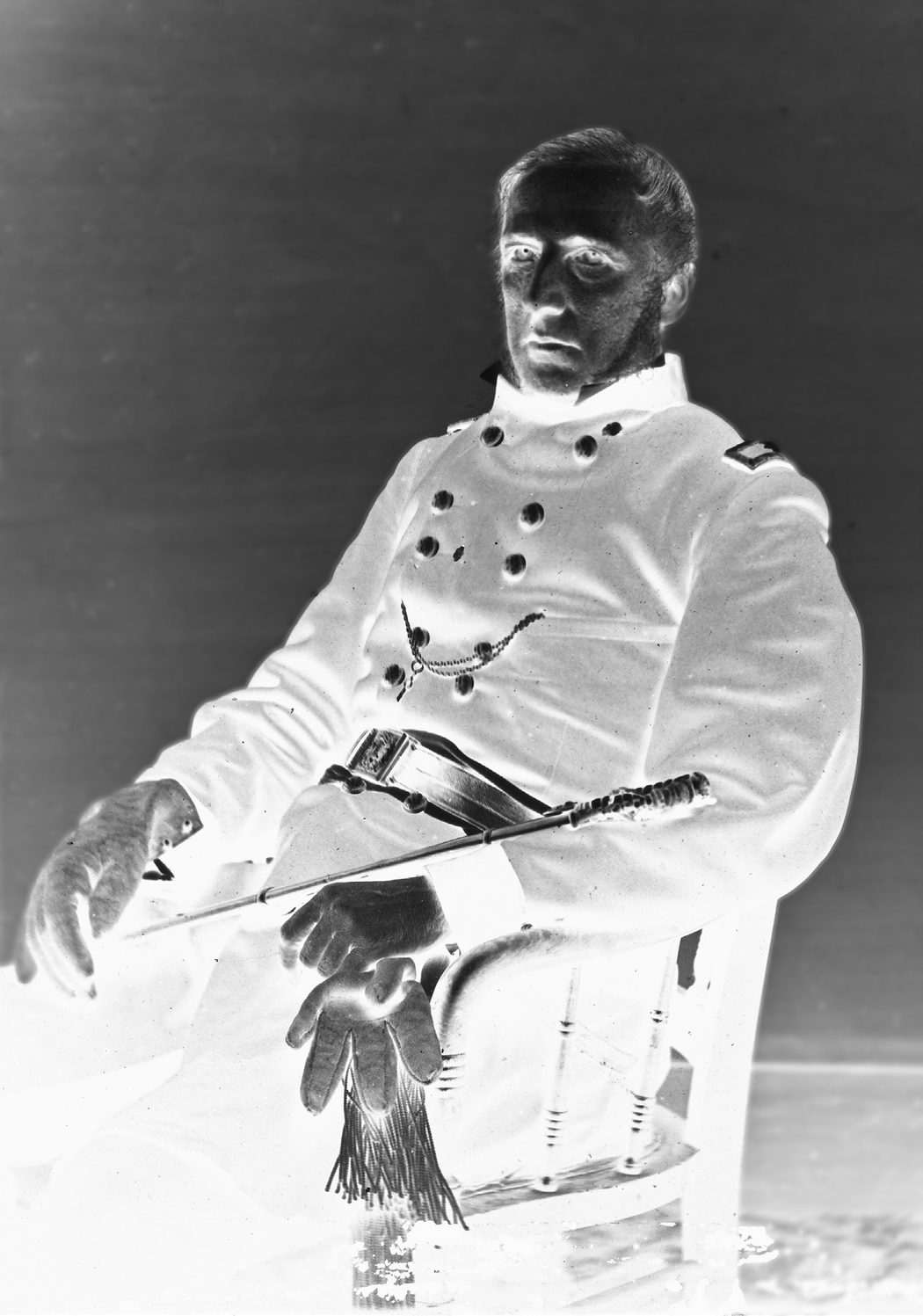
If you’re driving along Orange Plank Road, just west of the historic Brock Road intersection during your battlefield history stops, you’ll pass the Wadsworth Memorial. It’s one of eight monuments within the National Park Service protected lands of the Wilderness Battlefield. General James Wadsworth was the highest-ranking officer to be mortally wounded and lose his life in the battle that opened the Overland Campaign through central Virginia. The memorial’s words and west-facing profile offer only a small reminder of the general’s life and a starting point to explore more of this officer’s story.
Born on October 30, 1807, to wealthy parents in Geneseo, New York, James Wadsworth’s youthful years focused on preparing him for responsibilities. He attended and studied law at both Harvard and Yale and was admitted to the bar. Wadsworth spent his prewar years managing his family’s estate, supporting philanthropic efforts, and entering politics. In
Brigadier General and Brevet Major
was mortally wounded near this spot May 6, 1864 and died two days later
resist a Confederate advance which
the 1860 presidential election, Wadsworth served as a presidential elector for Abraham Lincoln. In 1861, he attended the Washington peace conference, but after war became inevitable, Wadsworth considered it his duty to volunteer. Despite his complete lack of military experience at the outbreak of the War, Wadsworth was commissioned as a major general in the New York State Militia in May 1861. He served as a civilian volunteer aide-de-camp to Maj. Gen. Irvin McDowell at the First Battle of Bull Run. McDowell recommended him for command and, on August 9, Wadsworth was commissioned as a brigadier general of volunteers. On October 3 he took command of the 2nd Brigade, 3rd Division, I Corps, a position he held until March 17, 1862.
James S. Wadsworth General United States Volunteers commanding the 4th Division V Corps Army of the Potomac
in the field hospital of Hill’s Confederate Corps. He fell attempting desperately to threatened the strategic Plank- Brock Road intersection.
From March 17 to Sept. 7, 1862, Wadsworth commanded the Military District of Washington. As General McClellan prepared for the Peninsula Campaign, Wadsworth complained to President Lincoln that there would be insufficient troops to defend the capital. Lincoln countermanded McClellan’s plan and restored a full corps to the Washington defenses generating ill feelings between McClellan and Wadsworth.
Seeing no prospects for serving in McClellan’s army, Wadsworth allowed his name to be put into nomination for governor of New York, but declining to leave active duty to campaign, he lost the election.
After McClellan left the Army of the Potomac and following the Union defeat at the Battle of Fredericksburg, Wadsworth was appointed commander of the 1st Division, I Corps on Dec. 27, 1862. The Battle of Chancellorsville put Wadsworth’s skills to a test in combat. His division crossed the Rappahannock River below Fredericksburg along Tidewater Trail on May 1, 1863, and was only engaged lightly in the resulting fight. Wadsworth’s actions at
the Battle of Gettysburg were more substantial. Arriving as the vanguard of Maj. Gen. John F. Reynolds’s I Corps on July 1, 1863, Wadsworth’s division bore the brunt of Confederate attacks that morning and afternoon from both the west and north. This ferocious fighting bought time to bring up sufficient forces to hold the high ground