According to the Franklin Repository, Chambersburg’s Republican newspaper, the presidential contest in 1864 presented a clear choice to the electorate. A vote cast for McClellan would mean a “humiliating surrender to our barbarous foes.” A choice for Lincoln was a choice for the “utter overthrow of treason.”
The Valley Spirit, edited by Democrats, also saw a stark contrast. The Spirit embraced McClellan, who as president “would remove all obstructions and make the road to re-union and peace easy….” A ballot cast for Lincoln was a vote for “executive despotism and the destruction of constitutional liberty in America….”
In this column we will return to the Valley of the Shadow archive and review the Chambersburg newspapers in October November of 1864. Through these two different prisms we will examine the candidates, the issues at stake, and the campaign as it was waged in the local press. After election day we will view the significance of the Republican victory as it was seen by the highly partisan journalists in this Pennsylvania community of 5,000.
GEORGIA’S CONFEDERATE MONUMENTS In Honor of a Fallen Nation Gould B. Hagler, Jr.
This unique work contains a complete photographic record of Georgia’s memorials to the Confederacy, a full transcription of the words engraved upon them, and carefully-researched information about the monuments and the organizations which built them. These works of art and their eloquent nation’s profound grief, praise the soldiers’ bravery and patriotism, and pay homage to the cause for which they fought.
was a stranger to no one. Nevertheless, the Repository reminded the readers of the details of his life in an article that also introduced Lincoln’s running mate, Andrew Johnson. The laudatory biographies stressed their humble origins. Both men were born in slave states, “into a class of poor whites which slavery creates and preserves for its own convenience.” Lincoln entered Illinois as a “portionless, illiterate boy.” Johnson in his youth was “poor as Lazarus.” These two determined, self-made men were the ones to lead the country to victory.
The Repository further emphasized that Lincoln and Johnson were not fanatics. “Mr. Lincoln was never an Abolitionist until slavery declared war on the Union.” Johnson was “a tacit supporter of slavery until slavery struck at the life of his country.”
The Valley Spirit reminded readers of George McClellan’s military record and contrasted his approach to the war with Lincoln’s. By his victory at Antietam McClellan saved Pennsylvania from invasion in 1862, a matter of some importance to the citizens of this vulnerable border region. Though McClellan was not in command
at Gettysburg, the victory there was largely due to his efforts, as the army that drove the invaders from Pennsylvania was the army he built.
The Democratic candidate was not only a skillful general but also
a humane one. The Spirit quoted a letter written by McClellan to Lincoln urging that the war be “conducted upon the highest principles known to Christian civilization.” McClellan had criticized the destructive campaign waged in the Shenandoah Valley. The war ought not be a “war upon populations, but against armed forces and political organizations.” The Spirit argued that there was more at stake than Christian principles: there would be payback for this “desperately wicked” method of warfare, a policy “revolting to the civilization of this age.” The people of south central Pennsylvania would be the ones to suffer from any retaliation that was sure to follow.
In one issue the Repository named prominent Democrats who were supporting Lincoln. One was the James Reynolds, Pennsylvania’s quartermaster general and brother of Gen. John Reynolds, slain at Gettysburg. Another was Gen. George McCall, formerly the commander of the Pennsylvania Reserves, who had served under McClellan but “espoused the cause of Lincoln as soon as McClellan was nominated.” These and others named had “adhered to the Democratic party until it proved itself utterly faithless to the government, and they have sacrificed party to save a country imperiled by treason.” These Democrats are doing the right thing, the Repository told it readers. Other Democrats should do the same.
Both newspapers ran articles on the soldier vote, seen to be a significant factor in the election for two reasons. The votes themselves mattered, of course, and the sentiments of the soldiers also would influence others.
One Franklin County soldier, writing from a hospital, informed the Repository that a vote was held there and “it was unanimous for Lincoln.” The same soldier reported a similar outcome in another military hospital: 147 for Lincoln and only 16 for “Geo. B. Stick-in-the-mud.”
The Spirit ran a report on some chicanery aboard a naval vessel. A correspondent wrote that “Today two citizens came aboard…vested with authority to receive votes for the State of New York.” Three hundred New Yorkers lined up to get ballots but “it was ascertained that none but Union Abolitionist tickets were in possession of the deputies….” The vast majority of the sailors were McClellan men and they “were privileged to return to their quarters.”
The Repository also reported on such shenanigans (allegedly committed by Democrats, of course), with one article detailing massive fraud in New York. The Republican paper also wrote on the problematic logistics of collecting votes from soldiers in the field. A Pennsylvania official, commissioned to deliver election blanks to soldiers in Atlanta, was stuck in Chattanooga. “It is possible,” wrote the editors on October 12, “that most of the votes in that army, if not all, will be lost.”
The Confederates had a stake in this election also. Their preferred candidate? It depends on whom you ask. “All the traitors, north and south, are on [McClellan’s] side,” proclaimed the Repository. Not so, answered the Spirit. Citing editorials in two Richmond papers, the Democratic editors in Chambersburg stated confidently that Southern leaders feared that the election of McClellan would result in the swift demise of their new nation.
The position of the Repository was straightforward and easy to understand. Lincoln was prosecuting a hard war and would hammer the South into submission. Peace and reunion would come with overwhelming victory. The Spirit’s goal also was peace and reunion, but the method it advocated required some nuanced argumentation. The hard war united the South in its rebellion. McClellan’s humane approach would separate the Southern people from their misguided leaders.
The Richmond Enquirer, argued the Spirit, fervently sought “disunion and a Southern Confederacy, and it is but natural that it should espouse the cause of the man who has done more to make re-union of the States impossible…than any other man living. Had Lincoln conducted the war on the humane Christian and constitutional principles advocated by McClellan…the rebellion would have long since ended. The masses of the Southern people…would have revolted against their leaders and returned to their allegiance and brought the seceded States again within the fold of the Union.”
Lincoln’s policy made this course impossible and forced the Southern masses to support the rebel leaders. The South was fighting against a war “waged for the purpose of subjugating the South, and to uproot and destroy her domestic institutions and, if necessary, to exterminate her inhabitants.” Consequently “every Southern man capable of bearing arms became an active rebel….”
The Spirit argued vehemently that Lincoln was getting no closer to winning the war. “If the people have not learned that there are elements of strength in the South to last thirty years in resistance to a war of extermination, the lesson of the last four years has been most unprofitable.” Readers who believed that the Confederacy was on the verge of collapse should “ask the first soldier you meet, who has struggled with these men in the field….”
The issue of race loomed large in the minds of the Spirit’s editors. Three weeks before the election came the alarm that “while our brave soldiers, the laborers and mechanics of the North, are bravely shedding their blood for the Union…Shoddy supporters of Lincoln are filling their places of labor at home with Negroes and are preparing to offer them the right of suffrage on perfect equality with… those same gallant white soldiers….” A Republican victory would mean that “the poor whites shall be compelled to consort with them as equals.”
A week before the election the Repository drove home the message to loyal men. “In less than one week the people of the North must determine by their suffrages whether war for the life of the Republic shall be arrested in the midst of our victories by a humiliating ‘cessation of hostilities’ – whether our sacrifices of brave men…shall be pronounced vain and fruitless.” A verdict for Lincoln would be “a declaration that the war…shall be prosecuted until the despairing traitors yield to the majesty of the laws and the unity of the States.” A strong turnout was needed because the other side was cheating. “Already the most glaring frauds are shown to be in course of consummation by our desperate and unscrupulous foes.”
On Wednesday, November 9, the Repository gleefully announced Lincoln’s victory with the headline “The Republic Lives!” The paper predicted that the “popular majority against McClellan will be the largest ever cast” and that the electoral vote would be at least 205 of the 234.
The despondent Spirit wrote: “The election is over and the Democracy are defeated, by what means we need not stop to inquire….” The Lincoln victory would be “fraught with the most dire consequences to our poor and bleeding country, and will render peace and reunion an almost hopeless possibility….” The Spirit argued that “unless the honest and conservative portion of the Republican party… will now organize in opposition to [Lincoln’s] disruptive and ruinous policy and compel him to change it, we can see no hope for the future. Without a change in policy the future must be dark and bloody.”
We can stop here with the election’s immediate outcome and the two newspapers’ assessment of the consequences. Their future is our past, so we know what they could only guess at. However, I will add a
The cameramen include the better-known, such as George N. Barnard and George S. Cook, as well as some lesser-known ones: Samuel Cooley, Charles Quinby, the partners Haas & Peale, Osborn & Durbec.
Text by Stephen Davis and Jack Melton accompanies each featured photograph, describing the pictured scenes and the history surrounding them. The selected images depict a variety of settings: that portion of Charleston known as The Battery, the “Burnt District” (the area of the city destroyed by the Great Fire of December 1861), the Charleston Arsenal, and the many churches that allow Charlestonians to call theirs “the Holy City.” Special sections of this book are devoted to the huge Blakely guns imported from England by the Confederates and close-ups of Barnard’s views.
The history of Civil War Charleston goes back to The Defense of Charleston Harbor (1890) by John Johnson, Confederate major of engineers, and to Reminiscences of Forts Sumter and Moultrie in 1860-’61 (1876) by Capt. Abner Doubleday, Federal second-in-command. Since Charlestonians have contributed to the history of their city, notably Robert N. Rosen and Richard W. Hatcher III. The historical text surrounding 100 Significant Photographs draws on these and other works. A unique feature is its reliance upon the writings of actual participants, such as Augustine T. Smythe (1842–1914) and Emma Edwards Holmes (1838–1910).
As a contribution to this literature, 100 Significant Civil War Photographs: Charleston in the War offers rewards for all readers, from the casual novice to the serious student.
postscript that will be news to most readers of Civil War News. Our friends in Chambersburg wrote about Lincoln, his running mate Johnson, and his opponent McClellan, but not a word about the Democrats’ nominee for vice president. His name was George H. Pendleton, an Ohio man who had served in the United States House of Representatives. After the war he was elected to the Senate and later was ambassador
Digital Issues of
to Germany. He never became vice president, of course, but per
CWN are available
haps that failure did not trouble him. We know what John Vance Gardner said about that office.
by subscription
Not worth a bucket of warm… well, let’s say warm spit.
alone or with print plus CWN archives from 2012 at
Gould Hagler is a retired lobbyist living in Dunwoody, Ga. He is a past president of the Atlanta Civil War Round Table and the Georgia’s Confederate author
Emerging Civil War celebrated an important milestone this month: we published our 5,000th post.
When Kris White, Jake Struhelka, and I sat on the front porch of the caretakers cottage at the Stonewall Jackson death site in August 2011, brainstorming the creation of what would become ECW, we had hopes and plans for our little blog. But here we are, eight and three-quarters years later, going stronger than ever.
As I said in our 5,000th post, which you can read here, (www.emergingcivilwar.com) I've been especially proud of the great talent ECW has nurtured over the years, the platform we've provided for "emerging" voices, and the many other projects that have sprung from the blog. I also think of the enduring friendships I have developed within ECW and in the wider Civil War community because of Emerging Civil War, for which I'm deeply grateful.
I was delighted when, at our second symposium, keynote speaker Dana Shoaf, editor of Civil War Times, offered some kind words for ECW, which was just then four years old. “Emerging Civil War is a fantastic organization,” he said. “It is giving people the chance to get started, to get themselves published on the blog, and giving new voices a place to express themselves. I think that is really, really important, to see new historians coming up and new material being explored.”
Historian Will Greene, then still at Pamplin Park, also lauded us at one of his symposia. “[T] here is a very vital and vibrant publishing movement going on right now called Emerging Civil War.. .” he told his attendees. “I think our hope for the kind of traditional history that we have come to consume at historical sites rests in that particular movement... young scholars who are rolling up their sleeves and taking up work that the fellas and gals from my generation now are giving up. So I do think there is some hope there.”
That sleeve-rolling continues. It requires a lot of behind-thescenes work to keep the blog populated with a wide variety of quality content. Most of that’s handled these days by our managing editor, Sarah Kay Bierle. Kevin Pawlak, as the new chair of our editorial board, helps maintain the quality control.
To commemorate our 5,000 posts, I invited my ECW colleagues to reflect on their favorite memories. For my own part, I tend to think of days the site unexpectedly "blew up:" a random day last January when Meg Groeling's "War Chicken" (already one of our most-read posts of all time) suddenly exploded for no apparent reason; January 25, 2017, when Mary Tyler Moore died and Eric Wittenberg broke the story of her Civil War connection; the Confederate monument controversy in August 2018; my recent video tour of Longstreet's wounding site, which WordPress featured for some reason. Even as I write this, Jon-Erik Gilot's "I served under both Lee and Grant" from earlier this week is getting a lot of love after being randomly showcased by Google.
Such phenomena tend to obscure the stalwart, steady readership we get at the site every day, though. Posts like Ashley Webb’s “Reactions to Lincoln’s Death” (April 15, 2015) and Steward Henderson’s “African-Americans in the Civil War (part one)” (November 17, 2011) remain our most-read posts because they continue to get dozens of views per week; “War Chicken” does, too. We have so many fantastic pieces in our archives. I urge you to take some time one day and just explore them at your leisure.
I appreciate the work of the many talented historians who’ve gotten ECW this far. I also appreciate you, Faithful Reader, for reading along. After all, that’s why we do this, to help people like you stay connected with America’s defining event. Thank YOU for getting us this far.
Here’s to the many more stories that lie ahead for all of us.
Editor-in-Chief, Emerging Civil War
The million-dollar question remains, “Is there still going to be a Symposium this year?”
At Press Time: We are still good to go for the upcoming ECW Symposium, August 7-9, 2020, at Stevenson Ridge in Spotsylvania, Va. Our theme is “Fallen Leaders,” with a keynote address by Gordon Rhea and a line-up of nine other speakers, plus a Sunday tour that traces the wounding of James Longstreet in the Wilderness.
As is the case elsewhere, the pandemic situation remains fluid, but as of this moment, Governor Northam still expects Virginia to be in Phase Three of the state’s re-opening plan. That would allow us to hold the Symposium as scheduled. Tickets are $155 and are still available.
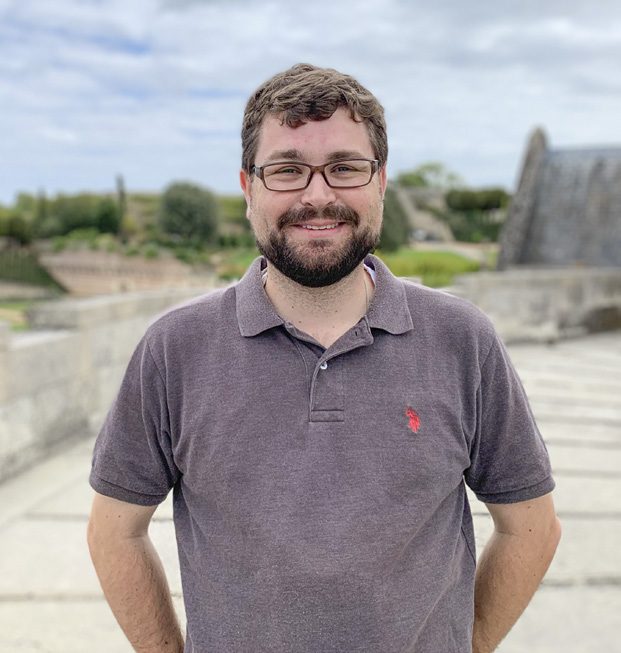
Kristopher D. White is a co-founder of Emerging Civil War. He struck the deal with Savas Beatie that started the Emerging Civil War book series. He co-founded ECW’s Engaging the Civil War Series at Southern Illinois University Press, and he’s written a small library’s worth of books and magazine articles. By day, he’s the education manager at the American Battlefield Trust. We first profiled him in the January 2017 newsletter (https://conta.cc/2kpx6sH), and he has a full ECW bio here (https://emergingcivilwar.com/ author-biographies/authors/ kristopher-d-white/).
Emerging Civil War co-founder Kris White.
Our editor-in-chief, Chris Mackowski, posed this month’s questions.
CM: I always look at May as “battlefield season” because of the anniversaries of Chancellorsville, Wilderness, and Spotsylvania, where we both cut our teeth as young historians. What is it about those battlefields you love so much?
KW: First and foremost, it’s the memories associated with those sites. I visited all those battlefields for the first time with my parents back in the mid-90’s. We visited the Fredericksburg area sites for a week. We drove through Poplar Run on the Jackson Flank March Trail in a clean car, and my dad drove us to a car wash immediately thereafter; he loves his cars and they have to be clean. We got lost on the Gordon Flank Attack Trail and found Lake of the Woods for the first time. I interacted with Greg Kurtz at the Stonewall Jackson Shrine; someone that we worked with years later. The whole time I was covered in poison ivy, a normal summer-time occurrence for me.
Fast forward to 2005 when I became an intern at Fredericksburg and Spotsylvania National Military Park. I met many people who are still in my life today and helped to form me as an historian, and we created many new memories from the parties and cigars at Quarters 2 to meeting my wives (Sarah and Chris Mackowski). You and I witnessed the Hindenburg crash into the Titanic as it hit the iceberg in Saunders Field. That park also led to the creation of ECW.
Overall, I love most of the stories and sites associated with those battlefields. The story of Phennie Tapp and Longstreet’s counterattack in the Wilderness are two great examples of stories that I find entertaining and compelling. Of course there is the overlooked Second Battle of Fredericksburg; there’s the overlooked wounding of James Longstreet, which is fascinating when compared to Jackson’s wounding just a few miles down the road. The fascination of Longstreet’s wounding is more tied into the memory aspect of things, from the fact that Jackson had a visitor center built near his wounding site, a visitor center movie largely based around Jackson, a walking tour called “The Wounding of Stonewall Jackson Tour,” and then the Stonewall Jackson Death Site. Then you head to Longstreet’s wounding site and it has a few signs, only one of which deals with his wounding, and a sign that doesn’t allow you to park for longer than 30 minutes. It shows the power of the cult of Jackson, and the postwar memory battle fought inside and outside the former Confederate ranks.
The memorialization, or should I say, non-memorialization, of the battlefields, which are not littered with monuments and visitors, allows you to take in the landscape in a more focused fashion, and walk a lot of the ground as it looked in 1863-1864. You don’t need 1,400 monuments to illustrate the battle’s importance; you need good interpretation on the ground. The battlefield is the #1 resource. While Chancellorsville only has nine monuments on the battlefield proper, and two have nothing to do with the battle, people still come to Chancellorsville because they know the Jackson wounding story, or some form of the story. It’s the story of Jackson’s wounding and the want or need to interact with the place that brought those visitors through the visitor center door.
While many historians like to over complicate or over-think these characters and events of the past to make a name for themselves, at the end of the day, history really is about telling an and accurate and compelling story, and hoping that we can take a visitor’s understanding to a new level in the finite amount of time that we have to interact with them and their family. It’s much easier said than done when we are dealing with vacationers. At these places, many visitors are there because they sought these sites out specifically to interact with in their free time. As many of us noticed, most visitors who drove farther from I-95 were the ones who really were into the subject. I had some of the best, most fulfilling, and entertaining interactions with visitors in the Wilderness and at Spotsylvania.
My favorite memory of Spotsylvania came in 2008 when a visitor came whipping into the parking lot with his car; he jumped out, and asked me if he was at Cold Harbor. I told him that he wasn’t, and it was about 45 miles away. He said, “Shit! Don’t tell my wife. We have been looking for Cold Harbor for hours, and I am just going to tell her that this it so that I don’t look like an idiot.” I did mention that all our signs said Spotsylvania Court House, and he replied, “Luckily she don’t read the signs.” Welcome to life as a public historian!
CM: You also cut your teeth at Gettysburg, where you first fell in love with the Civil War. What keeps drawing you back there?