years ago – 1762.” That reader was desperate to have his say.
With supplies restricted and prices rising, entrepreneurs saw opportunities in the paper mill business. Some mills were already in operation, of course, like our facility adjacent to the 13th hole. Others were built during the war at Mobile, Atlanta, and Manchester, Ga. There were plans to build paper mills in Texas and Louisiana; it is unclear if these plans came to fruition. Sometimes new mills were just hoped for in newspaper editorials. In April 1863 the Natchez Daily Courier listed 20 paper mills operating in six Confederate states.
No one will be surprised to learn that these businesses confronted challenges just as severe as those faced by their newspaper customers. They too had to battle for raw materials and deal with labor shortages, inflation, routine perils like fires, and un-routine perils like invading armies. One mill refugeed south when an enterprising Georgian bought mill machinery in Tennessee in 1863, “just before a raid of the enemy swept through the region in which it was located.”
Newspapers became advocates of recycling. “Rags! Rags! Rags!” blared numerous headlines above articles urging people to save their rags, assuring them that the paper mills were paying good prices for the material. By January 1863 the price of rags had risen 800%, according to the Charleston Mercury, and not just cloth rags were sought. The papers begged readers to save ashes, scraps of rope and thread, refuse cotton, flax, hemp, corn husks— anything that could be pulped and processed into paper.
Some mills limited sales to customers who helped supply the desperately-needed raw materials; consequently, newspapers did more than advocate. Bring your rags to us, they pleaded, and we will pay top dollar. “10,000 Pounds Of Rags Wanted at This Office, For Which the Highest Market Price Will be Paid!!” shouted the Columbus Enquirer on Oct. 13, 1863.
With the ashes, corn husks, and whatnot, the quality suffered. The Atlanta Southern Confederacy complained in early 1863 that much of the paper bought from the Marietta mill was unsatisfactory and would not run through the press.
For good paper or bad, prices continued to rise. A ream of paper cost the Athens Southern Watchman $15 in May 1863, up from the pre-war price of $3.50. In Texas things were much worse. In August the San Antonio Herald and the Galveston Weekly News
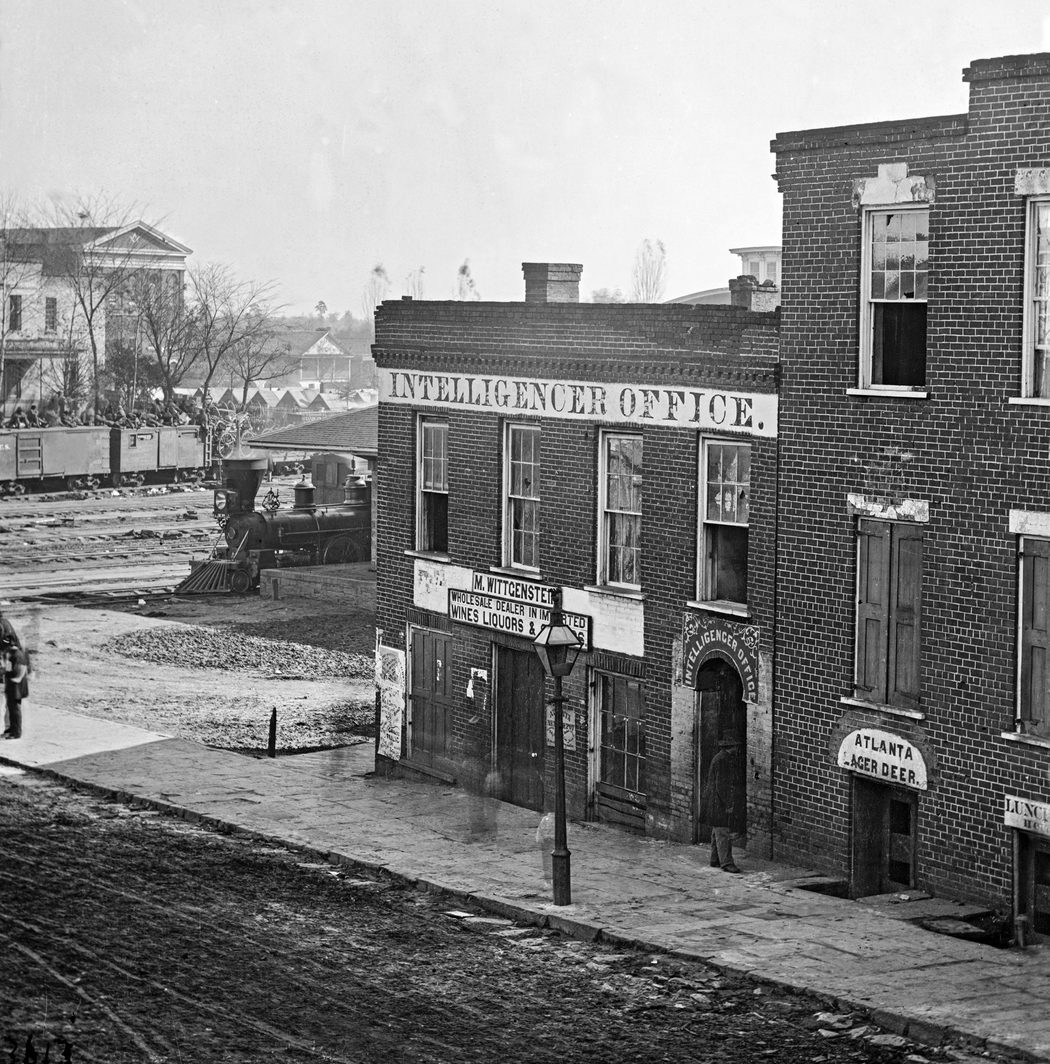
There were some accusatory editorials with headlines like “Profits of Extortion,” but these were rare. It seems that the newsmen understood that their suppliers were as stressed, strained, stretched, and starved as they were. There were also complaints that the blockade runners did not allot sufficient space to this vital cargo. The government too was shortsighted, say the editors, when it did not exempt newspaper hands and paper mill workers from the draft. The agent for the Marietta Paper Mill explained in a letter to the Atlanta Intelligencer (Sept. 10, 1863) that he would be able to supply no more paper until the government detailed workers to man his machines. “I do not exactly comprehend how it is that Government agents insist upon the absolute necessity for the Government to have paper,” he wrote, “and yet refuse us our hands.”
More and more papers suspended operations as the economy worsened with the war, and surely many a newspaperman went a-soldiering. The paperless editor of the Dallas Herald signed up early in 1862. Wartime newspapers contain scores of items on the shuttering of other papers. As the Columbus Enquirer put it, “We can but [express] our deep grief at the early loss of our boon companions, and pray that our fate be not too soon like theirs.”
The story of Southern newspapermen’s struggles during the Civil War is a tale of woe and hardship, but it is also a tale of persistence and resourcefulness. The publishers improvised and by one means or another made do for as long as they could.
The journalists also maintained their sense of humor: The Mobile paper in the spring of 1863 relayed a jape from the wags at the Winchester Bulletin, who advised “people in that region to write letters on the backs of one dollar bills, for the sake of economy.” Who said the money was worthless?
When forced to suspend, they bounced back as they could. The Dallas Herald ran an item in September 1863 welcoming the Marshall Republican back into the brotherhood after a forced hiatus of several months. The Republican was again knocked
online at
down and again rose from the mat a year later, as the Galveston paper happily reported. As unlikely as it seems, two new papers were established in Texas late in the war: the Army and Navy Messenger in the fall of 1864, and another publication in 1865, less than two months before Appomattox.
That required faith, but the founders had plenty of that. The other startup was the Texas Christian Herald, published by the Baptist State Convention.
Sources: The newspaper accounts used for this article were compiled by Vicki Betts, a librarian at the University of Texas at Tyler. Betts, Vicki, “Paper Manufacturing and Paper Shortages in the South, 1861– 1865” (2016). Special Topics. Paper 18. http://hdl.handle.
“This is the magazine for all things Civil War Navy. From ‘Uncle Sam’s web-feet’ to the ‘grey jacket navy’ raised
by Jeff Davis! It is all here thoroughly researched and illustrated by beautiful contemporary navy images.”
Gould Hagler is a retired lobbyist living in Dunwoody, Ga. He is a past president of the Atlanta Civil War Round Table and the author of Georgia’s Confederate Monuments: In Honor of a Fallen Nation, published by Mercer University Press in 2014. Hagler
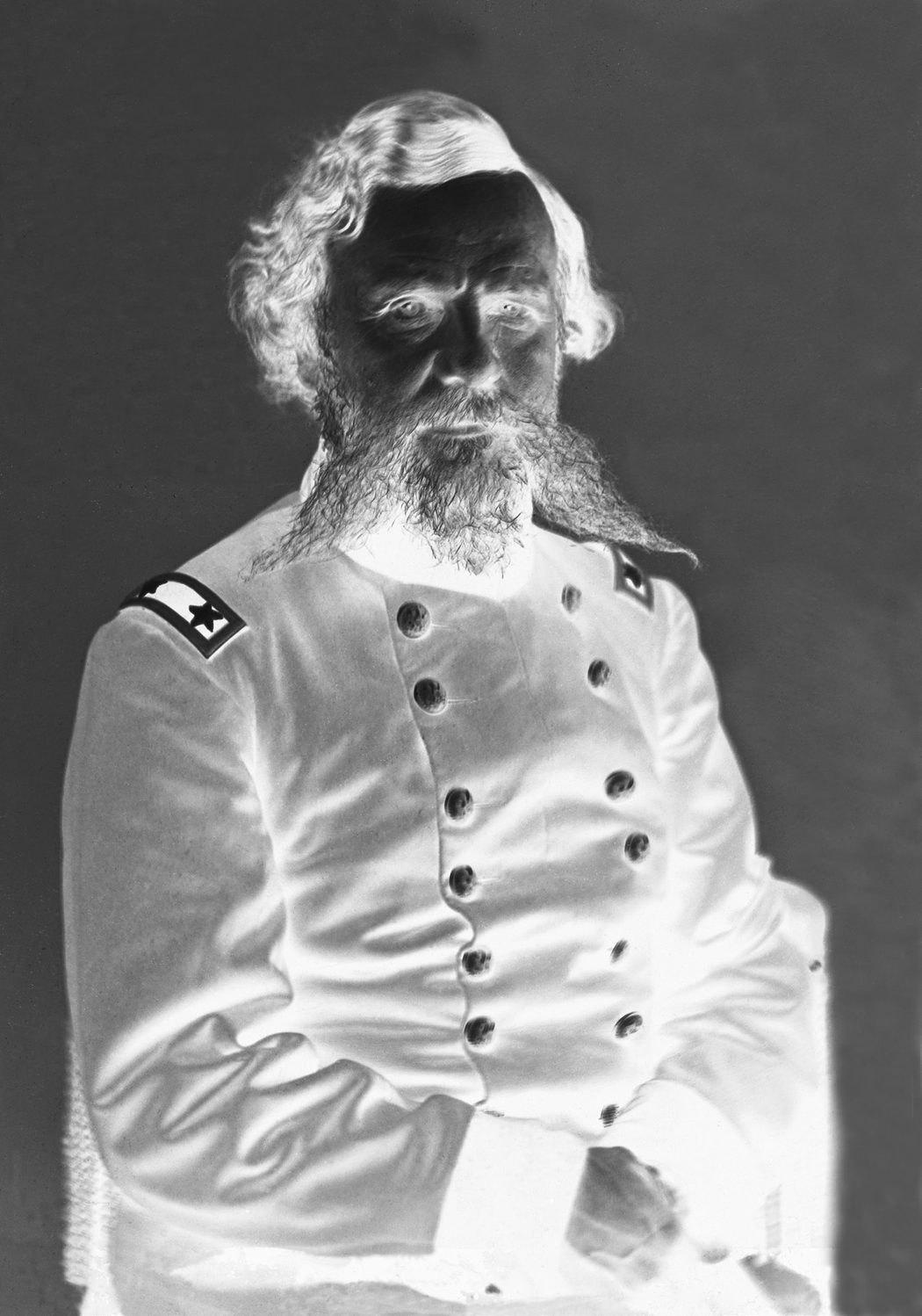
I received a phone call from the owner of a presentation sword given to General Alpheus Williams just prior to 2018 hurricane that threatened the South Carolina coast with mandatory evacuation. The sword had been in the family for five generations. I was asked if this sword should be taken inland and saved from potential storm damage. Since that call last year, I’ve been called back and asked the best way to market the sword after the family was informed that indeed the sword was valuable. The most transparent and reliable way to maximize money is usually an auction, the recommendation I usually suggest. This sword will be offered in the Poulin Auction, Fairfield, Maine, October 20. The
sword has not been seen by the public for a very long time and is totally unknown to the collector community. It is indeed a beautiful sword retained in its original casing with two sword belts and two regulation buff general’s sashes.
The sword was made by Bailey of Philadelphia though an agent mark of Canfield Brothers, Baltimore, with a Collins, Hartford, Conn., blade etched in a Tiffany style with four battle honors: “RAPPAHANOCK / ANTIETAM” and “WINCHESTER / CEDAR MOUNTAIN.” General Williams’ war record is extensive. He served as a brigade commander, division commander, and corps commander in the Army of the Potomac. He and his troops