How absurd to suppose that the ever-vigilant McCook, always on the alert, should permit any troops under his command to be surprised! How absurd to suppose that troops who had been up and breakfasted hours before the battle could be taken by surprise! – Brig. Gen. Richard W. Johnson, U.S.A.
If the Federal troops weren’t surprised on the morning of Dec. 31, 1862, they managed a good imitation. The Union Army of the Cumberland and the Confederate Army of Tennessee faced each other just north and west of Murfreesboro, Tenn. The Union commander, Maj. Gen. William S. Rosecrans, and his Confederate counterpart, Gen. Braxton Bragg, had similar aims. Each planned an early morning assault on his opponent’s right flank. Bragg struck first. Surprised or not, the Federals broke quickly and fell back in considerable disorder.
In its initial stages, this attack seemed to portend disaster for Rosecrans’s army. The retreat continued for hours; by the end of that winter day Rosecrans’s men had fallen back several miles north of where they stood when dawn broke.
Last time we listened to the
GEORGIA’S CONFEDERATE MONUMENTS In Honor of a Fallen Nation Gould B. Hagler, Jr.
This unique work contains a complete photographic record of Georgia’s memorials to the Confederacy, a full transcription of the words engraved upon them, and carefully-researched information about the monuments and the organizations which built them. These works of art and their eloquent nation’s profound grief, praise the soldiers’ bravery and patriotism, and pay homage to the cause for which they fought.
words of Union officers who commanded the retreating forces. We now review the events of the day through the eyes of Confederate officers* who led the forces assailing the Federal right.
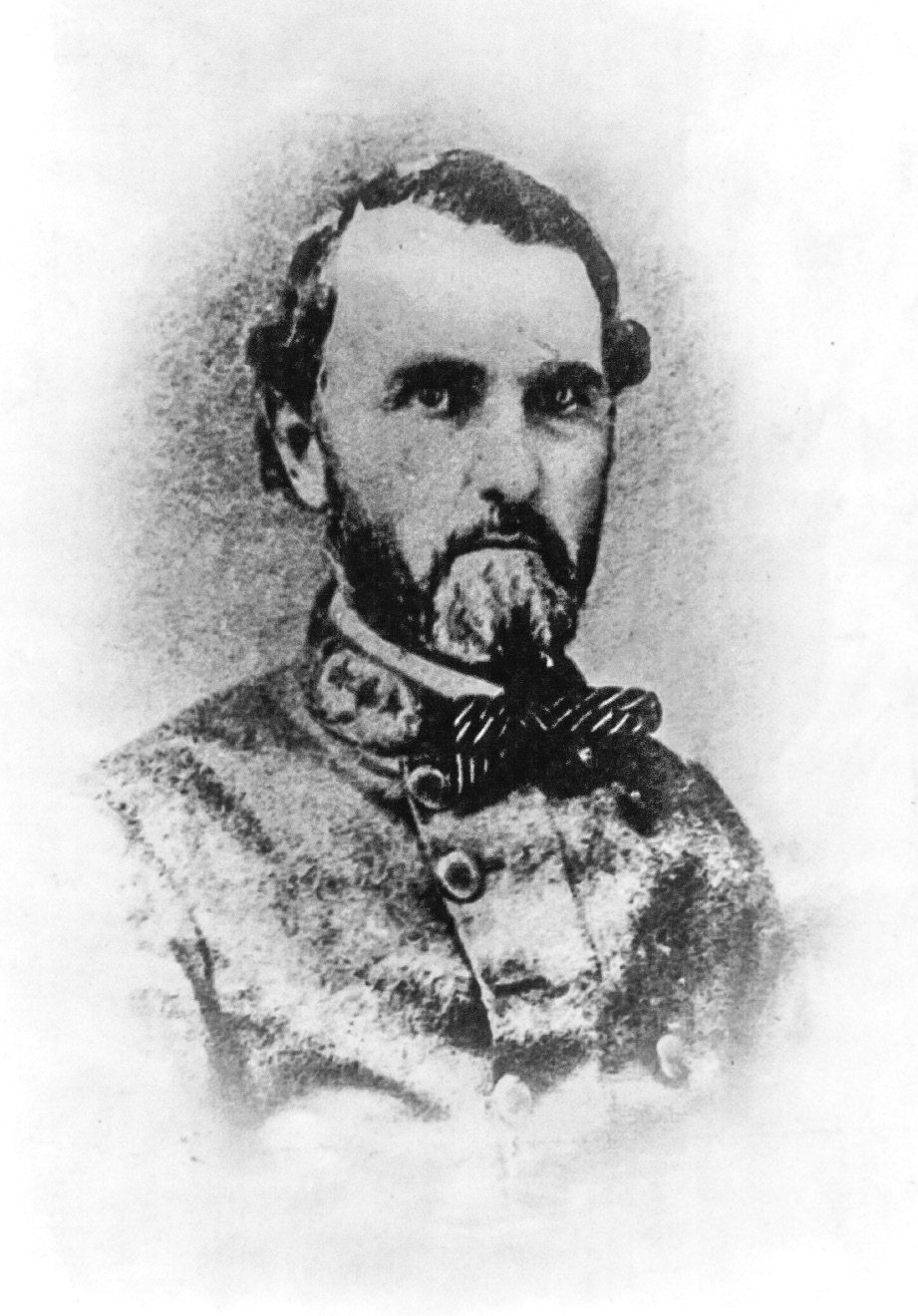
In his report, Maj. Gen. John McCown describes the first stages of the attack. “My men advanced steadily, reserving their fire until they were but a short distance from the enemy’s position. A volley was delivered, and their position and batteries taken with the bayonet, leaving the ground covered with his dead and wounded, leaving many prisoners in our hands…. The enemy made several attempts to rally, but failed, being closely pressed by my men, their defeat becoming almost a rout. The enemy was pressed near a mile.”
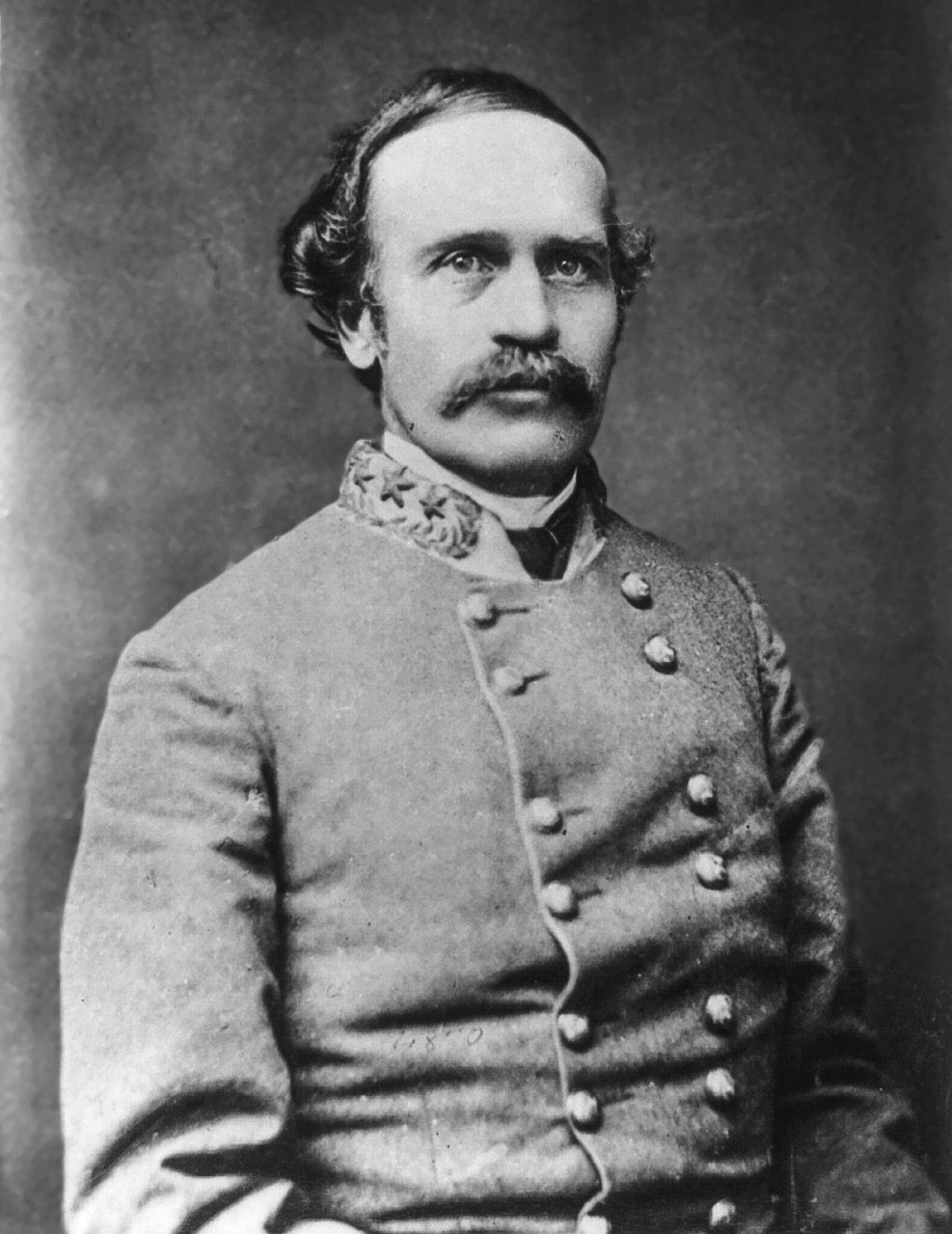
Brig. Gen. Evander McNair also reports an initial success. Fired upon by a six-gun Union battery, his men charged. “It was but a moment until his battery was ours, his long line of infantry routed and dispersed…. My command continued to pursue the enemy for three-quarters of a mile, pouring a destructive fire into his broken and shattered ranks, strewing the ground with his killed and wounded.”
Brig. Gen. Matthew Ector tells of his brigade’s advance in the center of McCown’s line. As they moved out, the men were fired upon by artillery. They charged at 100 yards and fired at 30 yards. “Their infantry gave way about the time we reached their batteries.” The Federal infantry attempted to reform, but “We pressed upon them so rapidly they soon gave way the second time.” The Federals attempted a third stand, and again were driven back.
As they advanced, the Confederates collected guns, booty, and prisoners. McCown says that his division “moved so rapidly and was so constantly engaged that the guns captured were not counted.” His best guess was 23 pieces, “besides caissons, forges, and other ordnance stores.” And, he says, his men “passed, untouched, wagons, knapsacks, &c.”
Ector reports that by the time his men advanced 2 ½ miles, “We had captured quite a number of prisoners, who had been sent to the rear. The enemy in their hasty retreat had left their camp equipage; and guns, blankets, overcoats, and knapsacks marked the line of their retreat.”
Maj. Gen. Patrick Cleburne writes that his division, next to McCown’s, captured two hospitals, almost 1,000 prisoners, and “a train of ammunition wagons, 1 piece of artillery, 3 or 4 caissons, and 2 wagons filled with medical stores.”
Col. Robert Vance’s account states that his regiment captured “one six-mule team and wagon, loaded with ammunition, instruments of a brass band, kettle and bass drum….”
In his memoirs, Brig. Gen. St. John Liddell recounts that he took many prisoners and dispatched them to the rear as he sent their captors back to the front line. He overran a Union field hospital and tells us that “The hospital yard was full of [prisoners], whither they had gone to escape
The Confederates moved from the Franklin Pike north to the Wilkinson Pike and beyond, threatening the Nashville Pike, Rosecrans’s link to his base in Nashville. Cleburne and Liddell both describe the action at this critical point. Cleburne’s report states that “Liddell was in full view of the Nashville turnpike and the enemy’s trains. He opened with his artillery on one portion of the train, while…the cavalry charged another. The trains disappeared in haste and confusion.”
In his own report Liddell’s writes that “we saw enemy’s lines scattered over the valley of Overall’s Creek and beyond. We saw large trains with bodies of men marching in confused masses in direction of Nashville…. I ordered the batteries to shell them. The Texas cavalry… charged upon those trains.”
The enemy retreating in confusion. Hundreds upon hundreds of prisoners. Guns captured. A battlefield littered with abandoned equipment. Trains fleeing. Time for the coup de grâce. Well, not quite.
While the attack achieved great success, from the outset it did not go entirely according to plan. Cleburne’s division was meant to follow McCown’s, in position to exploit any breakthrough with the overwhelming force of fresh troops. However, as they advanced Cleburne and his brigade commanders found to their surprise that no troops were ahead of them. “My left had not moved half a mile when heavy firing commenced near its front, supposed to be McCown’s division engaging the enemy,” writes Cleburne. “I was, in reality, the foremost line on this part of the field, [as] McCown’s line unaccountably disappeared from my front.”
Brig. Gen. Bushrod Johnson tells a similar story. “Though we had moved out on the second line to support…McCown’s division, it became evident that there was nothing before us but the enemy….”
Further to the right of the Confederate line, Col. Arthur Manigault moved his brigade forward after the units on the far left attacked. “By the time our turn came,” Manigault writes, “they were somewhat prepared for us.” The South Carolinian states that the Federal’s “first lines were broken…but their second line…was too much for us. We were forced to retire….” Manigault’s men regrouped, and with hard fighting pushed the Federals back.
The report of Brig. Gen. Lucius Polk gives us an idea of how much the Federals fought as they withdrew. The Yankees were driven from a brake of cedars; from a “woods pasture;” from a position “across an open field near one of their hospitals;” from a position protected by artillery; and from “a strong position on a cedar hill, with rocks so placed by nature as to afford great protection, [where the] enemy made a most obstinate stand, and it was only after a bloody fight and one repulse we succeeded in moving them.” With each charge, Polk suffered casualties and had less strength for the next one.
The enemy’s last position was in “cedar brakes to the right of a small dirt road running parallel to the railroad.” Here Polk’s men were “driven back in great confusion, and with the heaviest loss we had sustained during the day, their batteries near the railroad and infantry making fearful havoc in our ranks as we retreated.”
Other reports also explain how the terrain favored the retreating Federals. Vance describes a “thicket of cedars so dense that it formed in itself a natural breastwork and protected the enemy posted therein….” Cleburne, too, tells us that the enemy “found natural breastworks of limestone rock [where he] made obstinate and destructive resistance.”
The fighting took its toll. McCown writes that his “command was much exhausted” by the time it fought its way to the Wilkinson Pike. In one of the later charges, north of the pike, “the Thirtieth Arkansas Regiment… had seven company commanders cut down and the color bearer….” McNair reports that his brigade suffered 427 casualties. Liddell lost 589 men of the 1703 that entered the battle. Ector reports that he lost one-third of his men, “and most of the rest were very much exhausted.”
Cleburne describes the condition of his division as he came within sight of the Nashville Pike: “[I]t was now after 3 o’clock; my men had had little or no rest the night before; they had been fighting since dawn, without relief, food, or water; they were comparatively without the support of artillery…; their ammunition was again exhausted, and our ordnance trains could not follow….”
Furthermore, Cleburne says, “At this critical moment the enemy met my thin ranks with another fresh line of battle, supported by…artillery….”
Manigault describes the Federal position near the pike and railroad. “His position was a very strong one, his left protected by Stone[s] River, the bank of which was high and precipitous, and a commanding hill nearby, on which he had massed a large number of guns that swept all the approaches to it; his Infantry protected by the embankments of the railroad. The troops, already worn out with hard fighting and much reduced in number, found it impossible to dislodge him.”
Some Confederate units attempted to press on to the pike, but were repulsed. At this juncture, with the Federals holding a strong position and the Confederates “worn out” and “reduced in number,” the fighting on Dec. 31 ended. The armies spent the first day of 1863 watching each other. On Jan. 2 Bragg attacked the Federal left, suffered a bloody setback, then retreated.
Why did the attack fail to sever the Nashville Pike on the 31st? Bushrod Johnson believed that the Confederates could have pressed their advantage and succeeded. In his report he expresses criticism of his fellow officers and his own men. In his memoirs Liddell is critical of Bragg, saying that the commander “halted his lines in the midst of success.”
In contrast, Manigault and other officers describe an attacking force that was spent by late afternoon and could do no more when they faced the Federal position near the Nashville Pike.
Patrick Cleburne says plainly: “This was more than our men could stand.”
*For the reader’s convenience here is the relevant part of the Confederate order of battle: John McCown’s Division comprised the brigades commanded by Evander McNair, Matthew Ector, and James Rains. Rains was killed and was succeeded by Robert Vance. McNair, who had risen from his sickbed to lead his brigade, became exhausted and was succeeded by Robert Harper. In Patrick Cleburne’s Division were the brigades of Lucius Polk, St. John Liddell, Bushrod Johnson, and Sterling Wood. These two divisions were on the Confederate left where the assault began and the Union line collapsed. Arthur Manigault commanded a brigade in Withers’ Division.
• Peter Cozzens, No Better Place to Die: The Battle of Stones River, University of Illinois Press, 1990 R.W. Johnson, In Peace and War: A Soldier’s Reminiscences. Big Byte Books, 2014 (Originally published in 1886) St. John Richardson Liddell, Liddell’s Record, Edited by Nathaniel Cheairs Hughes, Jr., Louisiana State University Press, 1985 Arthur Middleton Manigault, A Carolinian Goes to War: The Civil War Narrative of Arthur Middleton Manigault, R. Lockwood Tower, Ed., University of South Carolina Press, 1983 O.R. Series I, Volume XX, Part I, Reports of Patrick Cleburne, Matthew Ector, Bushrod Johnson, St. John Liddell, John McCown, Evander McNair, Lucius Polk, and Robert Vance Several websites contain excellent maps showing troop movements at different stages of the battle. Most useful are the sites of the American Battlefield Trust, the National Park Service, and Wikipedia.